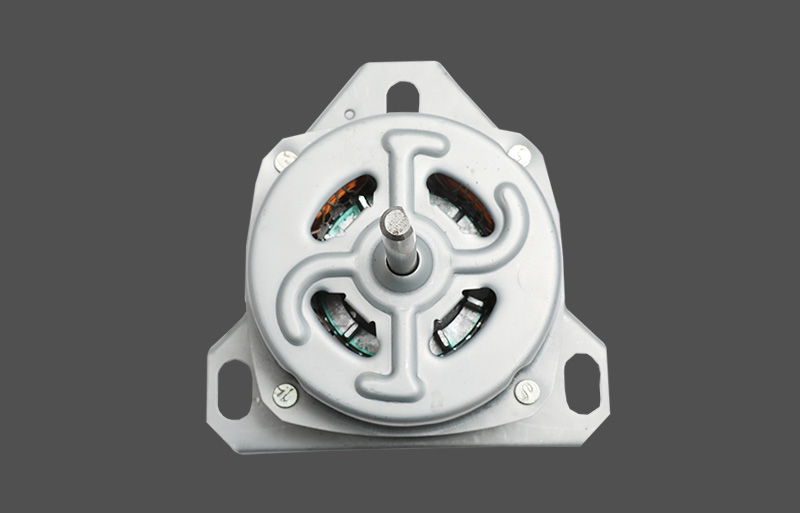
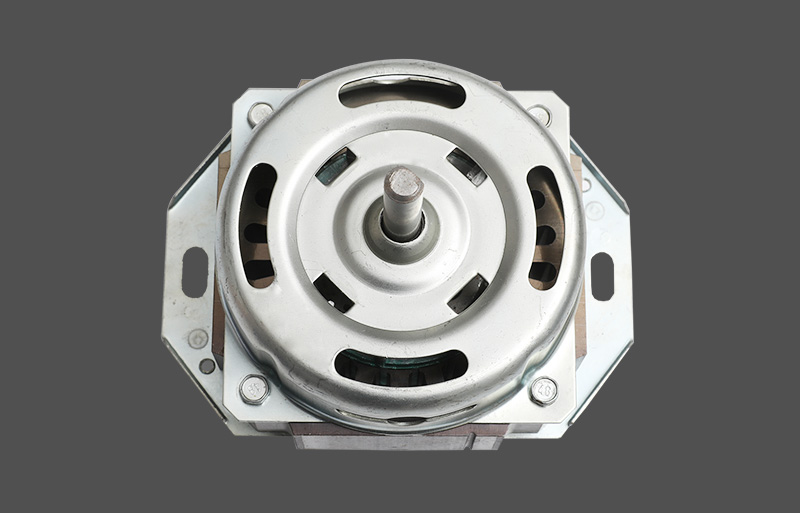
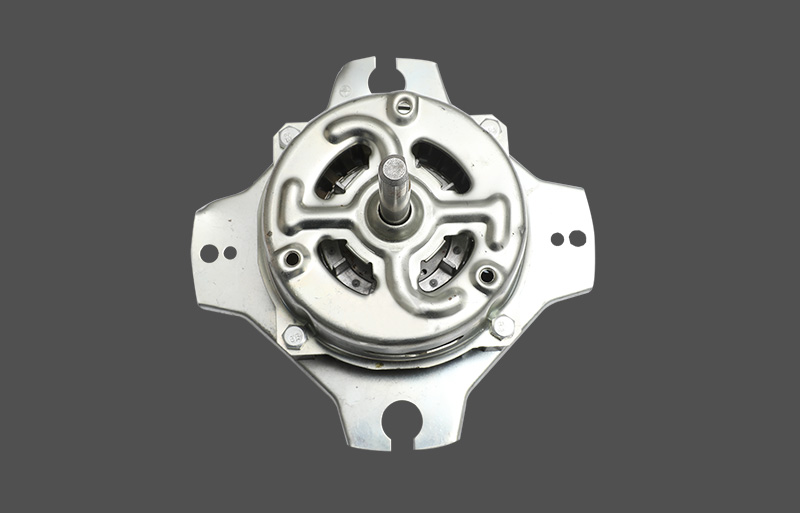
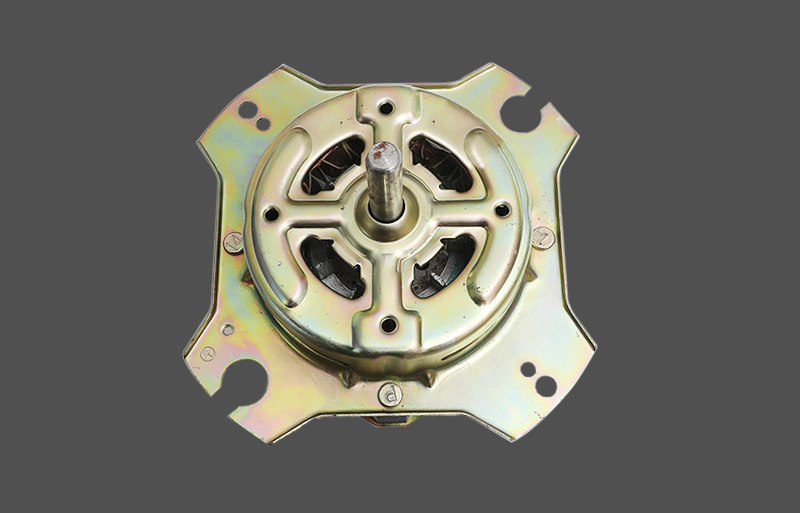
In modern architecture, industrial manufacturing, and daily household life, air circulation and environmental quality control are paramount. As the core driving component of ventilation equipment, the performance of the Ventilator Motor directly determines the exhaust efficiency, energy consumption, and service life of the entire system. Facing diverse needs ranging from large industrial plants to small household bathrooms, a deep understanding of the technical characteristics and application scenarios of different types of motors is the key to ensuring the long-term stable operation of the ventilation system.
Power Source for High-Load Industrial Environments
In factories, workshops, and large commercial kitchens, the air is often mixed with high concentrations of dust, oil fumes, or corrosive gases, which places extremely high demands on the power system of the exhaust equipment. The industrial exhaust fan motor is specifically designed to handle such high-intensity, long-running, and harsh environments.
These motors typically feature a Totally Enclosed Fan Cooled (TEFC) structure with high protection ratings (such as IP55 or higher), effectively preventing external impurities from entering the motor and causing coil short circuits. To meet the requirements of large air volume and high static pressure, the industrial exhaust fan motor generally possesses high starting torque and excellent overload capacity. In continuous industrial operation, high-specification double rolling bearings are usually selected, configured with high-temperature resistant grease to reduce friction loss and extend maintenance cycles.
For chemical or specific processing industries, beyond basic exhaust needs, safety and explosion-proof performance must be considered. In such cases, a specialized Ventilator Motor ensures that no electric sparks trigger safety accidents when transporting flammable and explosive gases through a specific flameproof design.
Efficient Suction for Commercial and Kitchen Smoke Exhaust
In the catering industry and commercial buildings, the efficient removal of odors and oil fumes is a rigid demand for maintaining environmental hygiene. The motor for extractor fan plays a central role in this field.
Unlike ordinary air convection, smoke or oil fume extraction requires the motor to overcome duct resistance and provide sufficient negative pressure. The design focus of the motor for extractor fan lies in the optimization of speed and blade matching. To cope with increased loads caused by oil fume adhesion, these motors usually have high insulation classes (such as Class F insulation), allowing them to operate stably under high temperature rise. Additionally, some high-end motor for extractor fan units adopt adjustable speed designs (such as variable frequency or voltage regulation), allowing users to flexibly adjust the air volume according to the actual smoke concentration, achieving energy saving and noise reduction while meeting exhaust requirements.
Strong Propulsion for Building Ducts and Ventilation Dead Zones
In the central ventilation pipe networks of large buildings, air generates significant resistance during long-distance transportation. The exhaust vent motor and the general exhaust fan motor are key supports for maintaining the air pressure balance inside the ducts.
The exhaust vent motor is usually embedded inside the duct system or the external wall exhaust port. Its shape design is often more compact to facilitate installation and maintenance in narrow duct spaces. Since these motors are often in hidden engineering locations with high replacement costs, they require extremely high reliability. In terms of manufacturing processes, silicon steel sheets are typically used to optimize the stator and rotor cores, reducing iron loss and improving operating efficiency. The standard exhaust fan motor is widely used in various small and medium-sized wall-mounted or window-mounted exhaust fans, balancing manufacturing costs and operating efficiency as the most widely used general power unit in the market.
Quiet and Moisture Control for Home Bathroom Spaces
Returning to the living environment, moisture and odors are mainly concentrated in bathrooms and restrooms, making the design focus of bathroom fans motors and small exhaust fan motor significantly different from industrial appliances.
Since the bathroom environment is in a high-humidity state for a long time, bathroom fans motors must have excellent moisture and water mist resistance. These motors usually undergo special moisture-proof dip-paint treatment on the windings and have sealed wiring terminals. Furthermore, aiming for quietness and comfort in the home environment, bathroom fans motors and small exhaust fan motor pay extreme attention to micro-dynamic balance control and noise suppression. They mostly use Shaded Pole Motors or Permanent Split Capacitor (PSC) Motors. By optimizing electromagnetic design and using silent oil-impregnated bearings (or ultra-quiet ball bearings), the operating noise is controlled at an extremely low level, ensuring that even nighttime use does not affect the living experience.
Comparison of Technical Parameters for Key Application Scenarios
To more intuitively understand the technical differences of motors in different application scenarios, the following typical parameter range comparisons for core motor types are listed:
| Motor Type (Keywords) |
Power Range |
Common Protection Rating |
Main Bearing Type |
Core Design Focus |
| industrial exhaust fan motor |
0.75 kW - 11 kW+ |
IP55 / IP56 |
Double Ball Bearing |
High durability, overload resistance, high dustproof |
| Ventilator Motor |
0.37 kW - 7.5 kW |
IP54 / IP55 |
Sealed Ball Bearing |
Stable operation, explosion-proof available, long life |
| motor for extractor fan |
0.18 kW - 2.2 kW |
IP44 / IP54 |
High-temp Ball Bearing |
High static pressure, oil resistance, adjustable speed |
| exhaust fan motor |
45 W - 550 W |
IP42 / IP44 |
Sleeve / Ball Bearing |
Universal structure, cost-effective, easy maintenance |
| exhaust vent motor |
30 W - 250 W |
IP44 |
Closed Ball Bearing |
Compact structure, duct-fit, high reliability |
| bathroom fans motors |
10 W - 50 W |
IPX2 / IPX4 |
Quiet Sleeve / Sleeve |
Moisture-proof, extreme silence, safe low power |
| small exhaust fan motor |
8 W - 40 W |
IP20 / IP42 |
Sleeve Bearing |
Small size, low energy consumption, low EMI |
Whether it is the industrial exhaust fan motor for harsh industrial environments or the bathroom fans motors pursuing silence and moisture resistance, the selection must be closely combined with actual air volume demand, static pressure resistance, installation space, and environmental characteristics. Precise manufacturing, reasonable parameter matching, and strict quality control are the foundations for ensuring efficient operation and reducing long-term maintenance costs of the ventilation system.