


A washing machine motor is bad when the drum will not turn under load, the winding reads open or shorted on a multimeter, or the motor smells burnt and trips the breaker. Confirm those findings before you buy a motor, because a failed capacitor, a stretched belt, a door lock, and a control board with no output produce the same symptoms. Test in this order: capacitor, belt, door or lid switch, board output, winding resistance, insulation to ground, and current draw. The motor is usually the last part to fail, but when it does, the evidence is specific.
The meter reads OL across run and common, or across start and common. The copper path is broken. This is a motor replacement, not a terminal cleaning job.
A terminal-to-frame reading below 1 MΩ means insulation has broken down. The motor may still turn, but it is a shock risk and should come out.
Overheating leaves a sharp, acrid smell and dark lacquer on the windings. Once the insulation is cooked, resistance can look normal cold and drift when hot.
The motor is receiving power but cannot start. Check for a seized bearing, a stuck pump, or a broken start winding before assuming the motor is dead.
The opposite is also useful: a motor that spins freely by hand, smells normal, and shows balanced resistance is usually healthy. In that case, look at the capacitor, belt, pump, door lock, or board. A motor that “does nothing” and a motor that “hums” are different failures, and they lead to different tests.
Washer motors are not interchangeable test subjects. A universal motor with brushes has a commutator and a field winding. A permanent split capacitor motor has a run winding and a start winding. A BLDC or inverter motor has three phases and a Hall sensor. A direct-drive motor may have a stator and a rotor with permanent magnets. The meter leads go to different places, and the pass values change.
| Motor type | Typical washer | First test | Common failure | Repair path |
|---|---|---|---|---|
| Universal, brushed | Top-load, twin-tub | Brush length, commutator, winding continuity | Worn brushes, open armature, carbon dust | Replace brushes or motor |
| PSC induction | Top-load, front-load | Capacitor, run and start winding resistance | Weak capacitor, open winding, bearing seizure | Replace capacitor or motor |
| BLDC / inverter | Front-load, direct drive | Phase resistance, Hall signal, board output | Hall sensor, magnet, board, bearing | Replace motor, sensor, or board |
| Direct drive | Front-load | Stator resistance, rotor magnet, seal | Bearing, seal, stator, rotor | Replace stator, bearing, or rotor |
The table is not academic. A universal motor with 4 mm of brush left may run for another month, while a BLDC motor with a failed Hall sensor can stop mid-cycle with a perfectly good stator. Testing the wrong part wastes money and time.
Unplug the washer and remove the back or front panel. Discharge the capacitor before touching terminals. A motor capacitor can hold 300 V or more after the plug is pulled. Then look for evidence that narrows the diagnosis.
A clean motor with tight bearings, intact terminals, and no burnt smell is worth testing electrically. A motor with burnt varnish and a melted connector is usually beyond economic repair, even if one winding still shows continuity.
Set a digital multimeter to the lowest ohms range and touch the probes together. The display should read near 0 Ω. If it does not, replace the meter leads or zero the meter. Then disconnect the motor plug and photograph the wiring before removing any wire.
An OL reading is an open circuit. A reading near 0 Ω across a winding that should be 20 Ω is a shorted turn. Both are motor failures. A reading that is 30% above the service value may still run, but it will draw more current and run hotter.
| Motor type | Winding | Expected range | Bad sign |
|---|---|---|---|
| Universal | Field winding | 5–50 Ω | OL or near 0 Ω |
| Universal | Armature | 1–10 Ω | OL, or reading changes when shaft turns |
| PSC induction | Run winding | 10–50 Ω | OL or below 5 Ω |
| PSC induction | Start winding | 20–100 Ω | OL or identical to run winding when it should differ |
| BLDC | Phase to phase | 0.5–5 Ω | One phase open or far higher than the other two |
Use a 500 V DC megohmmeter. Disconnect the control board and the capacitor. Measure each motor terminal to the metal frame. Do not test with the washer plugged in. A new motor should read above 100 MΩ. A used motor above 2 MΩ is generally acceptable. Below 1 MΩ is a leakage failure. Below 0.5 MΩ, do not reconnect the motor.
| Reading | Interpretation | Action |
|---|---|---|
| Above 100 MΩ | Healthy insulation | Continue electrical tests |
| 2–100 MΩ | Acceptable for a used motor | Check again after a load run |
| 1–2 MΩ | Marginal, moisture or carbon tracking | Dry and retest; replace if it stays low |
| Below 1 MΩ | Insulation breakdown | Replace the motor |
A motor can pass a cold insulation test and fail when hot. If the washer trips a GFCI or earth-leakage breaker after 10 minutes, run the test again while the motor is warm. Heat opens small cracks in the varnish and turns a marginal reading into a clear fault.
These parts sit between “the motor is bad” and “the motor is fine.” Test them before ordering a motor. A capacitor is the cheapest part in the chain and the most common false diagnosis. A 10 µF capacitor that reads 4 µF will let the motor hum and stall, and the owner will swear the motor is dead.
| Component | Test | Good reading | Bad reading | Action |
|---|---|---|---|---|
| Run capacitor | Capacitance meter | Within ±10% of rated µF | Bulged, leaking, or below 80% | Replace |
| Brushes | Length and spring tension | Above 6 mm | Below 3 mm or chipped | Replace brushes |
| Thermal protector | Continuity at room temperature | 0 Ω | OL when cold | Replace protector or motor |
| Hall sensor | 5 V supply and signal pulse | Square wave when rotated | No pulse, stuck high or low | Replace sensor or motor |
| Tachometer coil | AC voltage while spinning | 20–200 V AC | 0 V | Replace tachometer or motor |
On a universal motor, inspect the commutator as well. A dark, glazed commutator with heavy carbon tracking can be cleaned. A commutator with raised mica or a thrown bar needs a new armature. On a BLDC motor, a failed Hall sensor can stop the motor without any winding fault, so do not condemn the stator until you see the signal.
If the motor receives no voltage in spin, the motor may be fine. Check the control board output, door lock, lid switch, and wiring. In a front-load washer, the door lock must close before the board commands spin. In a top-load, the lid switch does the same. A broken wire at the hinge or a corroded connector can remove power from a healthy motor.
Do not probe a live connector with loose meter leads. Use insulated probes and keep one hand clear of the chassis. If the washer has an inverter board, the motor terminals may carry pulsed DC rather than clean AC; use the service manual’s recommended meter mode.
A clamp meter around one motor lead shows current in wash and spin. Compare the reading with the nameplate. A motor that draws 10 A on a 3 A spin is mechanically overloaded or has a shorted winding. A motor that draws 0.2 A and does not turn has an open circuit. Current tells you whether the motor is working hard or not working at all.
| Washer type | Wash current | Spin current | Overload clue |
|---|---|---|---|
| 5 kg front-load | 0.8–1.5 A | 2–6 A | Above 8 A in spin |
| 6–8 kg front-load | 1–2 A | 3–8 A | Above 10 A or breaker trip |
| 8 kg top-load | 2–5 A | 5–9 A | Above 12 A or smell |
| Twin-tub | 1–4 A | 3–7 A | Above 9 A on spin |
High current with a loud hum usually means a seized bearing, a jammed pump, or a brake that has not released. Low current with no rotation means an open winding or no power. Current that climbs steadily during spin suggests a binding seal or a failing capacitor.
No single reading is a diagnosis. Use the pattern. A motor with an open winding and a burnt smell is clearly bad. A motor with balanced resistance, good insulation, and no voltage at the plug has a control problem. A motor with good resistance but a short to ground is a shock risk even if it runs.
| Finding | Probable cause | Next step |
|---|---|---|
| OL across run and common | Open winding | Replace motor |
| Near 0 Ω across a 20 Ω winding | Shorted turns | Replace motor |
| Below 1 MΩ to frame | Insulation failure | Replace motor |
| Good windings, no voltage at plug | Board, door lock, lid switch, wiring | Trace control circuit |
| Good windings, hums, good capacitor | Seized bearing or mechanical jam | Check shaft and pump |
| Good windings, low current, no rotation | Open circuit or no command | Check power and board output |
| Good windings, high current in spin | Overload, bearing, brake | Inspect mechanical load |
| Intermittent OL when shaft turns | Worn commutator or broken armature | Replace motor |
Use a simple rule: if the motor costs more than 50% of a new washer, or the machine is over 8 years old, replace the machine. If the motor is under 15% of a new washer and the drum, bearings, and board are healthy, replace the motor. A capacitor or brush set is almost always worth repairing. A burnt winding or a shorted stator is not.
| Fault | Typical part cost | Labor | Verdict |
|---|---|---|---|
| Run capacitor | Low | Low | Repair |
| Brushes | Low | Medium | Repair if commutator is smooth |
| Hall sensor | Low to medium | Medium | Repair if stator and bearing are good |
| Bearing and seal | Medium | High | Repair only on a clean, low-hour machine |
| Burnt winding | High | Medium | Replace motor or machine |
| Shorted stator | High | Medium | Replace motor or machine |
For a top-load washer with a universal motor, a replacement motor is often the fastest path. For a front-load washer with a direct-drive stator, the bearing and seal condition matters more than the stator price. If water has reached the bearing, a new stator will fail again unless the seal is replaced.
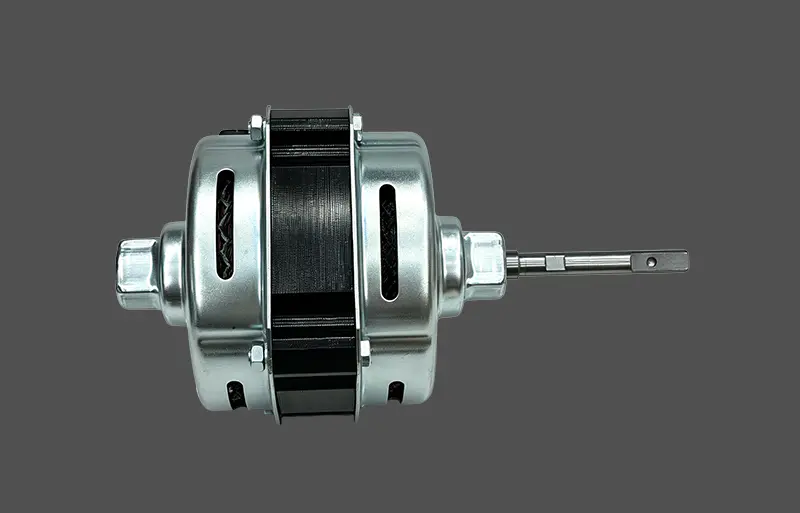
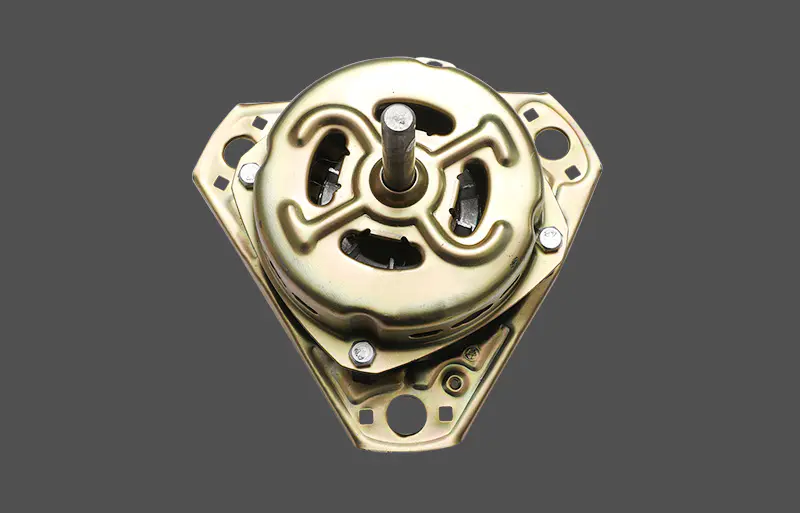 TY-001 Series Wash Motor for Twin-Tub WashersSingle-phase 4-pole copper-wound wash motor in 80–200 W variants, suited for twin-tub washers when mounting, shaft, voltage, and capacitor match the original.View Product →
The TY-001 washing machine motor is part of a series built for repetitive wash and spin duty. When a motor is genuinely failed, match the mounting, shaft, voltage, and capacitor to the original rather than forcing a universal replacement into a machine with a different pulley and speed profile.
Many “bad motor” calls end with a different part. The washer may stop before spin, hum without turning, or leave clothes wet, but the motor can still be healthy. Check these five before ordering a motor.
These false alarms share a pattern: the motor is silent, but the machine stops at a specific point in the cycle. A true motor failure often appears as a burning smell, a tripped breaker, or a dead spot that changes when the shaft is rotated.
Our factory in Shengzhou has built household motors since 1993. In 2023 we produced 12 million motors, including 8 million washing machine motors. The plant covers 25,000 m² with 20,000 m² of buildings, about 200 employees, and more than 50 engineers and managers. ISO9001, CCC, and CE are part of the quality system. That background matters when a replacement motor has to survive heat, moisture, and repeated starts, not just turn on a bench.
| Specification | Why it matters | Typical choice |
|---|---|---|
| Voltage and frequency | Wrong voltage changes speed and current | 120 V/60 Hz or 230 V/50 Hz |
| Insulation class | Laundry rooms are damp and hot | Class F or higher |
| IP rating | Water splash and steam ingress | IPX4 or better where required |
| Bearing type | Noise and life under radial load | Sealed ball bearing |
| Thermal protector | Prevents winding burnout | Automatic reset, correct opening temperature |
| Shaft and mounting | Pulley alignment and vibration | Match original exactly |
| Capacitor | Starting torque and direction | Rated µF and voltage, ±10% |
| Noise | Spin and wash sound quality | Specify dB(A) at 1 m |
A replacement motor that matches mounting but not insulation class can fail in a damp laundry room. A motor with the wrong capacitor can lose torque at start. A motor with a low-grade bearing can sound fine for a month and then rumble in spin. The specification sheet is not paperwork; it is the difference between a repair and a comeback.
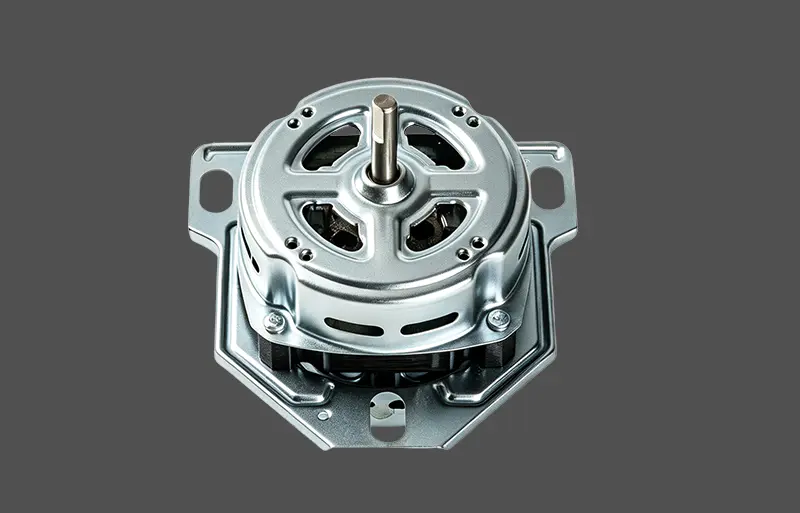 TY-019 Spin Motor Series for Washing MachinesSingle-phase 4-pole copper-wound spin motor in 30–90 W models, intended for the high-speed, high-vibration spin phase where seal and brake should also be checked.View Product →
The TY-019 spin motor family is built for the high-speed, high-vibration part of the cycle. Spin motors face different loads from wash motors: higher current, more heat, and more stress on the bearing and shaft. When a spin motor fails, check the seal and the brake as well as the winding.
Motor accessories matter because a failed capacitor, connector, or mounting part can look like a failed motor. The TY-053 accessory range supports replacement and service work with matching parts rather than generic substitutes.
Motor failures cluster around two periods: early life, where a manufacturing defect or a damaged seal appears, and late life, where bearing wear, insulation aging, and brush wear accumulate. A motor that fails in the first year is usually a warranty or quality issue. A motor that fails after eight years is often a system issue: the seal has leaked, the bearing has worn, or the capacitor has drifted.
Illustrative trend, not a warranty curve. Early failures are often defects or installation damage; later failures are wear, moisture, and insulation aging.
If the machine is over eight years old and the motor has a burnt winding, the realistic choice is a new washer. If the machine is three years old and the motor has a failed Hall sensor, repair is usually the better return. The age of the machine, the condition of the drum, and the cost of labor decide the outcome more often than the motor alone.
Look for a burnt smell, black varnish, melted terminals, or a motor that hums and does not turn with a good belt and capacitor. If the drum spins freely by hand and the motor is silent, the fault may be the door lock, lid switch, or board rather than the motor.
Brushes, capacitors, thermal protectors, and some Hall sensors are replaceable. A burnt winding, shorted stator, or worn commutator usually means a new motor. Bearing replacement is possible but only worth it when the housing and shaft are in good condition.
OL means the meter sees no continuity, or a resistance above its range. Across a winding, OL means an open circuit. From a terminal to the frame, OL is good: it means no connection to ground. Read the test point before interpreting the letters.
Universal field windings often read 5–50 Ω, PSC run windings 10–50 Ω, start windings 20–100 Ω, and BLDC phases 0.5–5 Ω. These are typical ranges, not universal values. Use the nameplate or service manual and allow about ±20%.
A hum means the motor is receiving power but cannot start. Check the capacitor first, then the belt, pump, bearing, and start winding. A seized bearing or a jammed pump can hold a healthy motor still and make it hum.
If the motor costs less than 15% of a new washer and the machine is under eight years old, repair is usually worth it. If the motor costs more than 50% of a new washer, or the drum and bearings are also worn, replacement is the better choice.
Many washer motors run for 10 years or more, but life depends on load, moisture, and duty cycle. Bearings and seals often fail before the winding. A motor that runs hot, smells burnt, or trips the breaker should be tested rather than run until it fails.
A weak capacitor reduces starting torque and lets the motor hum without turning. The higher current can overheat the winding and open the thermal protector. Replace a capacitor that reads below 80% of its rated capacitance or shows swelling or leakage.
Ty001 Double-Tub Washing Machine Dedicated Motor
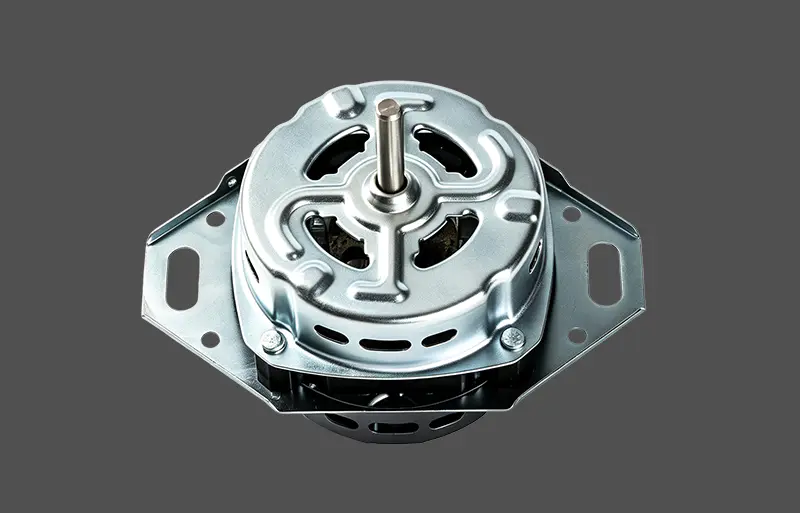
TY002 Powerful & Durable Copper-Wound Washing Machine Motor
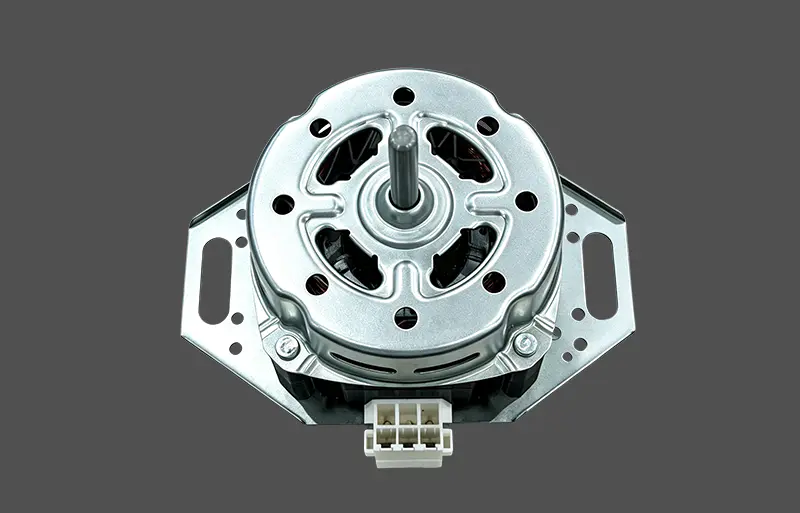
Environmental Cover Washing Machine Motor
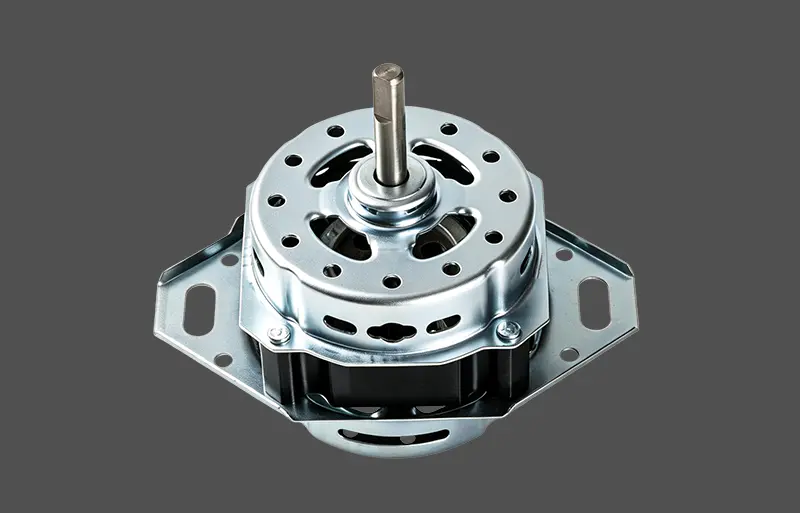
TY004 High-Efficiency Mini Copper Wire Washing Machine Motor
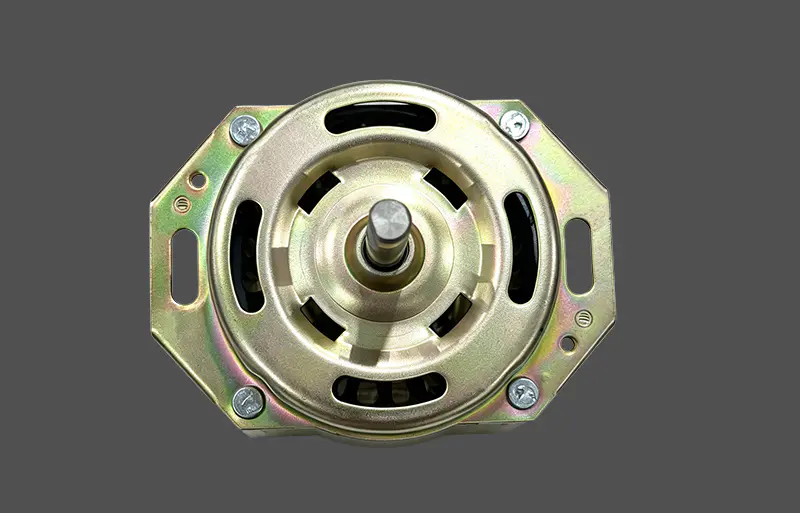
TY005 100% Copper Wire High-Speed Induction Motor
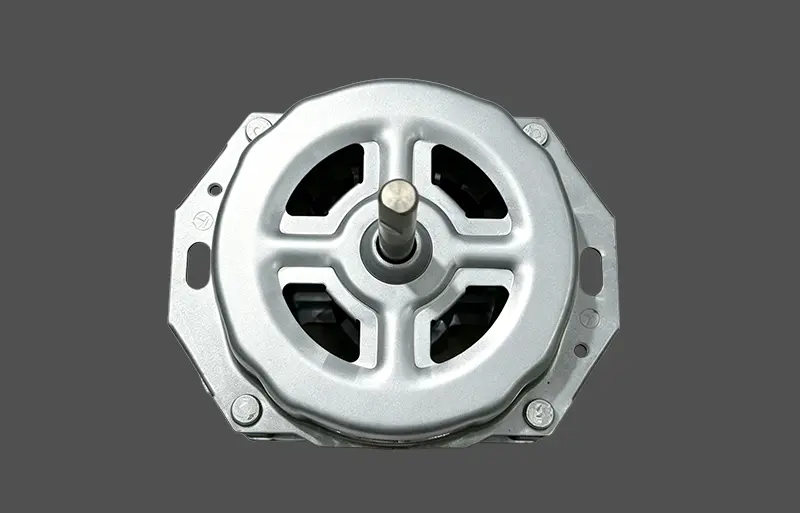
Home Appliance Parts Washing Motor
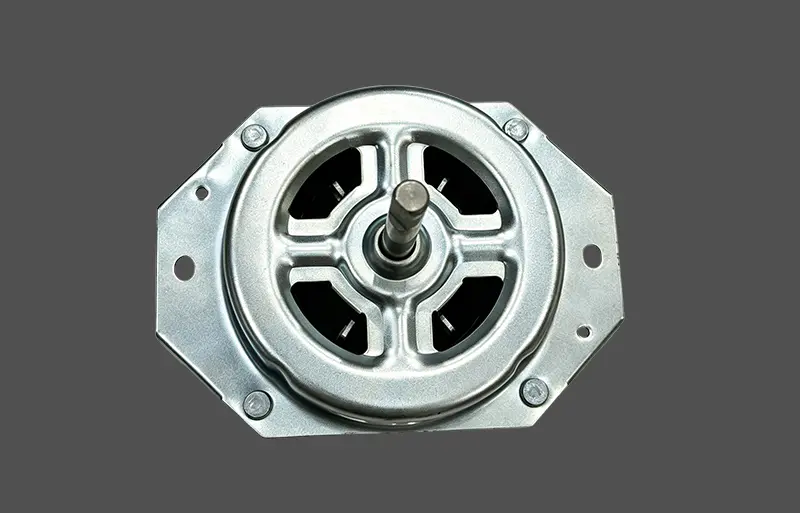
White Color CCA Motor
TY-008
Please leave your Email or phone nomber, so we can contact you as soon as possible.
Share


