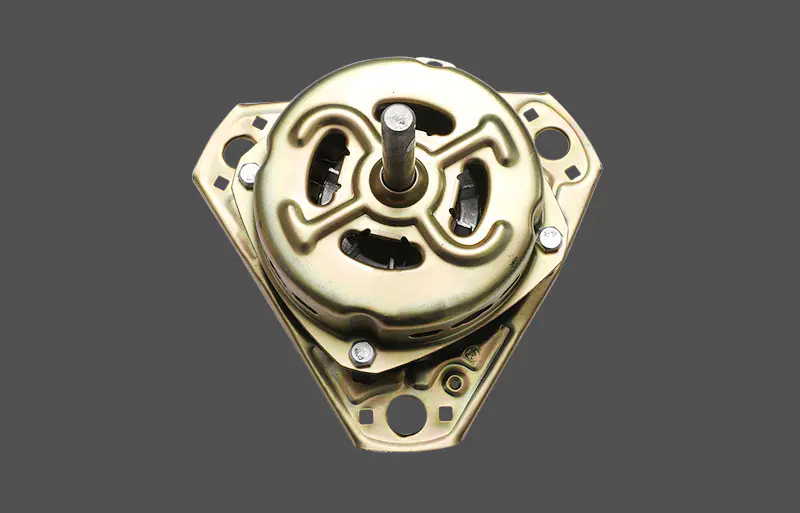
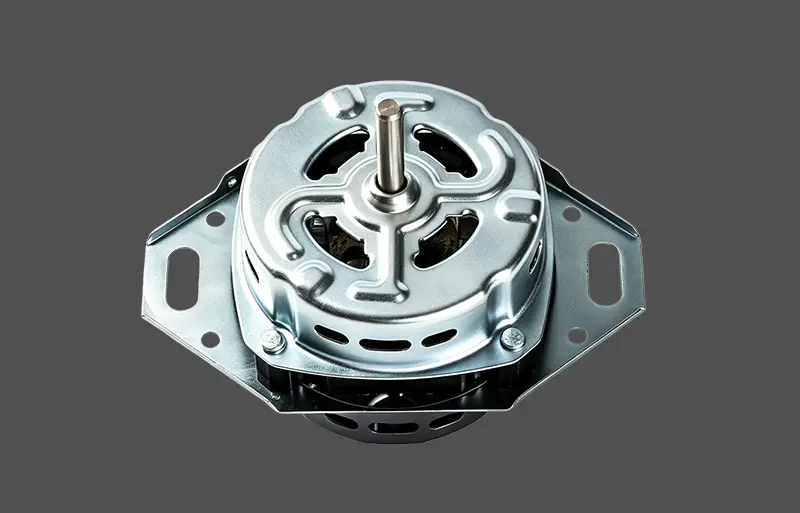
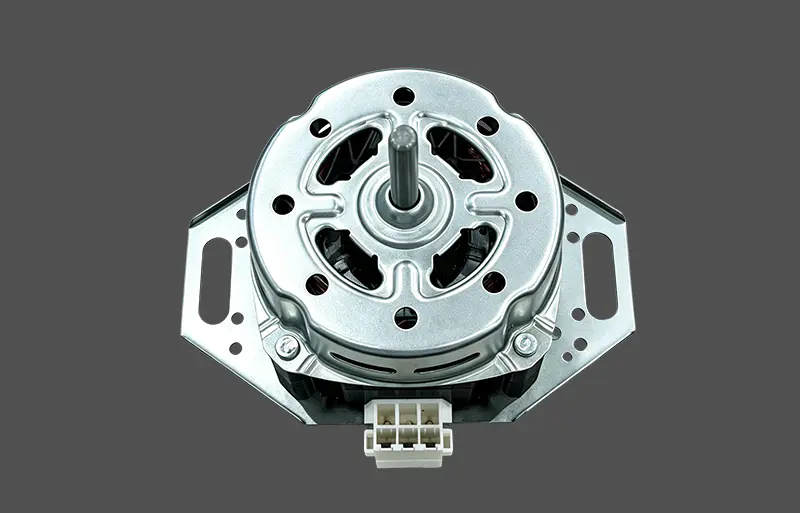
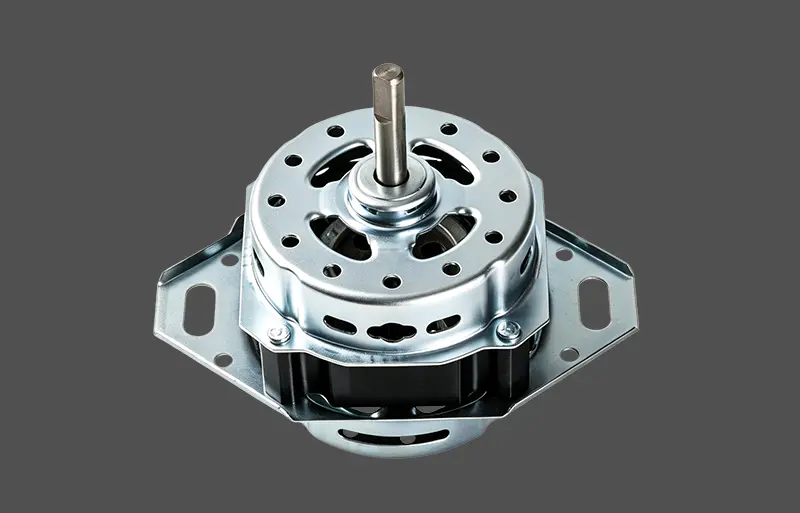
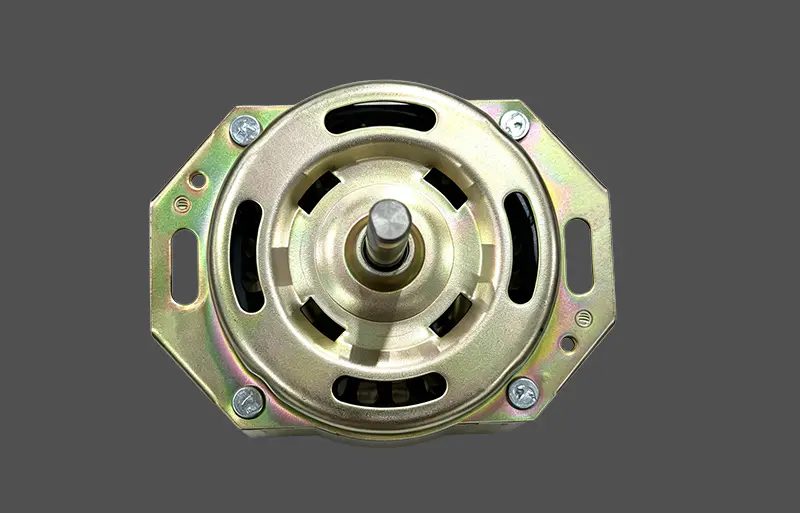
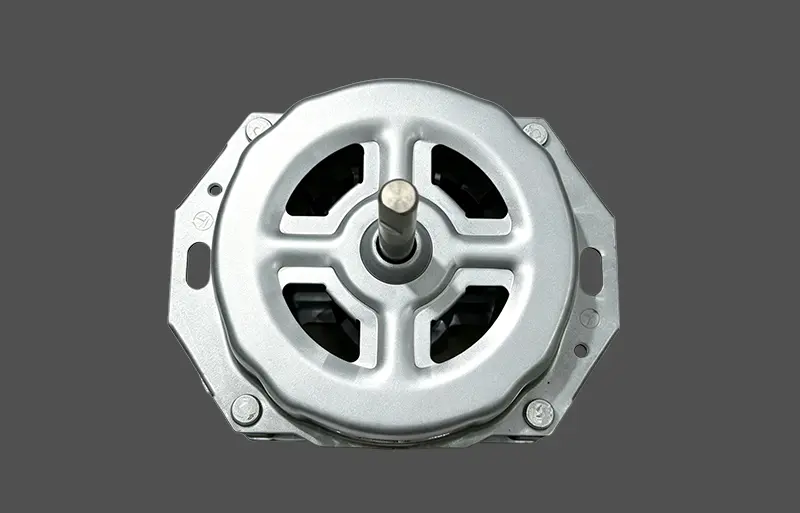
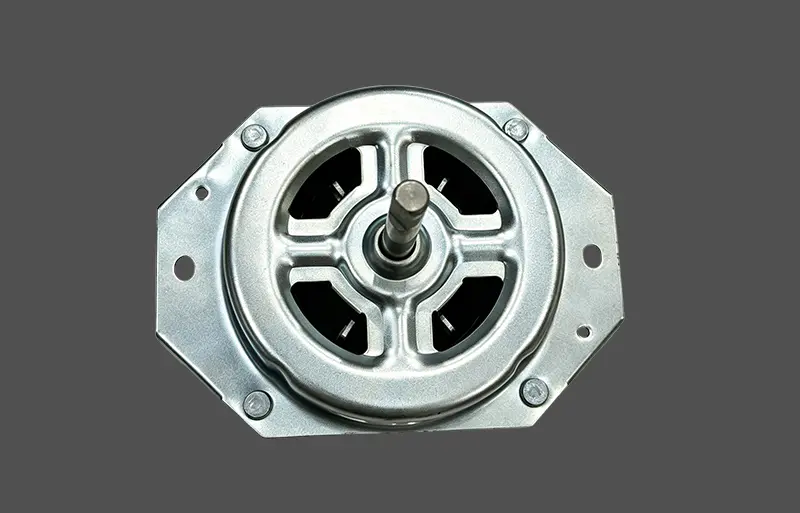
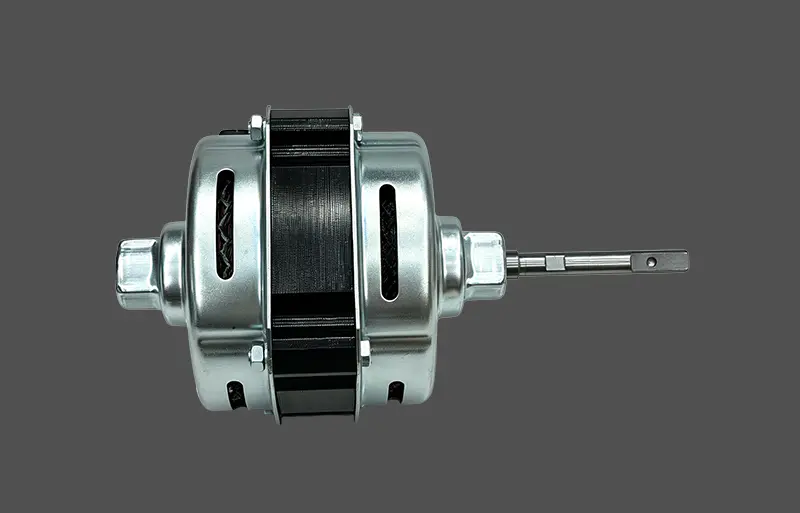
What is a Washing Machine Wash Motor?
When we discuss washing machine performance, we often focus on capacity or cleaning ratios, but the core component that truly determines these metrics is the Washing Machine Wash Motor. Simply put, the motor is the power source of the entire machine. It converts electrical energy into mechanical energy, driving the inner drum to tumble, agitate, or spin at high speeds, using water flow and friction to remove dirt from clothing.
In modern appliance design, a Washing Machine Wash Motor is more than just a rotating motor; it acts as a precision actuator. It must switch between forward and reverse rotation within a very short time based on the wash program's requirements and withstand the pressure of high-speed rotation reaching over a thousand revolutions per minute (RPM) during the spin cycle.
Comparison of Mainstream Motor Types and Technical Parameters
As technology has evolved, there are three main types of motors available. Understanding their differences is crucial for determining "how do I know if the motor is bad" and "is it worth replacing."
| Parameter |
Induction Motor (Fixed Frequency) |
Inverter Motor (Variable Frequency) |
Direct Drive (DD) Motor |
| Drive Method |
Belt Drive |
Belt Drive |
Direct Shaft Drive |
| Speed Control |
Fixed speed via On/Off |
Flexible multi-stage switching |
Precise stepless adjustment |
| Energy Consumption |
High (frequent starts/stops) |
Lower |
Extremely Low |
| Noise Level |
65-75 dB (Loud) |
50-60 dB (Quiet) |
45-55 dB (Ultra-quiet) |
| Typical Lifespan |
5-8 years |
10-15 years |
15+ years |
| Repair Cost |
Low, simple structure |
Medium, requires PCB matching |
High, usually modular replacement |
Basic Components of a Washing Motor
A typical Washing Machine Wash Motor consists of several core components. If any of these fail, the washing task will be interrupted:
Stator and Rotor: The fundamental structure that generates rotational torque through electromagnetic induction.
Carbon Brushes: Primarily found in older universal motors. These are wear parts responsible for conducting current to the rotor. If the machine makes a crackling sound or fails to turn, the brushes are often worn out.
Capacitor: Provides the initial "push" for induction motors to start. If the motor hums but doesn't spin, a capacitor failure is highly likely.
Hall Sensor: Essential for modern inverter and direct drive motors. It monitors the exact position and speed of the motor; if it fails, the machine will report errors or run erratically.
How do I know if my washing machine motor is bad?
Before deciding to dismantle the machine, an accurate diagnosis can save unnecessary expenses. Determining How do I know if my washing machine motor is bad? is a systematic process you can follow from easiest to most difficult.
Listening: Abnormal Sound Signals
Heavy Humming: If you hear a "mmm" sound as the motor tries to start but the drum remains motionless, this usually indicates a shorted motor winding, a failed start capacitor, or a seized motor bearing.
Sharp Grinding or Metallic Clanking: This often points to worn bearings or detached magnets inside the motor. If accompanied by sparks, the carbon brushes may have reached their limit.
Vision and Smell: Visual Signs of Damage
Burning Smell: This is the most dangerous signal. When motor coils overheat due to overload or a short circuit, the insulation melts, emitting a pungent smell of burnt plastic or rubber.
Irregular Sparking: While the motor is running (for universal motors), observe through the bottom of the machine. Intense, continuous blue or orange sparks indicate damage to the commutator or carbon brushes.
Operational Performance: Abnormal Drum Behavior
Turns Empty, Stalls Loaded: If the machine spins when empty but fails with clothes inside, the output power of the Washing Machine Wash Motor has dropped significantly, or the starting torque is insufficient.
Failure to Reach Spin Speed: If the motor washes at low speed but cannot enter high-speed spin mode, it is often related to the speed feedback system or the inverter module.
Digital Diagnosis: Error Codes
Modern smart washers have self-diagnostic functions. When wondering How do I know if my washing machine motor is bad?, observing the fault codes on the panel is the fastest way:
LE/CE Errors: Usually related to motor locking or overloading.
3E/E3 Errors: Common motor drive signal abnormalities.
F02/F08: Indicates an open motor circuit or carbon brush issues.
Professional Testing: Multimeter Check
If you have DIY skills, use a multimeter to measure the resistance of the motor terminals:
Winding Resistance: Disconnect the power and measure the resistance between windings. If the resistance is infinite (open circuit) or near zero (short circuit), the motor is dead.
Is it worth replacing a washing machine motor?
Once you've confirmed the motor is faulty, the core question is: Is it worth replacing a washing machine motor? This is a financial decision based on repair costs, machine residual value, and expected lifespan.
Core Standard: The 50% Golden Rule
A general rule in appliance repair is the "50% Rule": if the total cost of replacing the Washing Machine Wash Motor (parts plus labor) exceeds 50% of the price of a comparable new machine, it is usually recommended to replace the unit.
Decision Matrix by Machine Age
The average design life of a washing machine is 8 to 12 years. Consider these suggestions based on age:
| Machine Age |
Recommended Action |
Reason |
| 0 - 3 Years |
Repair/Replace |
The machine is in its prime; other parts are in good condition. Replacing the motor is highly cost-effective. |
| 4 - 7 Years |
Evaluate Carefully |
Check if bearings are leaking or noisy. If the overall condition is good, a new motor can add 5 more years. |
| 8+ Years |
Do Not Replace |
Components like seals, pumps, and dampers are near failure. Fixing the motor may lead to a cycle of endless repairs. |
Hidden Repair Cost Comparison
When weighing Is it worth replacing a washing machine motor?, look at the true costs of different fault types:
Carbon Brush Replacement: Very low cost (about 10% of total motor price). Repair is definitely worth it.
Start Capacitor Replacement: Very low cost. Often the motor is fine, and only the capacitor has failed.
Full Motor Replacement: Moderate cost. Necessary if the coils are burnt.
Control Board/Inverter Module: High cost. Sometimes the motor is fine, but the "brain" controlling it is broken, which can be more expensive than the motor itself.
Can you replace the motor in a washer machine?
The answer is yes: Can you replace the motor in a washer machine? As long as you have basic hands-on skills and a standard set of tools, motor replacement is one of the most "modular" tasks in appliance repair.
Difficulty Levels by Structure
Top Load Washers: The motor is usually at the bottom. Simply lay the machine down and remove the bottom cover. Difficulty: Low.
Front Load Washers: The motor is at the bottom rear of the outer tub. You need to remove the back panel. For Direct Drive motors, you must remove the large rotor disk. Difficulty: Medium.
Tool Checklist
Ensure you have the following: Socket Wrench Set, Screwdrivers (Phillips and Flathead), Needle-nose Pliers, and a Belt Pry Tool.
Standard Replacement Process
Absolute Power Off: Unplug the power and turn off the water. This is mandatory.
Remove Housing: Remove the back cover or bottom plate.
Release Drive System: For belt drives, rotate the pulley by hand and use a tool to slide the belt off.
Disconnect Wiring: Unplug the wiring harness from the Washing Machine Wash Motor. Note any locking clips.
Unload Mounting Bolts: The motor is usually held by two long bolts. Loosen them while supporting the motor to prevent it from falling.
Install New Motor: Slide the new motor into the bracket, align the pins, and tighten the bolts.
Key Point: Belt Tension Adjustment
If replacing a belt-driven motor, tension is vital. Too tight wears out bearings; too loose causes slipping. The ideal tension allows the belt to be pressed down about 1-2 cm in the middle.
Maintenance Tips for the Washing Motor
After investing in a new Washing Motor, correct maintenance ensures it doesn't fail again.
Avoid Constant Overloading
This is the number one killer of the Washing Machine Wash Motor. Every machine has a rated capacity (e.g., 7kg or 10kg). This refers not just to space, but to the torque the motor can handle. Overloading causes heat buildup that ages the wire insulation.
Monitor Humidity and Ventilation
Motors are made of copper coils and hate moisture. Do not keep the washer in a damp, unventilated bathroom. Moisture causes shorts or rust on internal metal parts.
Regular Drive System Cleaning
For belt-driven Washing Motors, clean off black rubber dust from aging belts to prevent it from being sucked into the motor and blocking the cooling fan.
FAQ and General Knowledge
Why doesn't the drum turn if the motor isn't broken?
This is often caused by a snapped belt or a failed start capacitor. If the drum turns smoothly by hand while powered off but only hums when powered on, replacing a cheap capacitor usually fixes it.
How often should Carbon Brushes be replaced?
Typically every 5-7 years depending on usage. If you see excessive sparking or inconsistent speeds, check the brushes first.
What is the difference between DC Inverter and AC Fixed Frequency motors?
| Feature |
AC Induction Motor |
DC Inverter (BLDC/DD) |
| Brush Wear |
Some have brushes to replace |
Brushless, zero maintenance |
| Heat Control |
Runs hotter |
High efficiency, low heat |
| Speed Accuracy |
Low, usually two speeds |
Extremely high precision |
| Startup Torque |
High instant current |
Soft start, smooth current |
How does the Thermal Protector work?
Most Washing Machine Wash Motor units have a bimetal thermal protector. If the motor exceeds a safety temperature (usually 135 to 150 Celsius) due to overload, the circuit breaks. Let it cool for 30 minutes, and it will usually reset itself.
How can I tell if a replacement motor is genuine or refurbished?
Check Terminals: Genuine motors should have no scratches or insertion marks on the connectors.
Smell: New motors smell faintly of varnish; refurbished ones often smell of burnt coils or heavy cleaning agents.
Rotate the Shaft: Spin it by hand; it should feel smooth with no gritty friction.