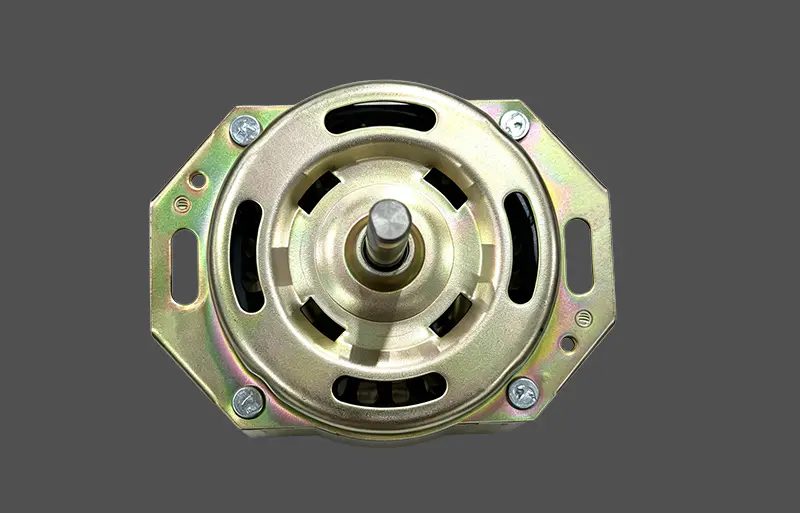
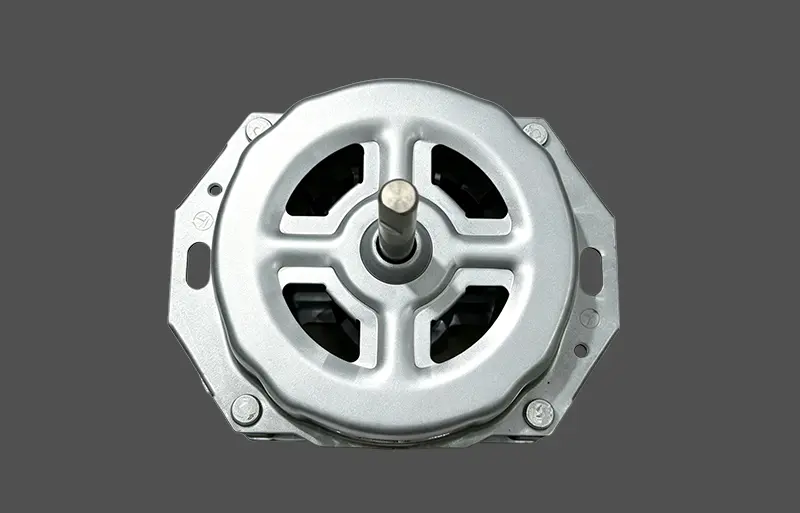
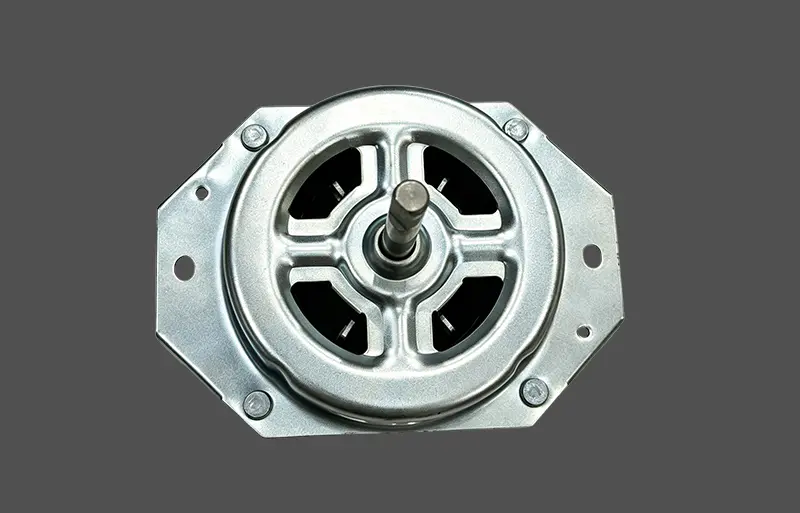
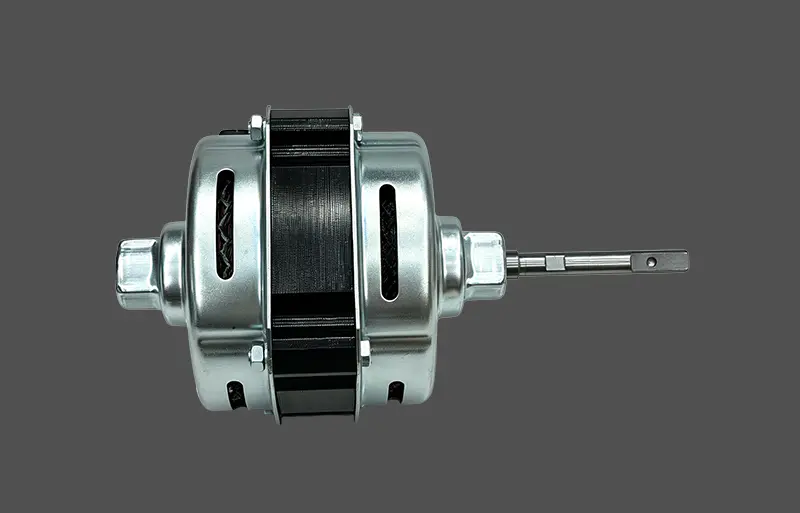
Deep Diagnosis: Is the Washing Machine Wash Motor Truly the Culprit?
Before committing to the cost of a replacement, you must systematically verify if the failure originates within the motor. A non-rotating drum does not always equate to a dead motor.
Core Inspection Workflow
- Physical Obstruction Check: With the power disconnected, manually rotate the inner drum. If it is seized, the issue likely lies with the drum bearings or a foreign object rather than the Washing Machine Wash Motor.
- Capacitor Testing: In many fixed-frequency models, a failure to start is caused by a weakened start capacitor.
- Electrical Parameter Measurement: Use a multimeter to measure the resistance between the motor pins.
Key Technical Diagnostic Parameters
| Measurement Item |
Normal Reference Value |
Abnormal Symptom |
Potential Root Cause |
| Main Winding Resistance |
5 to 50 Ohms (varies by power) |
Resistance is Infinite |
Open circuit/broken wire |
| Secondary Winding Resistance |
Slightly higher than Main |
Resistance is 0 |
Short circuit |
| Insulation Resistance |
Over 20 Megohms |
Low Resistance (under 2M) |
Current leakage or moisture |
| Carbon Brush Length |
Over 10mm |
Under 5mm |
Worn brushes (Universal motors only) |
Technical Comparison: Understanding Different Washing Machine Wash Motor Types
The decision to repair depends heavily on the specific technology used in your appliance.
Technical Specification Comparison Table
| Technical Index |
Universal Motor |
BLDC Motor (Inverter) |
Direct Drive (DD) Motor |
| Drive Method |
Belt Drive |
Belt Drive |
Direct Shaft Drive |
| Efficiency (Approx.) |
60% to 70% |
80% to 85% |
90% or higher |
| Noise Level |
High (Brush friction) |
Low |
Extremely Low |
| Expected Lifespan |
2,000 to 5,000 Hours |
10,000 to 15,000 Hours |
15,000+ Hours |
| Core Maintenance |
Brushes and Belt |
Belt and Drive Module |
Hall Sensor/Control Circuit |
| Repair Value |
High (Low part cost) |
Moderate (High part cost) |
Moderate (Complex labor) |
Cost-Benefit Analysis of Replacing the Washing Machine Wash Motor
Evaluate the feasibility of a repair using the following technical and economic benchmarks.
The 50% Rule and Depreciation
- The 50% Rule: If the total cost of the new Washing Machine Wash Motor plus labor exceeds 50% of the price of a comparable new machine, replacement of the entire appliance is usually recommended.
- Age Factor: Under 5 Years: Highly recommended to replace the motor, as other mechanical components like the pump and seals are likely still in good condition. 8+ Years: Components such as the spider arm, drum bearings, and plastic housing are nearing the end of their fatigue life. Replacing the motor may lead to a sunk cost trap where other parts fail shortly after.
Hidden Replacement Costs
When replacing the motor, ensure you account for these peripheral components:
- Drive Belt: A glazed or stretched belt will cause slippage and overheat the new motor shaft.
- Motor Coupler: On some top-load models, the plastic coupler between the motor and transmission often fails simultaneously.
- Wiring Harness: Inspect for oxidation or heat damage at the connector pins to prevent high-resistance hotspots.
DIY Installation Guide for the Washing Machine Wash Motor
If you have basic mechanical skills, replacing the motor yourself can significantly improve the value proposition of the repair.
Safety and Tool Preparation
Tools: Socket wrench set (10mm, 13mm), needle-nose pliers, screwdriver, and a multimeter. Safety Warning: Ensure the unit is unplugged. Capacitors can hold a charge; wait at least 10 minutes after unplugging before touching electrical terminals.
Step-by-Step Installation
- Access: Remove the rear service panel.
- Belt Removal: Walk the belt off the motor pulley by rotating the large drum pulley while pulling the belt outward.
- Electrical Disconnection: Document the wire colors and unplug the harness from the Washing Machine Wash Motor.
- Mechanical Removal: Support the motor weight and loosen the mounting bolts. Be careful as motors are significantly heavier than they appear.
- Calibration: When installing the new motor, ensure the belt tension allows for approximately 10mm to 15mm of deflection. Over-tightening will cause premature bearing failure.
FAQ
Q: Why does the new Washing Machine Wash Motor smell like it is burning?
A: A slight smell during the first few cycles is often the protective varnish on the copper windings heating up. However, if smoke appears, the belt may be too tight, or the drum is overloaded, causing excessive current draw.
Q: Can I replace a copper-wound motor with a cheaper aluminum-wound version?
A: While they are physically compatible, aluminum has higher resistance and lower heat tolerance. If you do a lot of heavy laundry or high-temperature washes, an aluminum Washing Machine Wash Motor will have a significantly shorter lifespan than the copper original.
Q: Does a Motor Error code on the display always mean the motor is dead?
A: Not necessarily. In inverter models, the error code often points to a failure in the IPM (Intelligent Power Module) on the control board. Always test the motor windings for continuity before purchasing a replacement.
Q: How do I know if I only need to replace the carbon brushes?
A: If the Washing Machine Wash Motor produces heavy sparking or runs intermittently but the drum still spins freely by hand, the brushes are likely the only issue. This is a small fix compared to a full motor replacement.