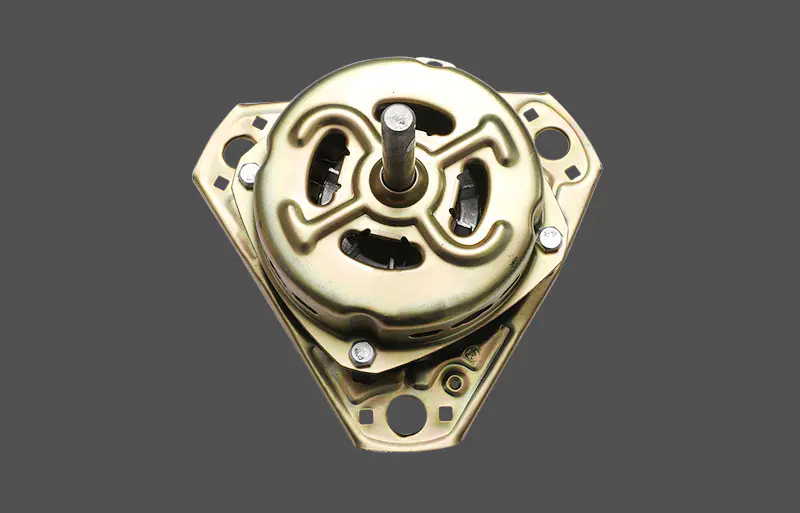
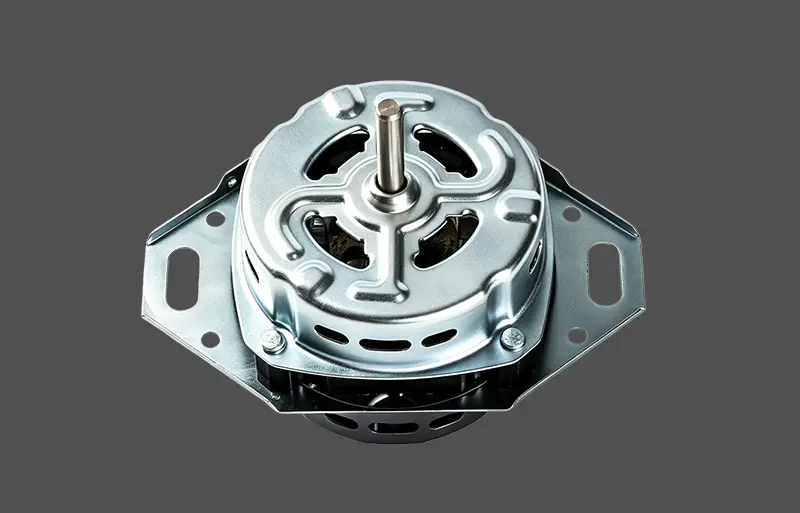
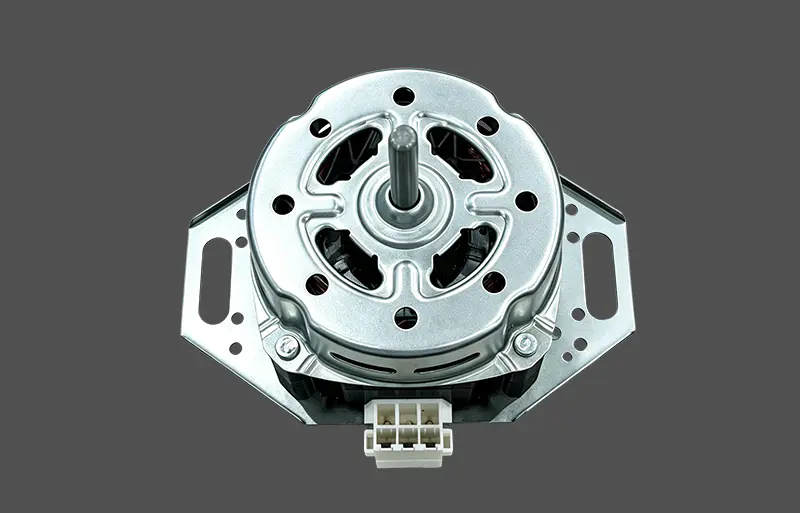
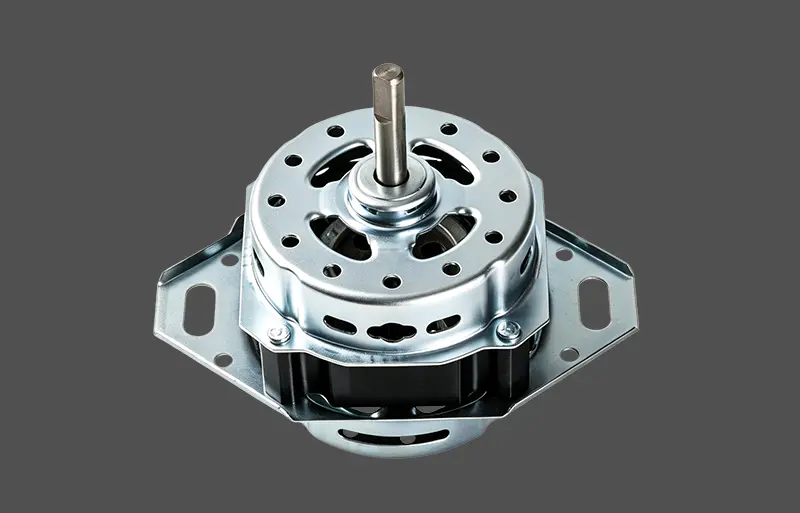
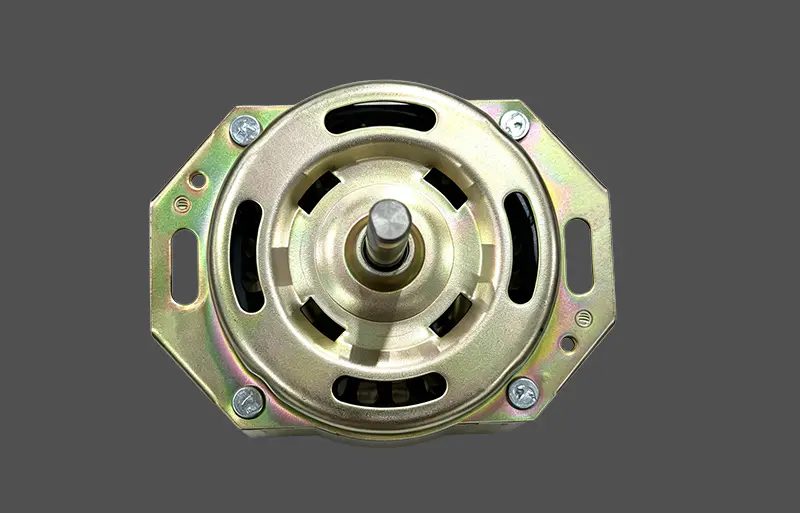
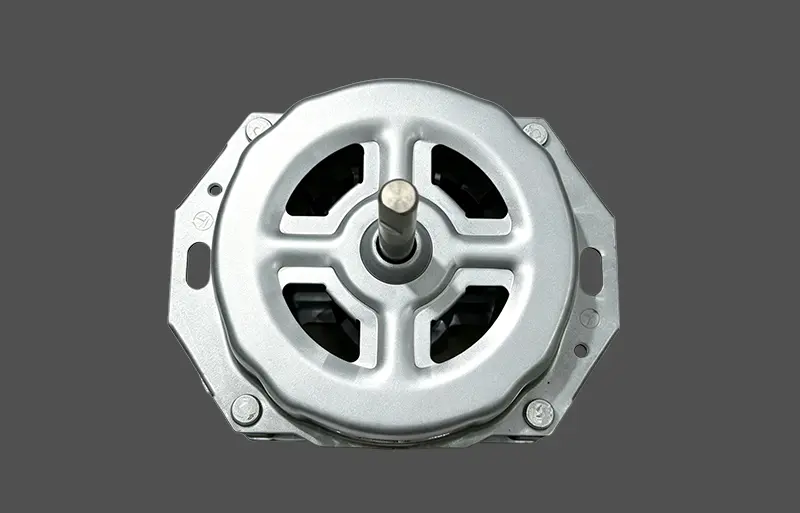
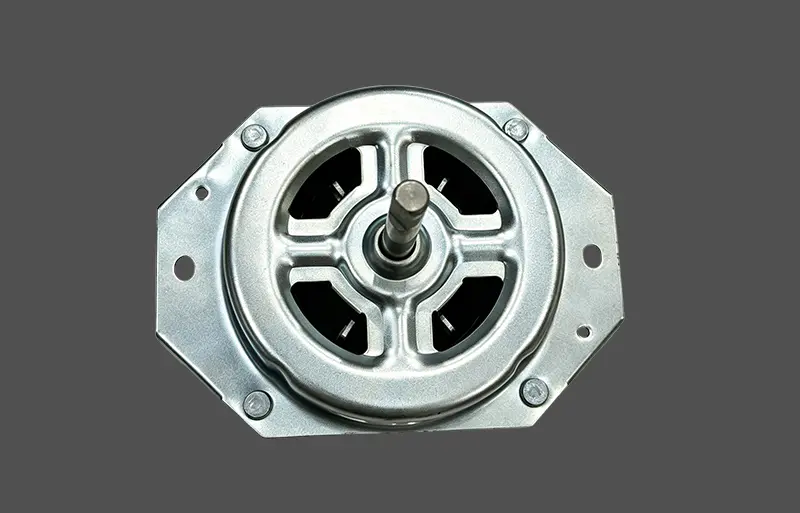
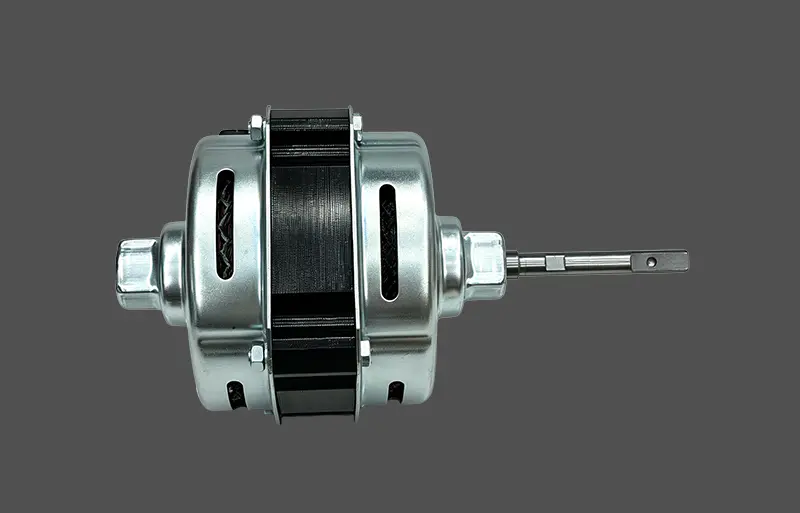
Automatic Universal Washing Machine Motors are widely used in conventional and cost-sensitive washing machine models due to their high starting torque, simple structure, and strong adaptability to varying loads. This type of motor is typically a series-wound universal motor, operating under conditions characterized by frequent start–stop cycles, rapid speed changes, high humidity, and continuous mechanical vibration. These operating characteristics make certain failure modes particularly common and predictable. The following sections provide a professional and detailed analysis of typical failure modes observed in Automatic Universal Washing Machine Motors, focusing on structural, electrical, thermal, and mechanical aspects.
Carbon Brush Wear and Contact Degradation
Carbon brushes are among the most critical consumable components in universal washing machine motors. During washing and spinning operations, the motor undergoes repeated commutation processes, causing continuous friction between the carbon brushes and the commutator surface. Over time, brush length is reduced, spring pressure weakens, and electrical contact stability deteriorates.
Common symptoms include difficulty during motor startup, unstable rotational speed, intermittent operation, and sudden stoppage under load. Excessive carbon dust accumulation can contaminate the commutator surface, increasing contact resistance and intensifying arcing. This condition accelerates further wear and may lead to secondary damage to other electrical components. High-speed spin cycles amplify these effects due to increased current density and mechanical stress.
Commutator Burning and Surface Damage
The commutator is a core current-switching component that directly affects motor efficiency and operational stability. Prolonged high-current operation, unsuitable carbon brush material selection, uneven brush pressure, or unstable phase-angle control can cause abnormal heating and arcing on the commutator surface.
Typical damage includes copper segment burning, surface pitting, grooving, and localized carbonization. These defects increase electrical losses and generate excessive sparking, electromagnetic interference, and abnormal noise. As damage progresses, motor current rises, temperature increases, and overall performance deteriorates. In washing machines frequently used under heavy load conditions, commutator failure becomes a dominant reliability concern.
Motor Overheating and Thermal Protection Failure
Automatic Universal Washing Machine Motors generate significant heat during both low-speed, high-torque washing cycles and high-speed spin cycles. Insufficient ventilation design, blocked cooling air paths caused by lint accumulation, or degraded cooling fans can result in poor heat dissipation.
Overheating often triggers built-in thermal protectors, causing the washing machine to stop mid-cycle. In motors equipped with low-quality or aged thermal protection devices, delayed response or complete failure may occur. Persistent overheating accelerates insulation aging in windings and increases the risk of internal short circuits. Severe cases may lead to irreversible motor burnout and damage to control board power components.
Winding Insulation Aging and Short Circuit Faults
Motor windings operate in an environment combining high temperature, high humidity, electrical stress, and continuous vibration. Over long service periods, insulation varnish deteriorates, reducing dielectric strength and mechanical adhesion.
Early-stage insulation degradation manifests as reduced torque output, abnormal current rise, and unstable speed performance. Advanced deterioration may lead to turn-to-turn short circuits, partial discharge phenomena, and localized overheating. Once winding failure occurs, repair becomes economically impractical, and motor replacement is generally required. This failure mode significantly affects long-term motor reliability and safety.
Bearing Wear and Mechanical Seizure
Bearings provide mechanical support for the rotor and ensure smooth rotation. During spin cycles, the motor operates at high speed while subjected to substantial radial and axial loads transmitted from the washing drum. Aging lubricant, seal degradation, and moisture ingress accelerate bearing wear.
Bearing failure is commonly associated with increased mechanical noise, vibration, elevated starting current, and reduced rotational efficiency. In advanced stages, bearing seizure may occur, leading to rotor misalignment, stator contact, winding abrasion, and sudden motor lock-up. This type of failure presents a high risk of cascading damage within the washing machine system.
Speed Control Abnormalities and Control Compatibility Issues
Universal washing machine motors rely heavily on electronic phase-angle control for speed regulation. Mismatch between motor electrical characteristics and control board parameters can result in unstable speed control behavior.
Observable issues include abnormal acceleration during spin cycles, fluctuating speed under constant load, excessive vibration, and reduced washing performance. In extreme cases, overspeed conditions may compromise the structural integrity of the drum, suspension system, and transmission components. Accurate parameter matching between the motor and control electronics is essential for stable operation.
Electromagnetic Interference and System Disturbance
Due to inherent commutation sparking, universal motors generate higher electromagnetic interference compared to brushless alternatives. Inadequate suppression circuit design may allow conducted and radiated interference to propagate through the washing machine electrical system.
Typical manifestations include control board misoperation, program interruptions, display instability, and unintended resets. In household environments, interference may extend to the power supply network, affecting other connected devices. EMI issues are more prevalent in older designs or products with limited cost allocation for suppression components.