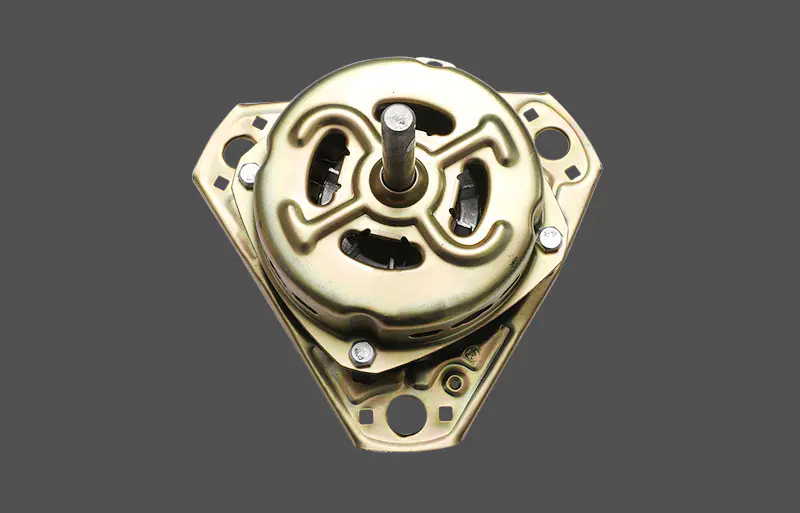
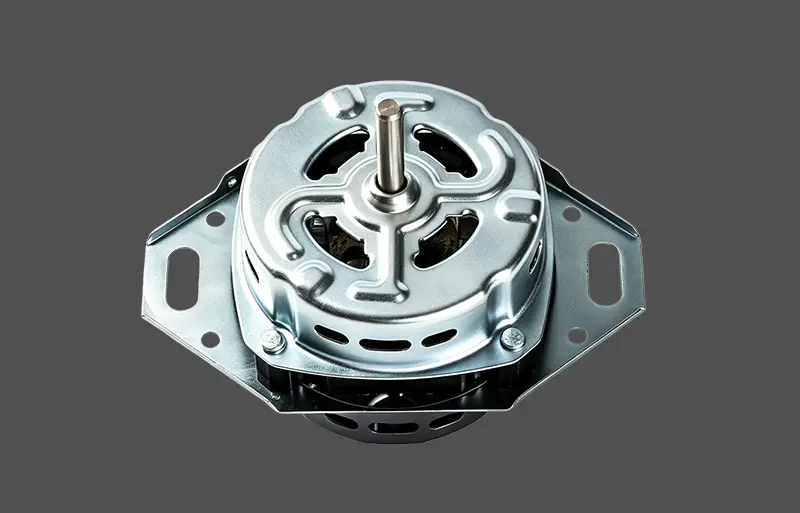
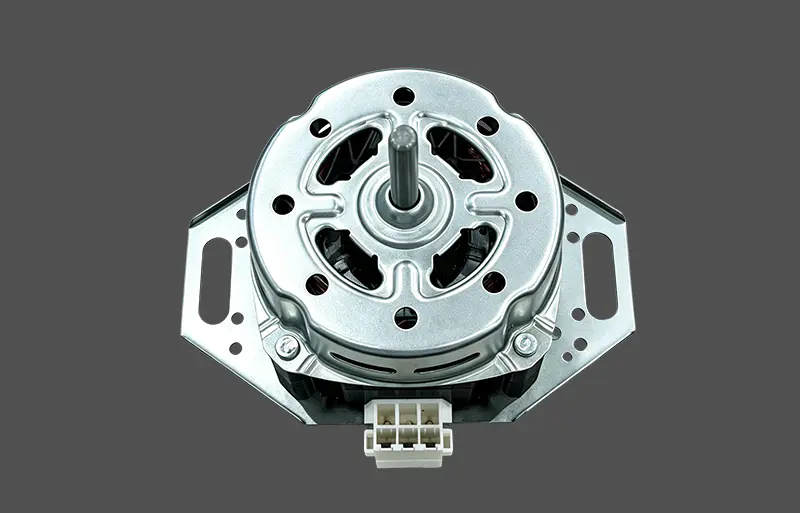
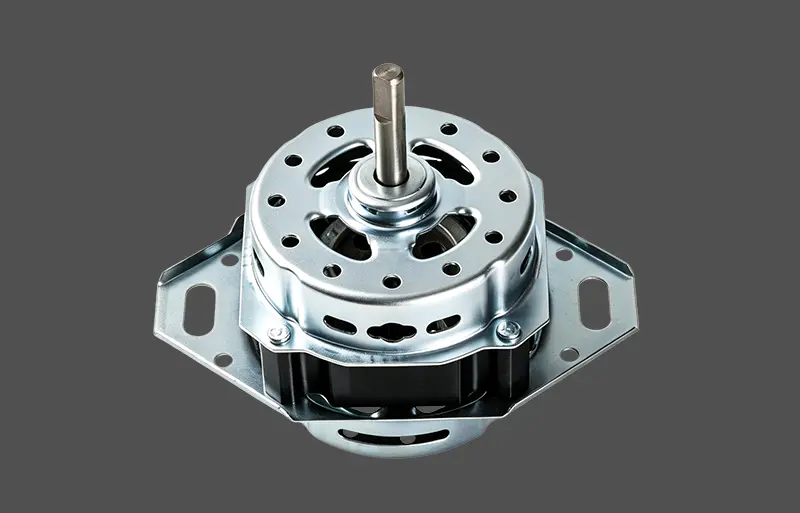
Single-phase motors are widely used in industrial and household applications. Prolonged operation or overload conditions can cause motor winding temperatures to rise, insulation aging, and even motor burnout. Proper selection and application of overload protection devices are crucial for extending motor life and ensuring safe operation. This article provides a professional overview of the common overload protection methods for single-phase motors and their characteristics.
Mechanical Thermal Overload Protector
Mechanical thermal overload protectors are the most traditional and widely used protection method. Their principle is based on a bimetallic strip that bends when heated by excessive current, mechanically triggering contacts to cut off the power supply.
- Simple structure, low cost, easy maintenance.
- Reaction time depends on overload duration, suitable for preventing long-term minor overloads.
- Insensitive to short-time high current spikes, cannot fully prevent instantaneous overload.
Mechanical thermal protectors are commonly used in household appliances, small fans, pumps, and light-load machinery.
Electromagnetic Overload Protector
Electromagnetic overload protectors use an electromagnet to actuate a switch. When motor current exceeds the rated value, the increased magnetic force moves the contacts to disconnect the power supply.
- Fast response, effectively prevents medium-duration overloads.
- Can be integrated with relays for remote alarms or control.
- Highly sensitive to current fluctuations, suitable for industrial production lines and medium-power motors.
Commonly used for pumps, fans, and compressors in industrial settings where rapid overload response is required.
Thermal Relay Protection
Thermal relays are frequently used with single-phase motors, usually paired with a contactor. They operate similarly to mechanical thermal protectors, using a bimetallic strip heated by current. The strip bends, pushing a rod that triggers the contactor to open.
- Adjustable trip current, providing high flexibility.
- Can protect single-phase or three-phase motors, widely applicable.
- Includes time-delay function to avoid false trips from short-term overloads.
Thermal relays are essential in industrial control panels and motor protection circuits.
Electronic Overload Protector
Electronic overload protectors detect motor current using Hall effect sensors, shunt resistors, or current transformers. When current exceeds a preset value, the electronic control circuit cuts off power or triggers an alarm.
- High protection accuracy, adjustable trip current and delay time.
- Provides multi-function protection including overcurrent, short circuit, and undervoltage.
- Supports remote monitoring and intelligent control, suitable for modern automated systems.
Electronic overload protection is ideal for medium- to high-power single-phase motors, especially in automation and smart control systems.
Self-Reset Overload Protection
Self-reset overload protection uses temperature-sensitive components such as PTC thermistors. When the motor overheats due to overload, the thermistor resistance rises, limiting current and reducing temperature. Once the motor cools down, the resistance returns to normal, and the motor can restart automatically.
- Automatically resets without manual intervention, ensuring higher continuous operation.
- Compact structure, suitable for small appliances and portable devices.
- Limited to low-power applications, not suitable for high-power industrial motors.
Widely applied in household air conditioners, refrigerators, small fans, and other light-load motors.
Selection Principles for Overload Protection
Choosing the appropriate overload protection method depends on motor power, operating environment, load characteristics, and control system. Low-power household motors are suitable for mechanical or self-reset protection. Medium-power industrial motors commonly use thermal relays or electromagnetic protection. High-precision or automated systems benefit from electronic protection devices. Overload protection should be integrated with short-circuit and undervoltage protection to form a complete motor protection system.