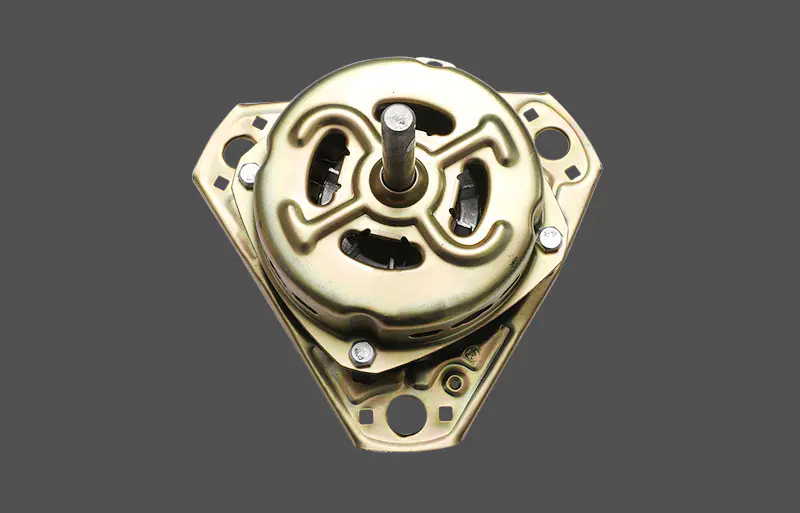
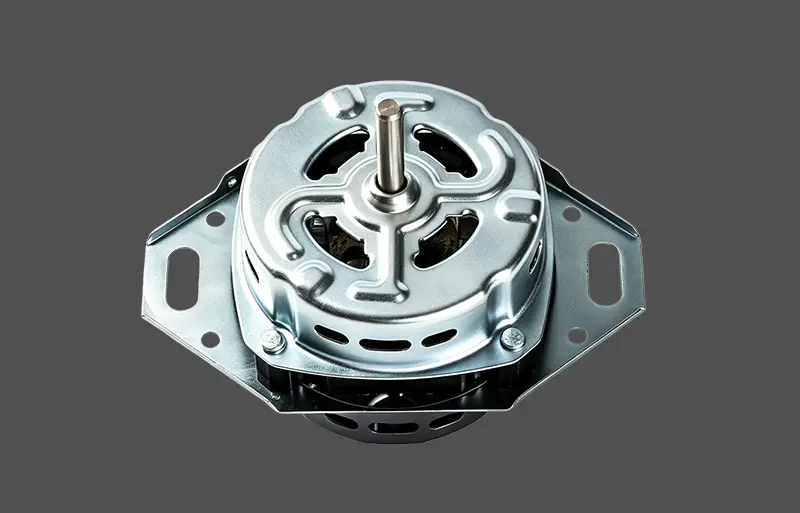
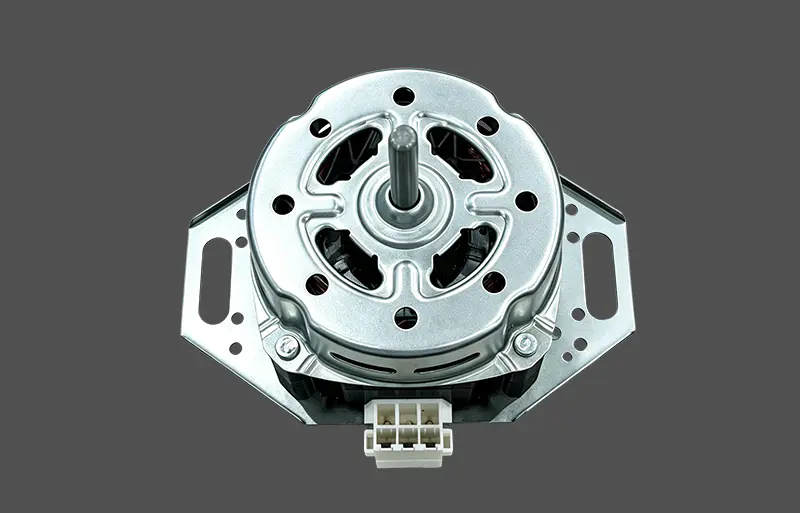
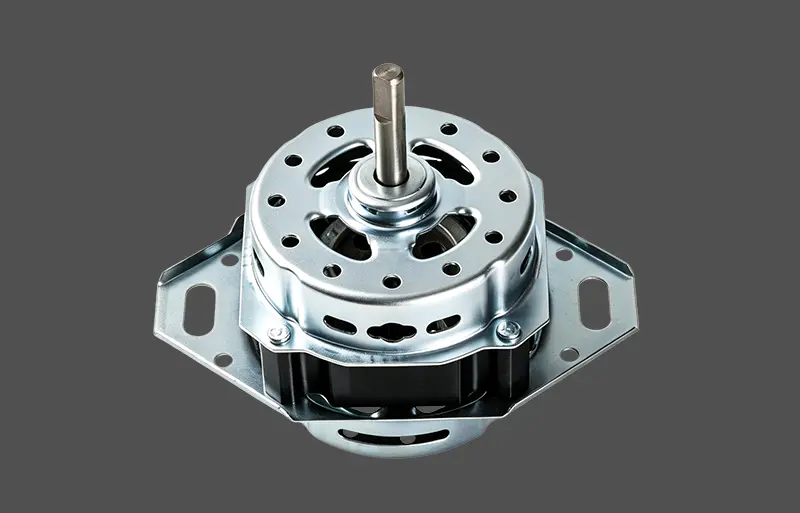
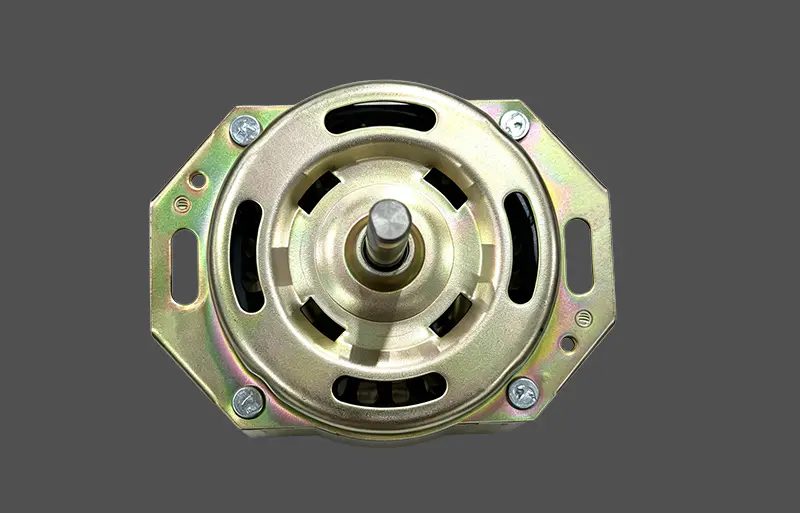
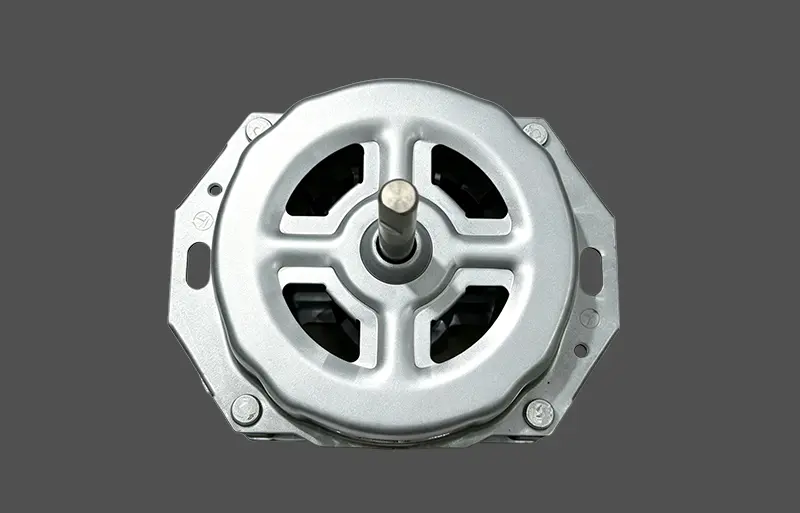
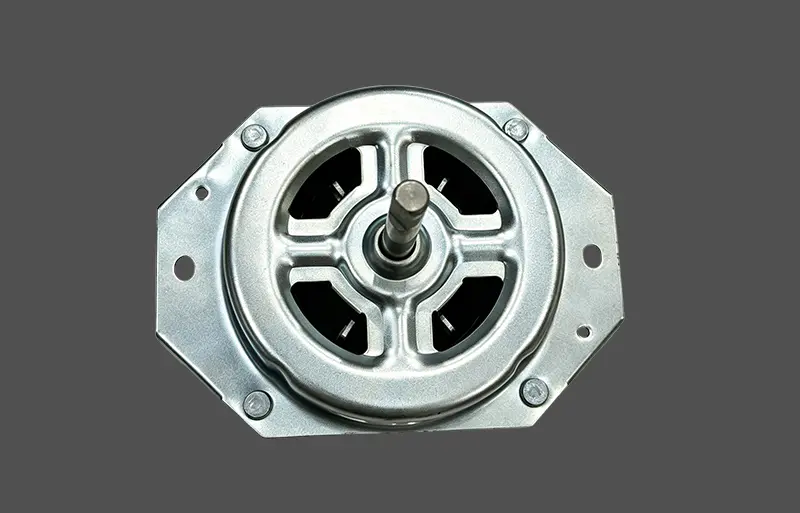
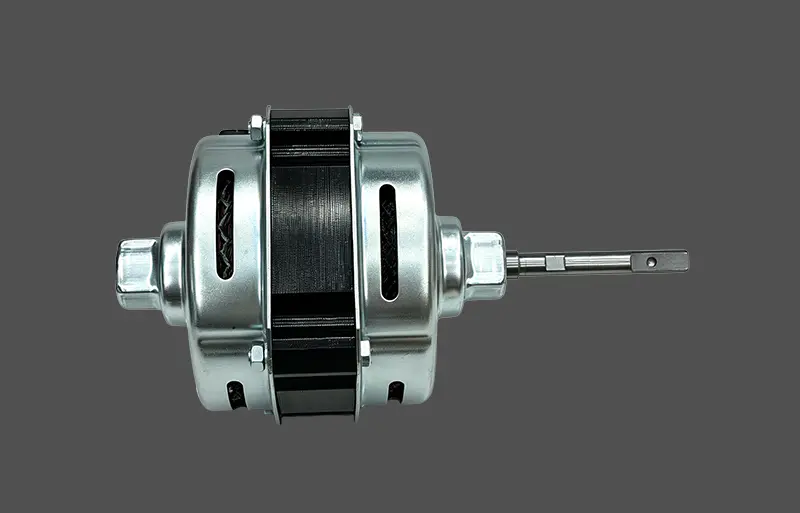
Automatic Universal Washing Machine Motors are widely used in household washing machines due to their high starting torque and adaptability to varying loads. Noise generated by these motors directly affects user experience, perceived product quality, and market competitiveness. The noise originates from multiple factors including electromagnetic forces, mechanical vibrations, brush commutation, and airflow dynamics. A professional understanding of these noise sources and suppression methods is critical for improving motor performance and enhancing washing machine comfort.
Electromagnetic Noise Sources
The armature current of a universal motor exhibits significant pulsation. Phase-controlled speed regulation can introduce waveform distortion, producing periodic electromagnetic forces. These forces act on the stator and rotor cores, causing micro-vibrations that generate electromagnetic noise.
During commutation, the sudden change in coil current causes rapid flux variations, resulting in magnetostrictive effects. Silicon steel laminations deform slightly under alternating magnetic fields, producing high-frequency whining sounds. Frequent load changes further amplify these noise fluctuations.
Commutation and Brush Noise
Carbon brushes sliding over the commutator are a defining characteristic of universal motors. High-speed operation increases arcing, generating distinct high-frequency noise.
Uneven brush pressure, improper brush material selection, and surface roughness of the commutator exacerbate brush vibration, causing intermittent “sizzling” or friction noises. This type of noise is particularly noticeable to users and affects perceived quality.
Bearing and Mechanical Friction Noise
Bearings are a major source of mechanical noise in universal washing machine motors. High-speed spin cycles subject the bearings to significant radial and axial loads.
Lubricant degradation, increased bearing clearance, worn races, or moisture ingress lead to uneven rolling, producing continuous low-frequency hums or intermittent metallic noises. Bearing noise is often accompanied by noticeable vibration, which propagates through the motor housing and washing machine structure.
Rotor Imbalance and Structural Vibration
Rotor balance significantly affects motor noise. Manufacturing tolerances or accumulated debris and bearing wear during operation can disturb rotor balance.
At high-speed spin, even minor imbalance translates into centrifugal forces that induce structural vibrations. These vibrations transmit through the frame, suspension system, and housing, generating prominent structural noise, often perceived as “whole-machine resonance” or strong shaking.
Airflow Noise
Universal motors rely on fans for forced cooling. Fan blade design, rotational speed, and air duct configuration directly affect airflow noise.
High-speed rotation produces periodic pressure waves as blades cut through air, generating mid-to-high frequency noise. Narrow ducts, sharp edges, or turbulent airflow can amplify these sounds, especially during high-speed spin cycles.
Control-Induced Noise
Phase-angle control for speed regulation introduces current discontinuities, which excite structural vibrations.
During low-speed washing cycles, intermittent conduction produces audible low-frequency hums or rhythmic buzzing. Poorly matched control parameters exacerbate this effect, creating noticeable variations in motor noise.
Electromagnetic Noise Suppression
Optimizing iron core design and using low magnetostrictive silicon steel reduce electromagnetic vibration sources. Proper winding slot design and pole distribution help smooth flux variations.
Optimized phase-angle control reduces current spikes, lowering electromagnetic excitation noise. Additional filtering and damping circuits can suppress high-frequency vibrations.
Brush and Commutation Noise Suppression
Selecting suitable carbon brush materials balances conductivity and lubricity, reducing friction noise. Controlling brush spring pressure ensures stable contact.
Improving commutator surface finish and machining precision minimizes brush chatter and localized arcing. Optimized brush holder designs reduce resonance and vibration.
Mechanical and Structural Noise Suppression
High-quality sealed bearings and high-temperature lubricants extend low-noise operation. Enhanced rotor dynamic balancing minimizes vibrations at high speeds.
Elastic mounts, vibration isolators, and structural reinforcements reduce the transmission of vibration to the washing machine housing, decreasing radiated noise.
Airflow Noise Control
Fan blade profiles can be optimized for low-noise operation. Smoother airflow paths reduce turbulence and vortex formation.
Balancing fan speed against cooling requirements minimizes airflow noise while maintaining sufficient motor cooling.