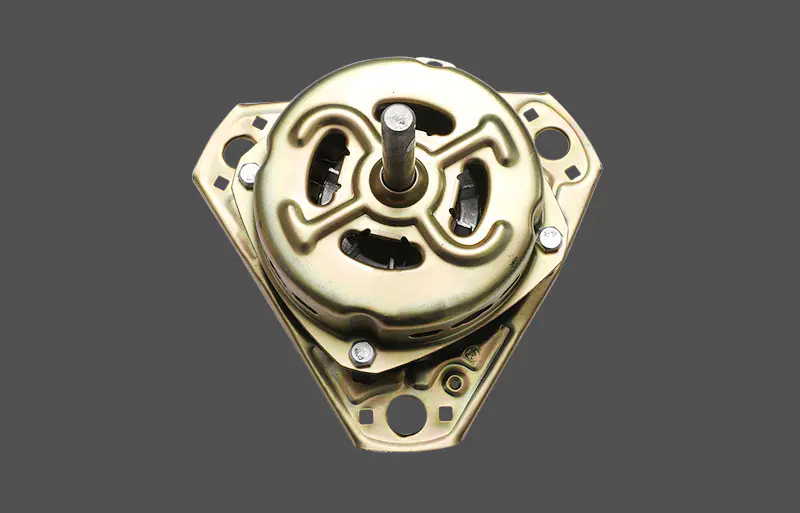
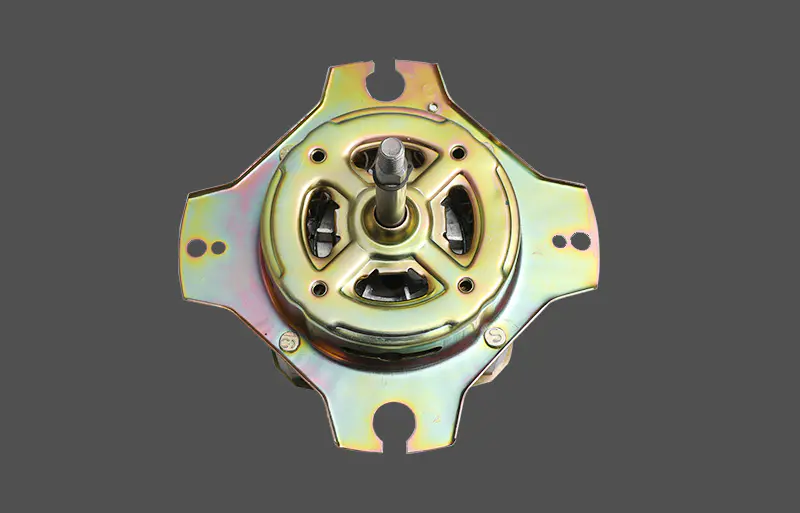
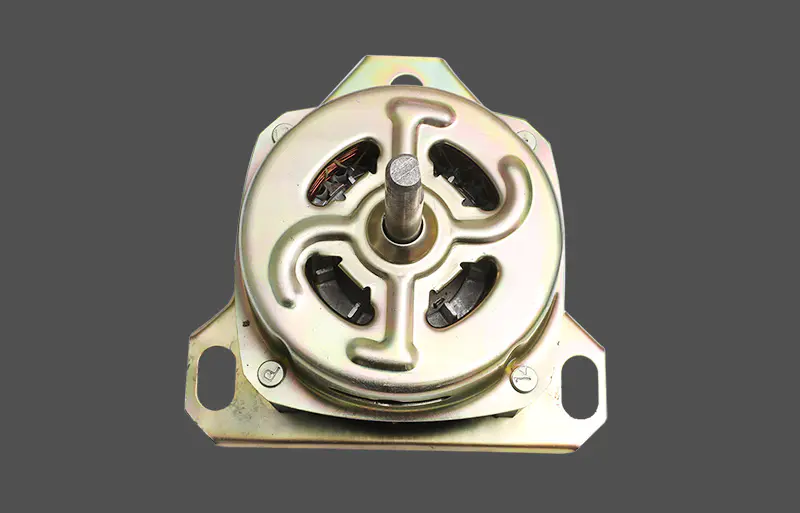
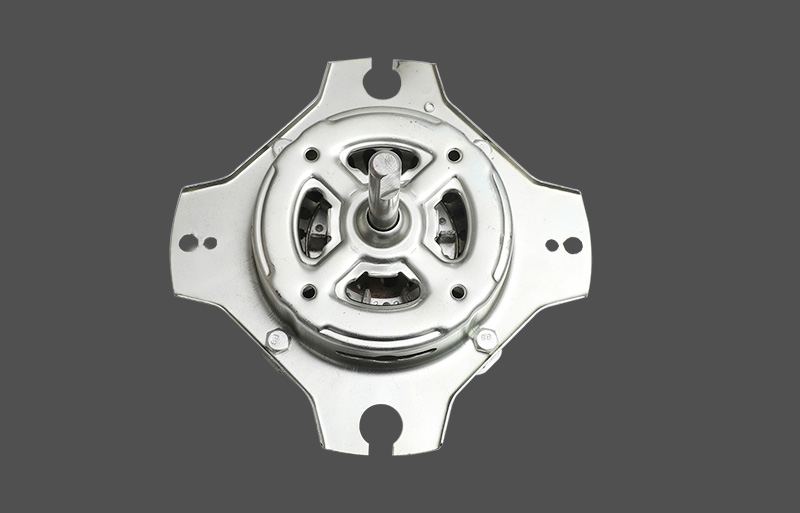
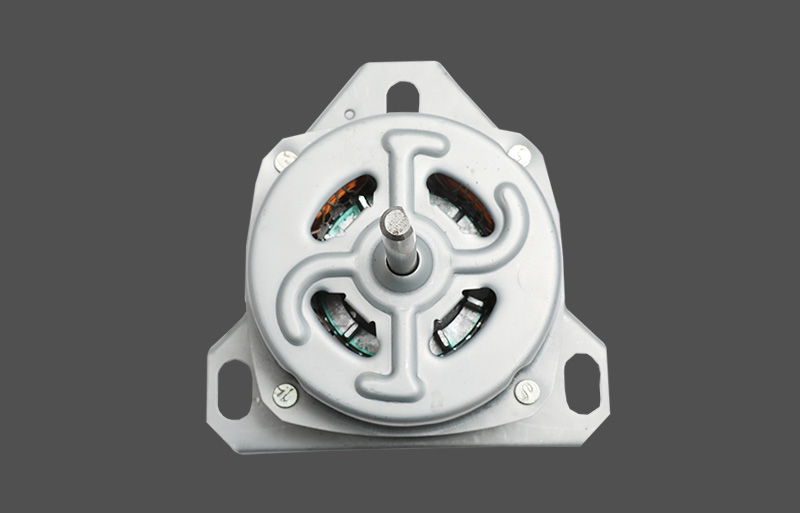
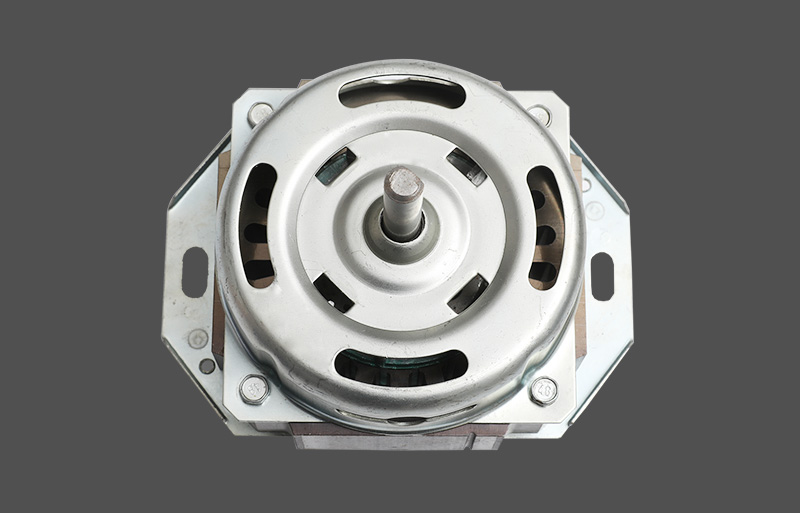
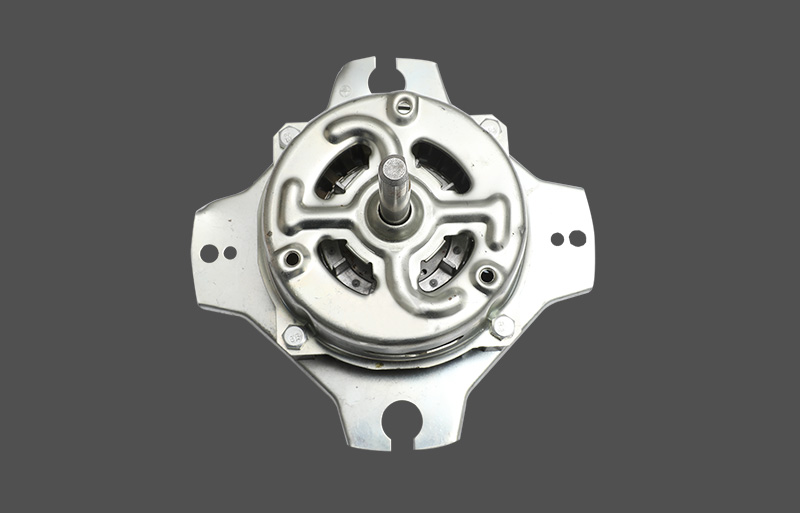
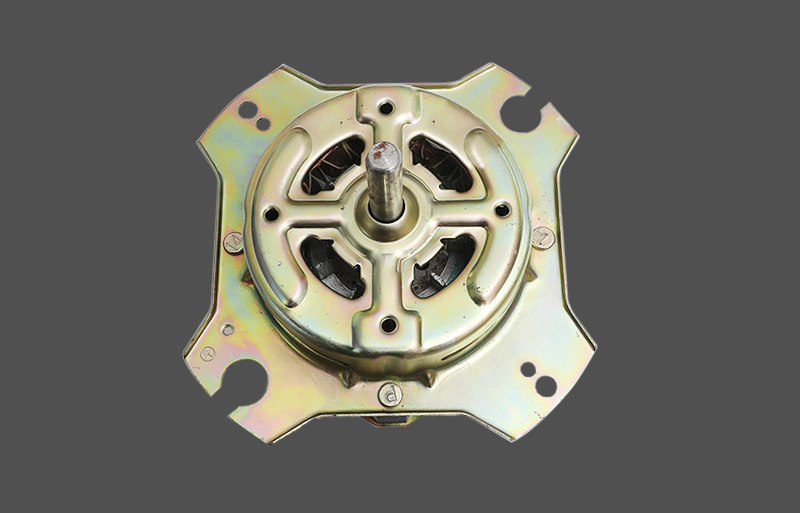
In the overall architecture of commercial and industrial washing equipment, the stability and precise control of the power system are the core factors determining the cleaning rate, dehydration rate, and overall machine lifespan. The power core of washing equipment mainly consists of Wash Motors responsible for low-speed rubbing and Spin Motor (or integrated motor systems with high variable frequency speed regulation performance) responsible for high-speed dehydration and drainage. A deep understanding of the technical parameters, working principles, and matching logic of these two core drive components can effectively help equipment maintenance personnel and buyers solve problems of low operating efficiency, excessive vibration, and high energy consumption.
Working Mechanism and Core Technical Parameters of Wash Motors
As the primary driving force in the washing cycle, the core task of Wash Motors is to provide a continuous and stable high torque output under environments with high load and multiple water flow resistance. During the washing phase, the motor needs to drive the drum to switch between forward and reverse rotation frequently to form a strong mechanical rubbing force.
This type of motor usually adopts a multi-pole design (such as 4 poles or 6 poles) to increase the rated torque at low speeds by increasing the number of pole pairs. Meanwhile, modern high-performance drive devices generally integrate variable frequency drive (VFD) technology, allowing the current to be adjusted in real time according to load changes, thereby avoiding high current shocks caused by frequent starting, stopping, and reversing of the motor.
Low-speed high torque output: Maintains a stable rated torque at washing speeds of dozens of revolutions per minute, ensuring that large-capacity clothing or fabrics can still be effectively tumbled when saturated with water.
Frequent commutation resistance performance: Insulation levels usually reach F-class or H-class, capable of withstanding the temperature rise challenges brought by frequent forward and reverse rotations.
High-speed Power Performance and Dynamic Balance of Spin Motor
Unlike the washing phase which focuses on torque output, the dehydration phase places extremely high demands on rotational speed and dynamic response. Spin Motor (or the high-frequency dehydration mode in an integrated power system) bears the task of reducing the moisture content in the fabric to the lowest level.
During the dehydration startup phase, the motor needs to overcome huge static friction and eccentric resistance caused by uneven distribution of fabrics, rapidly raising the speed to thousands of revolutions per minute. At this time, the mechanical centrifugal force (G-Force) becomes the decisive indicator of dehydration efficiency. To ensure safety and stability at high speeds, this type of motor must possess extremely high rotor dynamic balance precision and be equipped with sensitive overload and over-temperature protection devices.
High power density: Achieves extremely high output power within a compact structure, ensuring power continuity at high speeds.
Low vibration design: The rotor undergoes precise dynamic balance weighting and is matched with high-strength bearings to maximize the reduction of mechanical resonance during high-speed rotation.
Key Technical Parameter Comparison Between Wash Motors and Spin Motor
To more intuitively display the division of responsibilities between the two types of motors at different stages of the washing equipment, the core technical parameter characteristics are listed below. These parameters directly affect the cleaning efficiency and dehydration effect of the equipment:
| Technical Parameter Dimension |
Wash Motors Operating Mode Characteristics |
Spin Motor Operating Mode Characteristics |
| Rated Speed Range (RPM) |
Low-speed operation (usually 35 - 60 RPM drum speed) |
High-speed operation (usually 600 - 1400 RPM drum speed) |
| Torque Characteristics |
Constant torque output, emphasizing starting and braking torque at low speeds |
Constant power output, emphasizing the use of high-speed centrifugal force to overcome resistance |
| Operation Cycle and Steering |
Continuous periodic forward and reverse rotation, short single steering time |
Unidirectional high-speed rotation, long continuous duration |
| Temperature Rise and Cooling Demands |
Relies on shell heat dissipation and high insulation level to cope with frequent commutation temperature rise |
Relies on its own fan or forced air cooling during high-speed rotation |
| Startup Current Control |
Surge current during forward and reverse switching must be strictly limited |
Smooth frequency conversion curve is required to prevent overcurrent tripping caused by large eccentric loads |
Common Power Fault Analysis and System Maintenance Solutions
During long-term high-load operations, washing drive systems often face operating faults due to uneven loads, water vapor intrusion, or electrical fatigue. Providing accurate fault diagnosis and standardized maintenance processes can significantly extend the lifespan of the motor.
Abnormal vibration and noise during operation: If severe vibration occurs during the dehydration phase, it is usually related to Spin Motor bearing wear or rotor imbalance. In addition, if Wash Motors generate mechanical impact noises during low-speed switching, priority should be given to checking the fastening status of the motor mounting base and the tension of the transmission belt. Regular use of dynamic balance detection equipment to calibrate high-speed rotating components is an effective means to prevent such problems.
Abnormal motor heating and overload: When the equipment frequently handles overweight fabrics, Wash Motors remain under the rated torque status for a long time, leading to a sharp rise in winding temperature. If the inverter frequently reports overload faults, it is necessary to verify whether the actual load exceeds the rated output power of the motor and check whether the heat dissipation air duct is blocked by fiber impurities.
Decreased insulation resistance and electrical protection: The washing environment is accompanied by high humidity and chemical detergent odors all year round, which places extremely high demands on the enclosure protection rating (such as IP54 or IP55) of the motor. Maintenance personnel should regularly use a megohmmeter to measure the winding insulation resistance to earth, ensuring intact electrical insulation performance to prevent motor burnout caused by moisture short circuits.