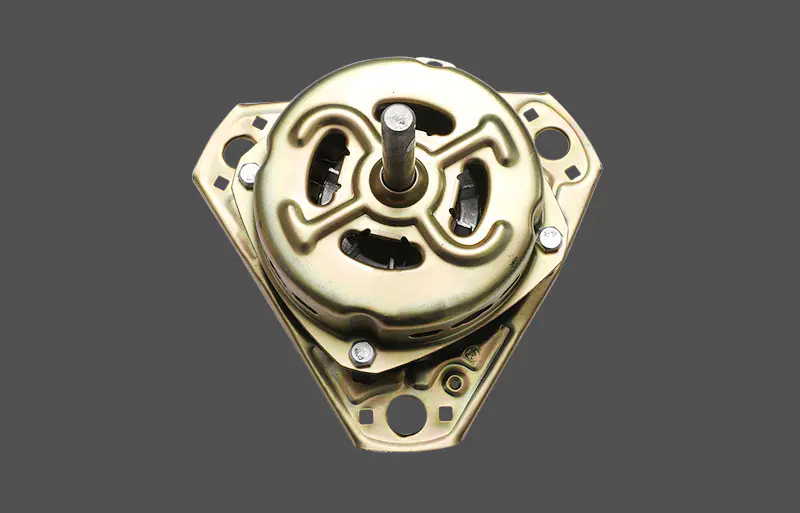
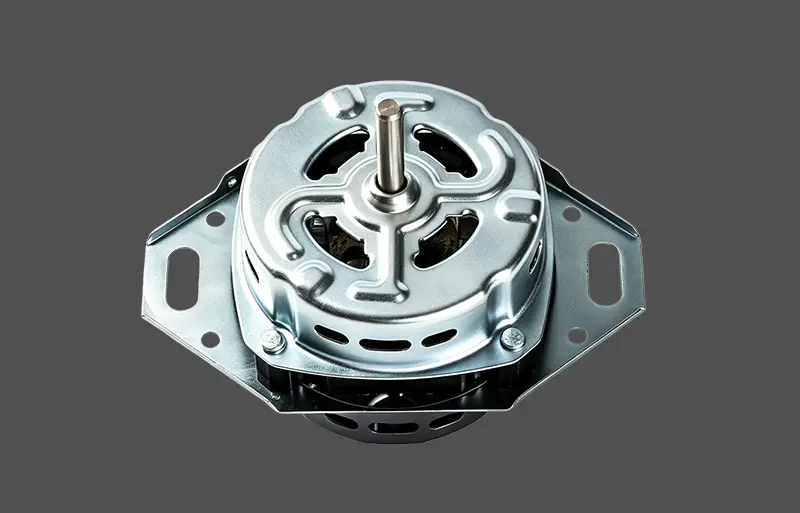
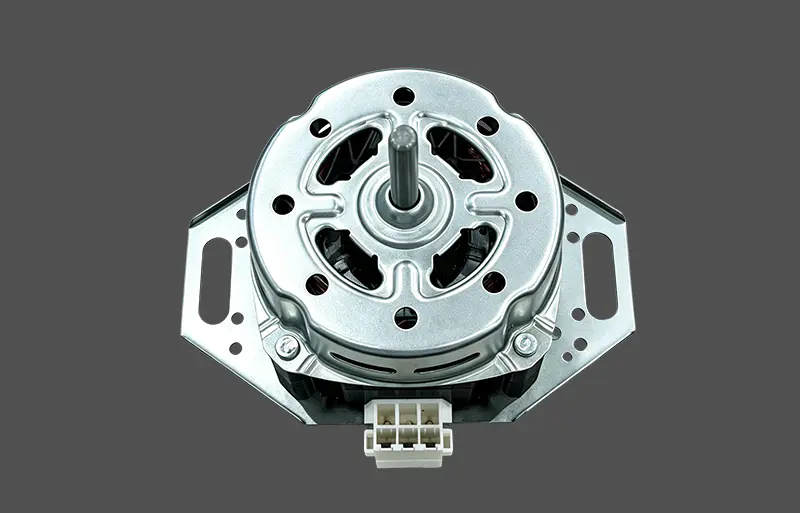
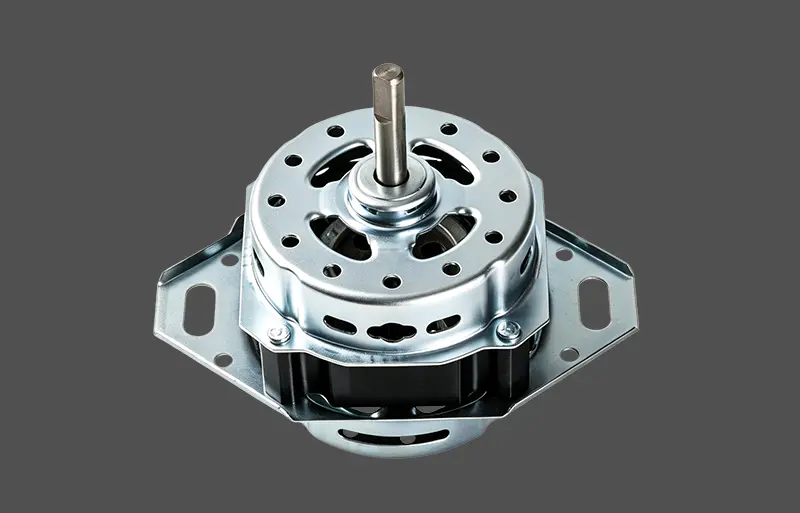
Definition and Current Status of Motor Failure
In today's highly automated medical and industrial environments, motors are often described as the "heart" of the equipment. Specifically, the Ventilator Motor serves as the core of the system, responsible not only for driving airflow but also for maintaining extreme stability under high-frequency adjustments and precision control.
However, no mechanical device is immune to wear and failure. Motor failure is generally defined as a state in which the motor can no longer output the expected power, speed, or torque due to electrical, mechanical, or environmental factors.
Core Status: Statistics indicate that in critical medical equipment, approximately 25% of unplanned downtime is directly attributed to Ventilator Motor malfunctions. Such failures result in high maintenance costs and, in intensive care scenarios, may directly threaten patient safety.
Parameter Differences Between Ventilator Motors and General Industrial Motors
To understand the root causes of failure, we must first identify the significant differences in design parameters between a Ventilator Motor and a standard industrial motor:
| Parameter Dimension |
Typical Standard Industrial Motor |
Specialized Ventilator Motor (2026 Standard) |
| Precision Level |
Medium (±5% Speed Deviation) |
Ultra-High (±0.5% Speed Deviation with Dynamic Pressure Compensation) |
| Noise Standard |
60 - 80 dB |
< 35 dB (Medical Grade Silence Requirement) |
| Start/Stop Frequency |
Low (A few times per hour) |
Ultra-High (Real-time adjustment with breath frequency, 10-40 times/min) |
| Cooling Method |
Self-cooling or Forced Air |
Conduction Cooling with Optimized Housing (Dust-proof Enclosed Design) |
| Expected Lifespan |
10,000 - 20,000 Hours |
40,000 - 60,000 Hours (Long-life Bearings & Brushless Technology) |
The Leading Cause of Motor Failure: Overheating
Among all factors leading to motor failure, overheating consistently ranks at the top. For a Ventilator Motor, heat is not merely a byproduct of energy loss; it is the "invisible killer" of the insulation system.
The Insulation Crisis Behind Thermodynamics
The internal windings of a motor are covered with an extremely thin layer of insulation coating. According to the Arrhenius Equation, temperature has an exponential impact on chemical degradation processes.
- The Half-Life Rule: For every 10°C increase above the motor's rated operating temperature, the expected insulation life of the Ventilator Motor is reduced by 50%.
- Failure Path: Sustained high temperatures cause the magnet wire insulation to become brittle and crack, eventually leading to turn-to-turn shorts and motor burnout.
Typical Triggers for Ventilator Motor Overheating
- Ambient Ventilation Resistance: Ventilators often have cramped internal spaces. If filters are not replaced promptly, airflow resistance increases. The Ventilator Motor must then increase its power output to maintain constant air delivery, generating more heat.
- Instantaneous Heat Accumulation from Frequent Start-Stops: Modern ventilators typically use synchronized breathing modes, requiring the Ventilator Motor to accelerate and decelerate in extremely short intervals. This high dynamic load generates large instantaneous currents, creating localized hotspots in the windings.
- Cooling Channel Blockage: Even small amounts of medical dust or fibers in the air can accumulate on heat sinks over thousands of hours, acting like a blanket that traps heat and hinders exchange.
Technical Warnings for 2026
As Ventilator Motor designs trend toward miniaturization and high energy density, the margin for error in thermal management becomes smaller. While early asynchronous induction motors might have been insensitive to slight temperature rises, modern Brushless DC (BLDC) Ventilator Motors integrate precision permanent magnets.
Technical Note: Once the operating temperature exceeds the demagnetization temperature of the permanent magnets, the Ventilator Motor will suffer an irreversible loss of torque, manifesting as "idling" or an inability to drive the load, leading to total failure.
Electrical Issues and Overload
In the modern power grids of 2026, despite mature distribution technology, systems composed of high-frequency switching devices and precision sensors have become more sensitive to Power Quality.
Transient Voltage and Surges
The insulation layers in a Ventilator Motor winding are usually only a few dozen micrometers thick.
- Voltage Spikes: Switching actions of nearby heavy equipment or internal electrostatic discharges can produce transient spikes several times the rated voltage.
- Consequence: This high voltage can instantly puncture the Ventilator Motor insulation, creating tiny carbonized paths that eventually develop into destructive short circuits.
The Invisible Threat of Harmonics
Since most modern Ventilator Motors utilize Electronic Commutation (EC) or Variable Frequency Drives (VFD), harmonics generated by non-linear loads (especially 3rd, 5th, and 7th harmonics) create additional heat.
- Efficiency Loss: Harmonics not only lower the power factor but also cause the motor to produce extra vibration and harsh noise, disrupting the quiet medical environment.
- Magnetic Circuit Interference: Harmonic currents increase eddy current losses in the stator core, further driving up the Ventilator Motor operating temperature.
Electrical Parameter Sensitivity Comparison
| Electrical Phenomenon |
General Industrial Motor Tolerance |
Ventilator Motor (Precision Grade) Tolerance |
Primary Failure Symptom |
| Voltage Swing |
±10% |
±3% ~ ±5% |
Logic errors, speed instability |
| Harmonic Distortion (THD) |
< 8% |
< 3% |
Extra heat loss, reduced component life |
| Phase Imbalance |
< 3% |
< 1% |
Negative sequence fields, violent vibration |
Mechanical Wear and Bearing Failure
If insulation is the "skin" of the motor, bearings are the "joints" of the Ventilator Motor. Statistics show that over 50% of mechanical failures in small motors stem from bearing issues.
Bearing Fatigue and Lubrication Challenges
The Ventilator Motor frequently switches between low and high speeds to achieve precise pressure control.
- Lubricant Degradation: Under high-temperature operation, the grease inside the bearing can oxidize, separate, or dry out. Without lubrication, metal-to-metal contact occurs, causing pitting.
- Precision Balance: The high-speed impellers of ventilators require perfect dynamic balance. Even 0.1 grams of contaminant on the impeller can create uneven centrifugal forces, accelerating bearing wear.
Electrical Erosion (Arcing)
This is a common but often overlooked failure cause in EC motors. Due to common-mode voltage from the drive, electrical charges can accumulate at the bearing's lubricant film.
- Discharge Damage: When the charge exceeds the dielectric strength of the oil film, micro-arcing occurs.
- Characteristics: This discharge leaves "fluting" marks on the bearing races, causing the Ventilator Motor to emit a rhythmic whine and eventually lock up due to excessive radial runout.
Bearing Health Key Indicator Checklist
- Vibration Amplitude: Exceeding 1.0 mm/s (RMS) is considered a warning.
- Temperature Gradient: A bearing temperature 15°C higher than the motor casing usually indicates lubrication failure.
- Acoustic Features: Use ultrasonic detectors to identify abnormal friction sounds between 20kHz - 100kHz.
Environmental Contamination
Although the Ventilator Motor is usually housed in a protected enclosure, environmental pollutants remain a "chronic poison" to its lifespan.
- Moisture and Humidity: In humidified respiratory therapy, condensation can enter the motor through wires or casing gaps, leading to winding corrosion or short circuits on the control board.
- Particulate Accumulation: Fine fibers in medical environments can wrap around the Ventilator Motor main shaft, increasing the startup torque requirement and causing the motor to overload during the initial spin-up.
Specialized Failure Analysis for Ventilator Motors
In medical-grade applications, the Ventilator Motor is more than just a power source; it is the core of a precision feedback system. Its failure often manifests not as a total stop, but as "control accuracy drift" or "sensor-level paralysis."
Sensor Failure: Blinding the Precision Control
Modern Ventilator Motors are widely integrated with Hall sensors or high-resolution encoders.
- Thermal Stress and Signal Drift: Even if the windings are not burned, prolonged slight temperature rises can shift the magnetic sensitivity of Hall elements. This leads to inaccurate commutation timing, increased vibration, and potential reversal risks.
- Optical Contamination: In open ventilation systems, trace amounts of dust entering an optical encoder can cause lost pulses. For a Ventilator Motor, this means the control algorithm cannot accurately sense speed, triggering a system-level protective shutdown.
Fatigue of Precision Components on the EC Board
Mainstream Ventilator Motors in 2026 feature highly integrated drive circuits (Smart EC Motors).
- Electrolytic Capacitor Drying: Small capacitors on the drive board are extremely temperature-sensitive. Operating in a 50°C enclosure can increase their Equivalent Series Resistance (ESR), leading to higher voltage ripple and preventing the motor from starting smoothly.
- Thermal Fatigue of Solder Joints: Due to the high-frequency vibration during operation, solder joints of heavy components (like inductors and power transistors) can develop micro-cracks, causing intermittent shutdowns.
2026 Leading Preventative Maintenance Strategies
To address the complex failure modes of the Ventilator Motor, maintenance has shifted from "reactive repair" to "data-driven predictive maintenance."
AI-Based Electrical Signature Analysis (ESA)
Rather than relying on physical sensors for every part, maintenance now analyzes minute distortions in the Ventilator Motor input current.
- AI Diagnosis: AI models can identify specific frequency signatures related to bearing wear or partial discharge in windings, predicting failure 200 hours before it occurs.
Digital Twin Real-Time Monitoring
By establishing a 1:1 physical model of the Ventilator Motor in software, real-time data (voltage, current, temperature rise, air pressure) is monitored.
- Comparative Validation: When the actual motor's temperature curve deviates from the Digital Twin's prediction—even if still within safe limits—the system flags an "efficiency deviation," prompting an inspection of filters or lubrication.
Maintenance Standard Comparison (2026 Standards)
| Maintenance Indicator |
Traditional Periodic Maintenance |
Modern Predictive Maintenance |
| Detection Frequency |
Once every 6 months |
Real-time |
| Fault Identification Rate |
~65% (Human Experience) |
>95% (AI Algorithms) |
| Part Replacement Logic |
Schedule-based (Wasteful) |
Condition-based (Remaining Life Prediction) |
| Downtime Risk |
Higher (Sudden Failures) |
Extremely Low (Weeks of Advance Warning) |
FAQ:
- Q: How can I tell if a Ventilator Motor is about to fail?
A: Watch for abnormal grinding noises, an unusual rise in casing temperature, or increased current fluctuations under a constant load.
- Q: Why do Ventilator Motor bearings wear out even in clean medical environments?
A: Despite the clean air, continuous operation and frequent micro-speed adjustments create specific types of mechanical fatigue.
- Q: Will replacing a motor's capacitor solve all "failure to start" issues?
A: Capacitors are common failure points, but if the Ventilator Motor windings are damaged or the bearings are seized, a new capacitor will not fix the problem.
- Q: What advancements in failure prevention have been made in 2026 motor designs?
A: Most now use integrated EC drives that use software to compensate for hardware wear and utilize synthetic insulation materials with higher thermal resistance.
- Q: Why does my Ventilator Motor report "Overcurrent" without any burning smell?
A: This is often not a burned winding but increased mechanical load from failed lubrication or impeller dust accumulation. The motor pulls more current to maintain speed, triggering the drive's protection.
- Q: How can I protect a Ventilator Motor in humid environments?
A: Ensure the motor has an IP rating of at least IP54 and install "drip loops" to prevent condensation from running along cables into the motor end-bells.
- Q: Should I shut down immediately if the Ventilator Motor makes a slight high-pitched buzzing?
A: This is usually a sign of bearing electrical erosion or drive circuit instability. While it won't stop instantly, the vibration accelerates electronic failure; inspection is recommended at the next maintenance cycle.
- Q: Can a standard motor of the same spec replace a specialized Ventilator Motor?
A: No. Specialized Ventilator Motors have strict requirements for Electromagnetic Compatibility (EMC) and dynamic response. Standard motors can create electrical noise that interferes with delicate patient monitoring equipment.