


Picture a metal fabrication workshop in mid-summer. Two 500 mm pedestal fans stand at opposite ends of a 120 m² floor, running at full speed for ten hours. The air near the presses is still heavy, operators' shirts are soaked, and the electricity bill keeps climbing. The fans are new, the blades are clean, the motors are spinning. What is missing is air volume, not blade speed.
That is the practical difference between an industrial fan and a regular fan. A regular household fan is designed to create a local breeze in a small room. An industrial fan is designed to move a large volume of air over a long distance and to keep doing it for thousands of hours. Both products spin blades, but they are engineered around completely different priorities.
So, are industrial fans better than regular fans? For workshops, warehouses, production lines, and any space above roughly 60 m² where heat, humidity, or fumes accumulate, the answer is yes. For bedrooms, home offices, and personal cooling, a regular fan remains the more sensible choice. The right answer depends on room size, operating hours, noise limits, and the surrounding environment.
An industrial fan is not merely a larger version of a household fan. The differences start inside the motor and extend to the blade profile, housing material, guard spacing, and certification.
A regular fan typically has a 400-500 mm blade, a plastic housing, a shaded-pole or small permanent-split capacitor motor, and sleeve bearings. It delivers roughly 1,500-2,500 CFM and is designed for intermittent use, meaning a few hours at a time. Push it beyond that duty cycle, and the motor windings overheat, the bearings dry out, and performance drops.
An industrial fan uses a continuous-duty motor with a larger stator stack, higher-grade insulation, ball bearings, and often built-in thermal protection. Its blades are larger, its housing is usually steel or reinforced engineering plastic, and its motor enclosure is shaped to shed heat. Industrial models commonly move 6,000-30,000 CFM depending on diameter and power, and they are rated to run for days or weeks without stopping.
| Design parameter | Regular fan | Industrial fan |
|---|---|---|
| Typical blade diameter | 400-500 mm | 600-900 mm |
| Airflow range | 1,500-2,500 CFM | 6,000-30,000+ CFM |
| Motor duty | Intermittent, 2-6 hour sessions | Continuous, 24/7 rated |
| Bearing type | Usually sleeve bearings | Ball bearings |
| Housing material | Plastic | Steel or reinforced composite |
| Thermal protection | Often absent | Built into the motor |
| Typical service life | 8,000-15,000 operating hours | 30,000-50,000+ operating hours |
This is why the classic advice still holds: check the motor duty cycle before you check the price. A fan that is only built for two-hour sessions will fail quickly if it is asked to run a full shift.
When the task is moving high volumes of air across a wide production bay, a mobile circulation fan with a capacitor-run industrial motor is the standard solution.
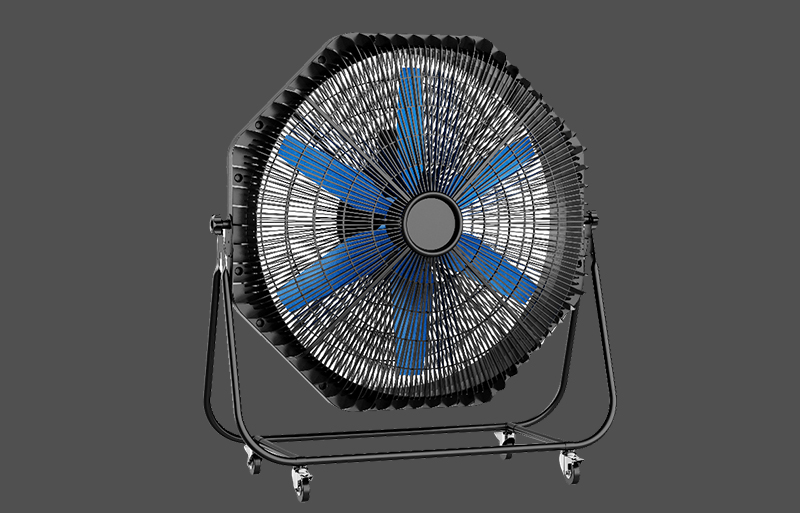 YS-Series Industrial Mobile High-Volume Circulation FanThis mobile fan suits large industrial spaces, offering long-range airflow up to 60 meters, energy-efficient AE/EC motors with adjustable speeds, and locking wheels for easy deployment on factory floors.View Product →
Most of what separates an industrial fan from a regular fan is decided before the blades turn. The motor carries the load, and industrial fan motors are built to a different standard than household fan motors.
Household fan motors are often shaded-pole motors or small capacitor motors. They are cheap and light, but they have low starting torque, modest efficiency, and insulation that is not meant for continuous heat cycling. Overheating breaks down the enamel wire insulation, sleeve bearings lose their lubricant, and the motor slows down or stops permanently. This is the most common failure mode in regular fans.
Industrial fan motors use higher-grade insulation, Class B or Class F, along with aluminum or cast-iron end shields, sealed ball bearings, and in many cases an automatic thermal cutoff. The same motor families are used in electric fan motors for exhaust fans, duct fans, and large circulation fans, where reliability is a production requirement rather than a comfort feature.
For a plant manager or a purchasing team, the motor specification is the hidden part of the total cost of ownership. A fan that costs 30 percent more but runs four times longer is usually the cheaper purchase, especially when the cost of downtime is included in the calculation.
Open-frame industrial ventilator motors are a good example of a motor built for continuous airflow in machinery rooms and ventilation cabinets, where the motor is mounted without a housing and depends on its own cooling fins.
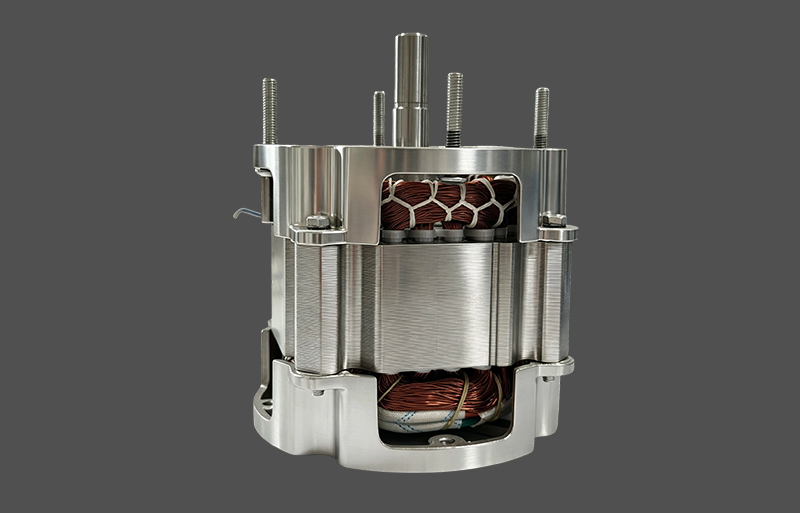 Open-Frame Industrial Ventilator MotorDesigned for continuous airflow in heavy-duty ventilation systems, this open-frame motor uses an alloy housing and copper windings to support robust operation and efficient self-cooling in machinery rooms.View Product →
Most buyers assume that a larger fan uses proportionally more electricity. In practice, a larger and slower-turning fan is often more efficient at moving air than a small high-speed fan. The fan affinity laws state that if blade diameter increases while speed decreases, airflow per watt improves significantly, and noise drops as well.
The chart below compares typical airflow per unit of power consumption for common fan classes. The figures are representative values from published fan test data, not performance guarantees for individual models.
The practical consequence: one 26-inch industrial fan at medium speed can distribute air across the full width of an 80 m² workshop, while two 20-inch household fans at the same total power only create local breezes near the blades.
This effect also changes perceived temperature. A wide, slow draft accelerates sweat evaporation across the whole body, while a narrow high-speed jet only cools the skin directly in front of it. Workers usually feel the difference long before a meter can measure it.
| Setup | Total power | Effective coverage | Air speed at 6 m distance |
|---|---|---|---|
| 2 x 20-inch household pedestal fans, high speed | 150 W | Local breeze within 3 m of each fan | Negligible |
| 1 x 26-inch industrial circulation fan, medium speed | 150 W | Full bay width, air movement across 10-12 m | 0.6-1.0 m/s |
The second setup uses one motor instead of two, one set of blades instead of two, and fewer moving parts to maintain over a year of service.
The decision becomes easier when you look at the application instead of the product photos. These four situations cover most of the real-world cases.
Workshops, warehouses, gyms, and assembly halls suffer from stratified heat. Industrial fans with 24-30 inch blades move air across long distances and keep temperatures evenly mixed. Regular fans only create a small local draft.
Production shifts, commercial kitchens, battery rooms, and printing areas need fans that run eight to twenty-four hours per day. Industrial fan motors are wound, insulated, and ventilated for that duty cycle; regular fan motors are not.
Bedrooms, home offices, and small reception areas are best served by a regular fan. The air speed of a large industrial fan can feel uncomfortable in a compact space, and the footprint is often too large for a desk or bedside table.
Dust, moisture, oil mist, and corrosive vapors destroy open household fans quickly. Industrial fans with sealed motors, waterproof enclosures, and proper IP ratings are designed for these conditions. Maintenance intervals are longer and the failure rate is far lower.
Industrial fans can also work well at home. Garages, basements, home workshops, and rooms with high ceilings are the places where an industrial model earns its price. If you choose one for residential use, select a multi-speed model and start with the low setting. The airflow is usually gentler than a regular fan on high, and the motor noise is easier on the ears.
Buyers often compare fans by blade size and price, but safety and installation requirements carry equal weight in the total cost of a fan purchase.
Humid and washdown environments are exactly where a fully enclosed waterproof motor extends service life and prevents costly mid-shift failures.
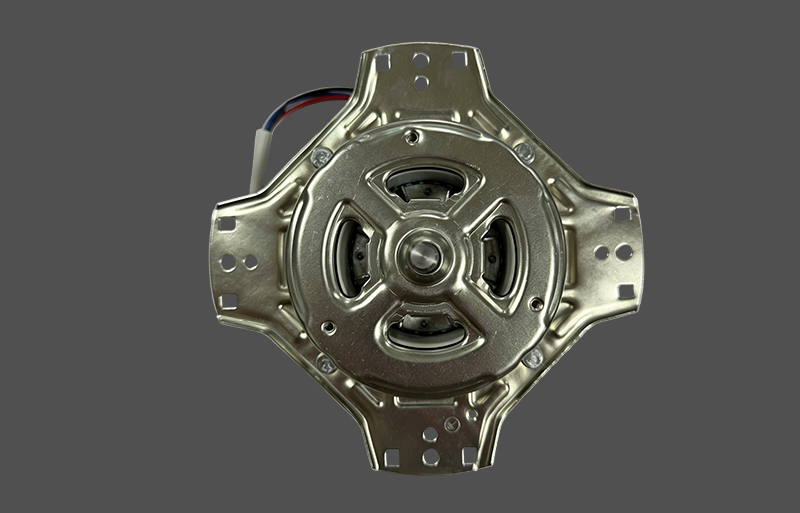 Fully Enclosed Industrial Waterproof Motor for Ventilating FansBuilt for humid and washdown environments, this fully sealed motor prevents moisture ingress and corrosion, making it a reliable power source for industrial axial fans in food processing and cold storage.View Product →
Maintenance is usually simple: clean the blades and inlet grille every two to four weeks, lubricate the motor bearings according to the manual, and check the capacitor once a year. The details of how industrial fans and ordinary electric fans differ become obvious in the maintenance log, not on the first day.
Use this short procedure and you will select the right machine in a few steps.
| Space type | Typical area | Recommended fan category | Key reason |
|---|---|---|---|
| Bedroom or home office | 12-25 m² | Regular desk or pedestal fan | Low noise, small footprint, adequate reach |
| Garage or home workshop | 20-50 m² | Industrial 20-24 inch fan | Better air throw and motor durability |
| Commercial kitchen | 30-60 m² | Industrial exhaust fan with make-up air | Heat, steam, and grease removal |
| Warehouse or production hall | 50-500 m² | 26-30 inch circulation fan or large-scale cooling fan | Wide coverage with low energy per CFM |
| Ducted ventilation system | Any | Industrial inline duct fan | High static pressure over long duct runs |
An industrial fan is basically a motor with a blade attached. When the buyer deals directly with a factory that makes both, the purchasing process becomes simpler and the technical risk decreases.
Shengzhou Tianyi Electric Appliance has been producing motors and ventilation products for more than three decades. The factory floor turns out over 12 million motors a year for washing machines, cooker hoods, exhaust fans, and ventilation systems, and the same production lines supply the motors used in its own industrial fans. That vertical setup means each fan can be tested with the actual motor that will ship inside it, not with a generic sample.
For any buyer, the practical questions to ask a fan supplier are:
A supplier that answers these questions with test data is likely a manufacturer. A supplier that can only repeat the catalog numbers is likely an intermediary. Sales language is not a specification. If the data sheet is vague, treat the product as unverified until it is tested.
No. Like regular fans, industrial fans circulate air and accelerate evaporation of sweat from the skin, which creates a cooling effect on the body without lowering the air temperature. If you need a lower air temperature, an evaporative cooling fan or an air conditioner is the correct tool.
Not necessarily. Noise depends on blade diameter, tip speed, and motor quality, not on the word "industrial" in the product name. A 30-inch industrial fan at low speed is often perceived as calmer than a 20-inch household fan on high speed, because it moves a wide, slow column of air instead of a narrow high-velocity jet.
Yes, in garages, workshops, basements, laundry rooms, and high-ceiling living areas. Choose a model with multiple speeds and a complete guard, and start with the lowest speed before trying the higher settings.
A continuous-duty industrial motor with ball bearings and thermal protection commonly exceeds 30,000 operating hours. A regular household fan motor, especially one with sleeve bearings and no overload protection, often fails between 8,000 and 15,000 hours. In a workshop that runs fans ten hours a day, that difference appears within two years.
For commercial or production use, usually yes. One industrial fan can replace two or three regular fans, its motor lasts longer, and its airflow per watt is higher. Calculate the cost per operating hour instead of comparing sticker prices, and the industrial fan becomes the economical choice in most spaces above 60 m².
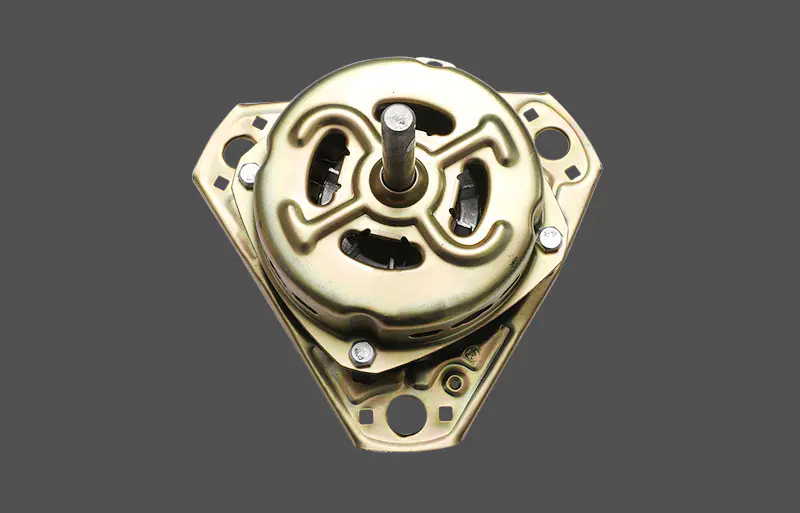
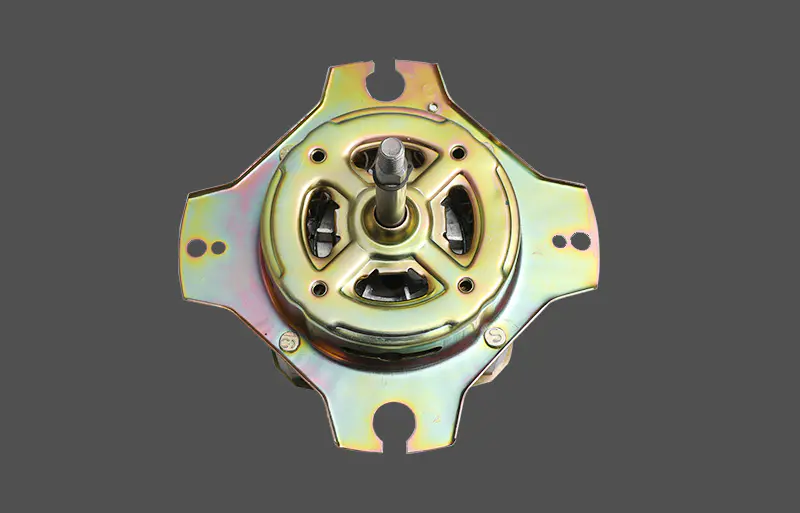
Ty001 Double-Tub Washing Machine Dedicated Motor
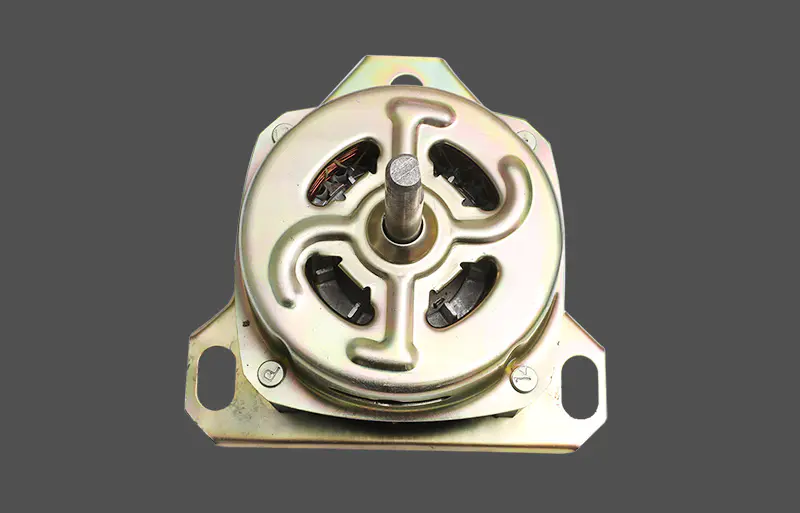
TY002 Powerful & Durable Copper-Wound Washing Machine Motor
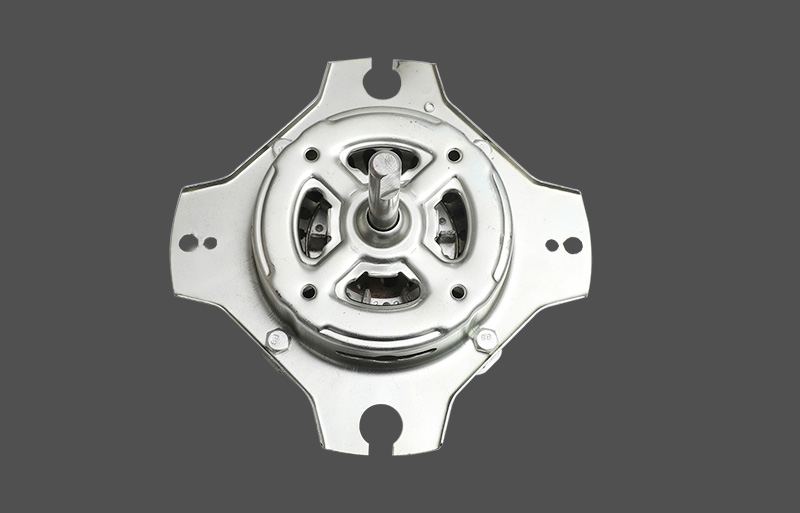
Environmental Cover Washing Machine Motor
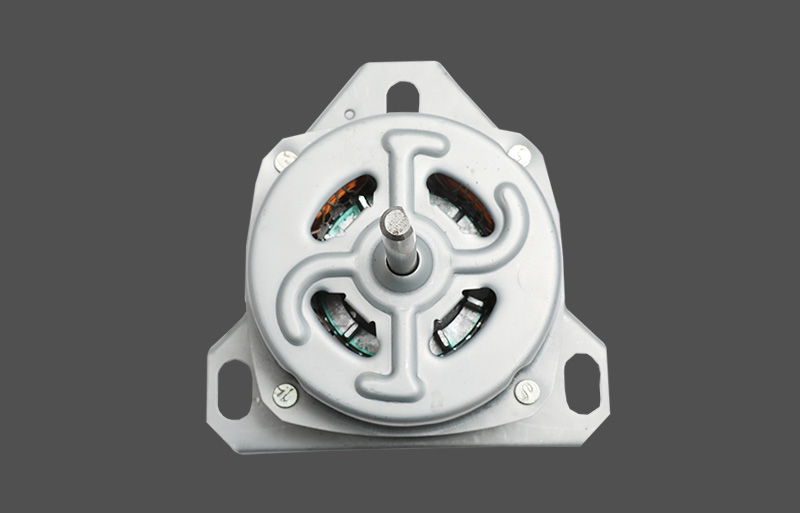
TY004 High-Efficiency Mini Copper Wire Washing Machine Motor
TY005 100% Copper Wire High-Speed Induction Motor
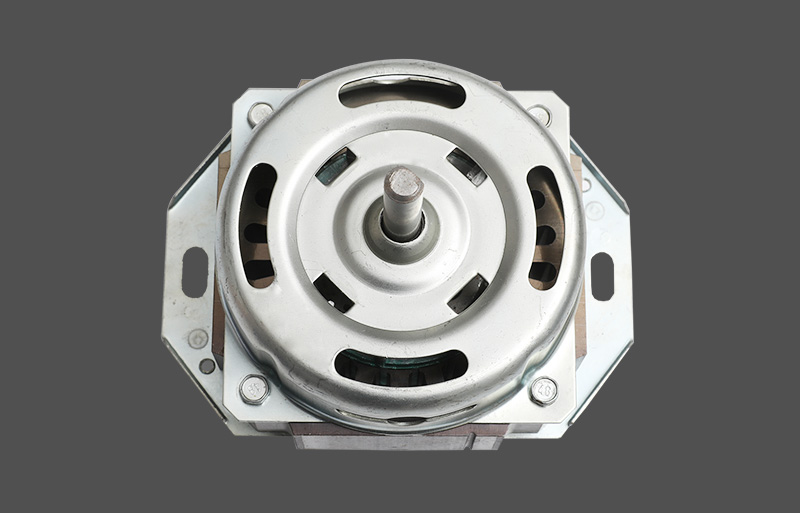
Home Appliance Parts Washing Motor
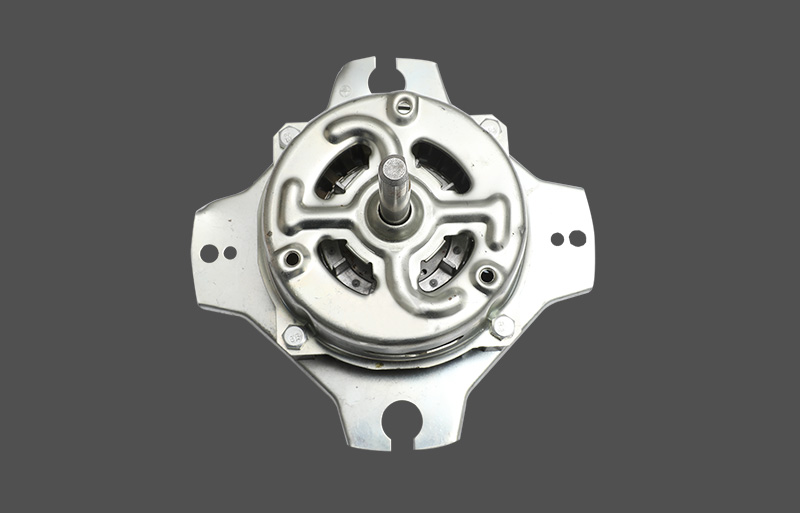
White Color CCA Motor
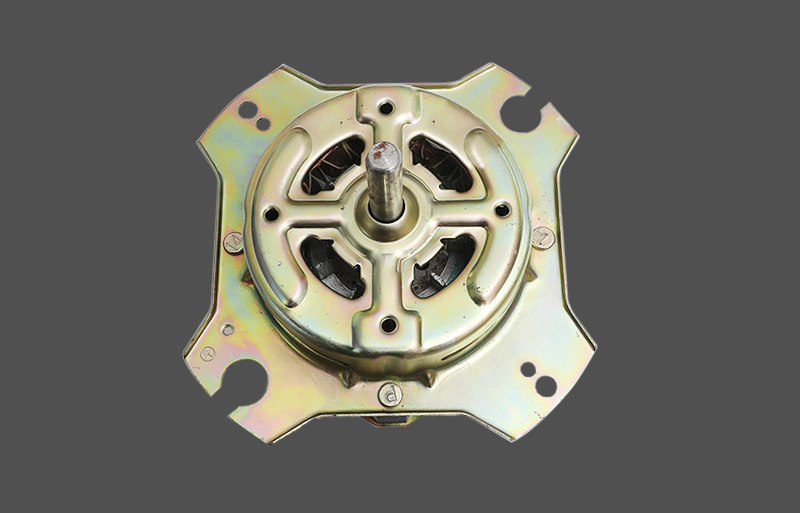
TY-008
Please leave your Email or phone nomber, so we can contact you as soon as possible.
Share


