


Stand on the floor of a 2,000-square-meter warehouse in summer heat. A 16-inch household fan, even at maximum speed, produces little more than a soft ripple of air. Swap in a 24-inch industrial circulation fan and the difference is immediate: a solid column of moving air that reaches across the bay. The short answer to the question “are industrial fans stronger?” is yes. The more useful conversation is about how that strength is engineered, how it is measured, and how to select the right level for your specific workspace.
When buyers compare an industrial fan with a household fan, “stronger” can refer to four different measurable characteristics. Understanding all four is important because a fan that is strong in one area may be only average in another.
An industrial fan is generally stronger in all four areas, but the gap between industrial and household models is not uniform. A well-built industrial fan can move two to four times more air than a household unit of similar blade diameter, while delivering a lifespan measured in years of continuous operation rather than months of occasional use.
2–4×
Higher airflow than household fans of similar blade size
24/7
Continuous-duty motor rating for around-the-clock operation
25,000+ hrs
Typical service life with proper maintenance and clean air
Specifications reveal the real differences. The table below compares the typical parameters of a 20-inch industrial floor fan with a standard 16-inch household floor fan. These values represent the common ranges seen in the market and align with production data from our own workshop.
| Parameter | Industrial Fan (20-inch) | Household Fan (16-inch) |
|---|---|---|
| Airflow volume | 3,500 – 5,000 CFM | 1,200 – 1,800 CFM |
| Motor power | 120 – 250 W | 45 – 60 W |
| Static pressure capability | Suitable for ducted or obstructed air paths | Free-air cooling only |
| Motor duty rating | S1 continuous duty | Intermittent use |
| Bearing type | Ball bearings or sealed ball bearings | Sleeve bearings in most cases |
| Housing and blade material | Heavy-gauge steel or aluminum alloy | Plastic or lightweight steel |
| Thermal protection | Built-in thermal overload protector | Rarely fitted |
| Typical service life | 25,000 – 40,000 hours | 3,000 – 8,000 hours |
These differences show up directly in real working conditions. A larger motor and specially profiled blades produce a concentrated, high-velocity airflow that carries across an entire workshop bay, while a household fan loses its effect within a few meters. If you want a more detailed comparison of construction and performance between the two classes, see our article on the difference between industrial electric fans and ordinary electric fans.
As a manufacturer of electric fan motors for more than 30 years, we know that three motor engineering decisions determine whether a fan can honestly be called industrial strength.
Industrial fan motors typically use Class B or Class F insulation, rated for continuous winding temperatures of 130°C and 155°C, respectively. Household fan motors often use Class B at best, and budget models may use materials that degrade far faster under sustained heat. In a hot workshop, the insulation class directly determines how confidently the motor can run at full load all day without premature aging of the windings.
Most household fans rely on sleeve bearings because they are quiet and inexpensive. Industrial fans use ball bearings or sealed ball bearings because they handle the axial and radial loads generated by larger, heavier blades and because they maintain their precision over tens of thousands of hours. If you are evaluating two seemingly identical fans, the bearing specification is often the clearest sign of which one is genuinely industrial grade.
A genuinely industrial motor is fitted with a built-in thermal overload protector. This device interrupts power if the winding temperature exceeds a safe limit and resets automatically when the motor cools. Household fans rarely include this protection, which is why they frequently fail when pushed for long periods. Thermal protection also protects the power cable and switchgear when a fan is operated in a dusty environment with restricted airflow around the motor housing.
In short, the motor is the heart of the fan. If the motor is not designed for continuous-duty service, no amount of blade area or metal housing will make the fan strong enough for industrial applications.
The added strength of an industrial fan is not an abstract benefit. It solves measurable problems in these common environments:
Each of these environments demands something a household fan cannot deliver: continuous runtime, dust and humidity tolerance, long-distance airflow, and the ruggedness to survive daily impacts and vibration.
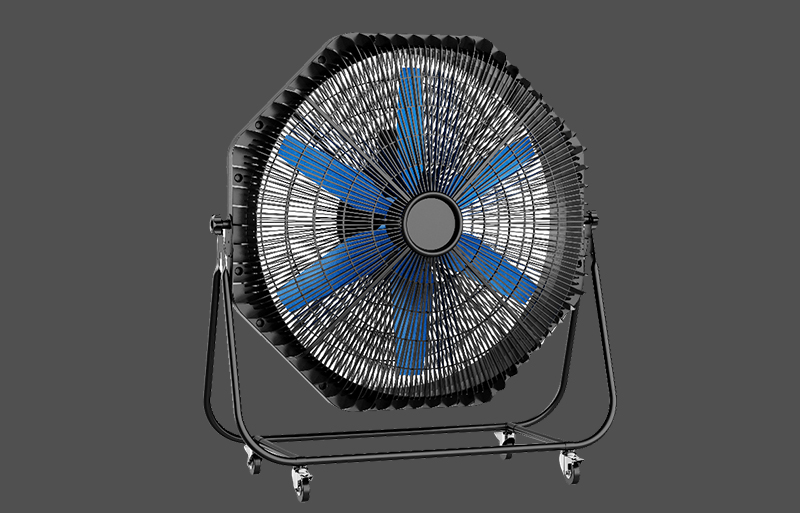 YS-Series Mobile High-Volume Circulation FanThis mobile fan provides high-volume airflow up to 60 meters, with adjustable angles and a rolling base for easy positioning. Built for rugged industrial use, it helps improve air circulation in large spaces.View Product →
For facilities that need flexible airflow exactly where the work happens, a mobile high-volume circulation fan is often the fastest solution. It can be rolled to any position, aimed horizontally or at an angle, and it pushes a wide stream of air across a substantial distance, giving operators immediate relief without altering the building layout.
Not necessarily. An industrial fan consumes more power than a household fan in absolute terms, but it also moves significantly more air per watt. The table below compares typical full-speed performance for several fan categories.
| Fan Type | Power Draw | Airflow | Airflow per Watt (CFM/W) |
|---|---|---|---|
| Household 16-inch fan | 55 W | 1,500 CFM | 27.3 |
| Industrial 20-inch floor fan | 180 W | 4,200 CFM | 23.3 |
| Industrial 24-inch circulation fan | 350 W | 9,000 CFM | 25.7 |
| Mobile evaporative air cooler with EC motor | 280 W | 8,500 CFM plus evaporative cooling effect | 30.4 |
Three practical conclusions can be drawn. First, one industrial fan can replace several household fans in a large space, so the total installed power may actually be lower. Second, the difference in airflow per watt between a household fan and a well-designed industrial fan is modest — industrial fans are not the energy hogs they are often assumed to be. Third, if heat relief is the primary goal, an evaporative air cooler delivers an additional temperature drop that a bare fan cannot achieve, at comparable energy consumption.
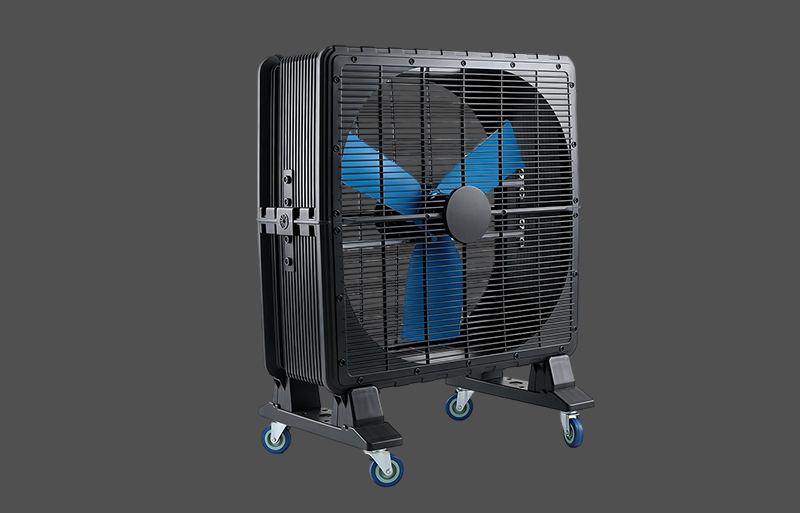 Mobile Industrial Evaporative Air Cooler with EC MotorFor heat relief in large facilities, this evaporative cooler adds temperature drop beyond a fan at comparable energy use. Its mobile design and 290W EC motor suit open layouts where AC is impractical.View Product →
Not every fan labeled “industrial” deserves the name. Before selecting a unit for your facility, review the following points.
Look for an S1 continuous-duty rating and at least Class B insulation. These specifications mean the motor is designed to run at its rated output without time restrictions. Fans without a clear duty rating are usually not intended for continuous industrial work, regardless of how robust the cage looks.
Ask whether the fan uses ball bearings, sealed ball bearings, or sleeve bearings. For a fan that will run long shifts in a dusty or hot environment, sealed ball bearings are the safest choice because they require less maintenance and tolerate contamination better.
A reputable manufacturer publishes airflow test data. Check whether the airflow value is measured at free air or at a stated static pressure. The honest comparison for industrial use is airflow at the resistance level that your application actually presents, not just the free-air maximum.
Heavy-gauge steel housings and aluminum or engineering-grade plastic blades withstand impact, heat, and prolonged exposure to vibration better than lightweight consumer components. A fan that wobbles when running has not been balanced correctly and will fail early.
For environments with dust, moisture, or wash-down cleaning, check the IP rating. A rating such as IP44 or IP54 means the motor is protected against solid particles and splash water, while higher ratings indicate stronger sealing for demanding conditions.
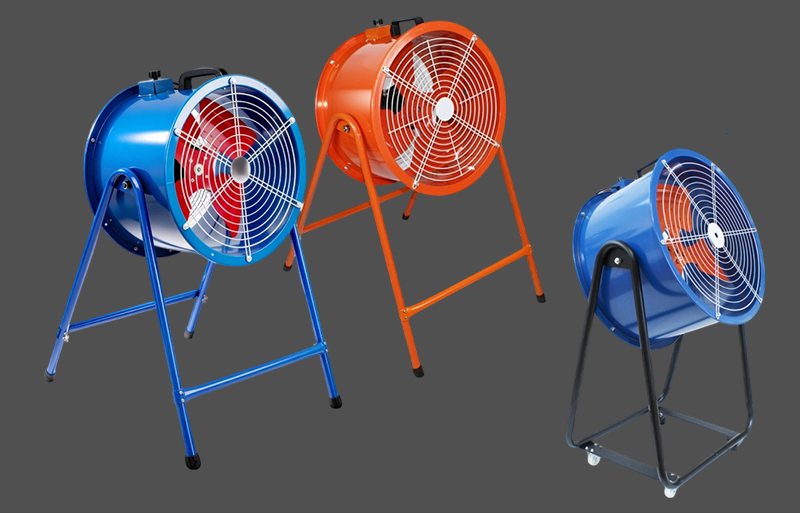 Post-Mounted Axial Flow Fan for Directed AirflowThis post-mounted fan delivers powerful directed airflow for localized cooling or ventilation, while saving floor space. Its adjustable angle and corrosion-resistant build make it reliable for dusty or humid industrial areas.View Product →
Where directional air movement is required — for example, cooling a fixed workstation or ventilating a specific bay — a post-mounted axial flow fan offers a compact and sturdy solution. It can be angled precisely and takes up no floor space, which makes it useful in narrow aisles and busy production areas.
A strong industrial fan is not just strong on day one; it stays strong throughout its service life. The typical lifespan of a well-maintained industrial fan is 25,000 to 40,000 hours, which corresponds to roughly 3 to 5 years of continuous operation. Three maintenance habits matter most:
Because industrial fan motors are built with replaceable bearings and sealed electrical components, repair is usually more economical than replacement. This is another way in which industrial fans justify their higher initial price over the long term.
Yes, but it will be noisier and larger than a typical household fan. Industrial fans are designed for open spaces and high airflow; in a bedroom or living room, the airflow may feel too intense. They are better suited for garages, home workshops, barns, or covered patios where heat and stuffiness are the real problems.
A properly specified industrial fan with an S1 duty rating can run 24 hours a day, 365 days a year, as long as it is kept reasonably clean and the ambient temperature stays within the motor design limits. Built-in thermal protection is essential for this kind of continuous operation.
In absolute terms, an industrial fan draws more power than a small household fan. However, because it moves two to four times more air, its airflow per watt is comparable or better. In large spaces, replacing several household fans with one industrial fan usually reduces total energy consumption.
Not always. Wattage indicates power input, not aerodynamic output. A fan with inefficient blade design or poor shroud geometry can waste energy as noise and heat. Check the airflow specification (CFM or m³/h) and static pressure rating rather than relying only on wattage when comparing models.
An axial fan moves air along the axis of the motor, producing high volume at low pressure — the standard choice for general ventilation and open-space cooling. A centrifugal fan draws air into the center and exhausts it at a right angle, producing higher static pressure for ducted systems or high-resistance environments. The right choice depends on whether your priority is moving large volumes freely or pushing air through ducts and filters.
Industrial fans are stronger than household fans in airflow volume, static pressure, duty rating, and mechanical durability. That strength is the result of deliberate engineering in the motor, the bearings, the thermal protection, and the overall structural design. For a workshop, warehouse, greenhouse, or production floor, investing in a fan built for continuous industrial service will save money over the long term — not simply because it moves more air, but because it keeps doing so long after a household fan would have been replaced.
When comparing options, ask for the specifications that matter: airflow at a realistic static pressure, S1 duty rating, insulation class, bearing type, and housing material. These numbers separate a genuine industrial unit from a household fan with an industrial-looking cage. With the right fan in place, you will notice the difference from the first minute of operation.
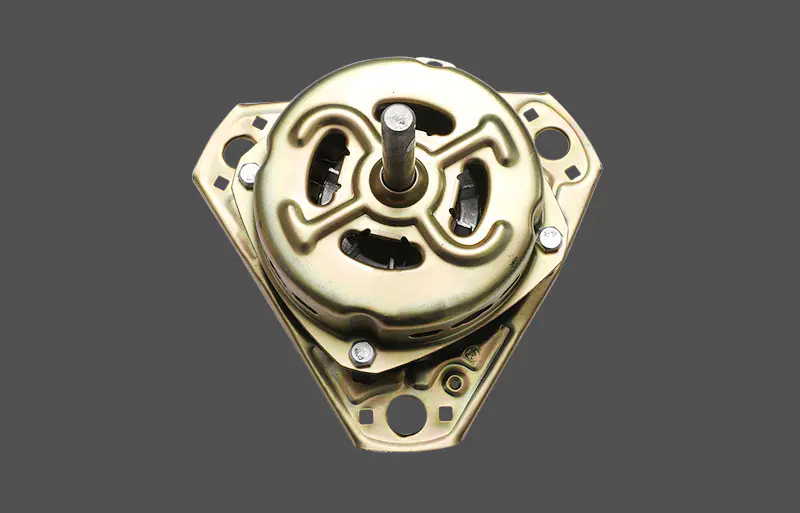
Ty001 Double-Tub Washing Machine Dedicated Motor
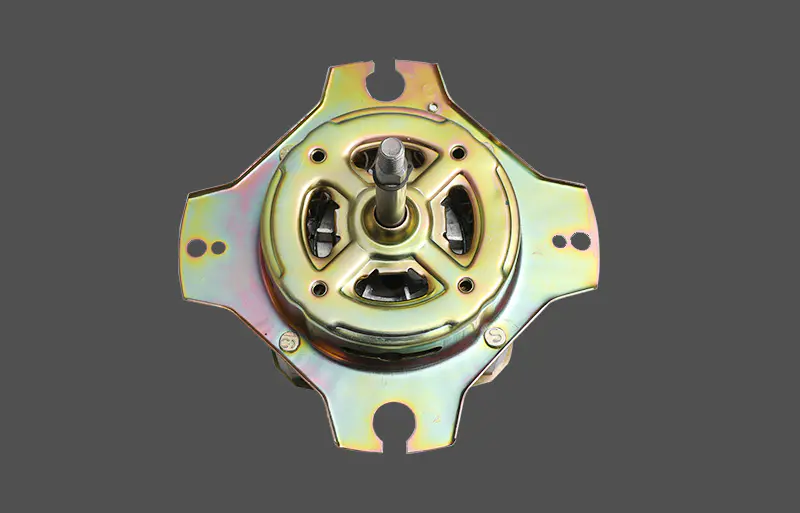
TY002 Powerful & Durable Copper-Wound Washing Machine Motor
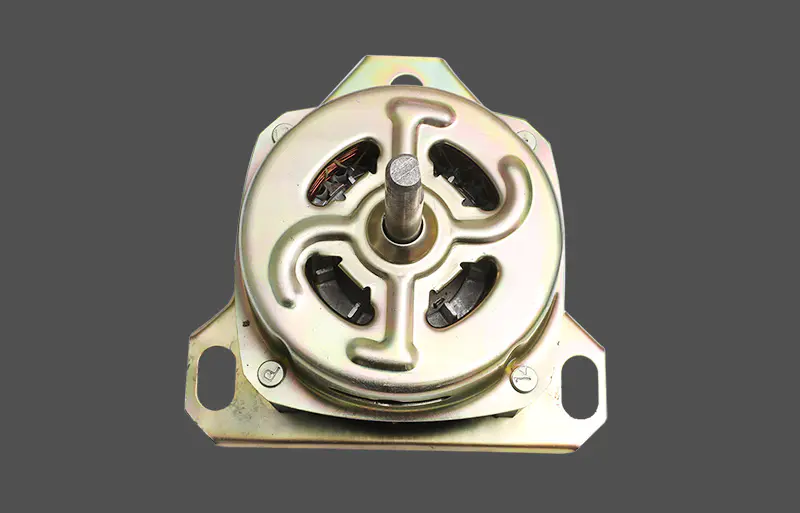
Environmental Cover Washing Machine Motor
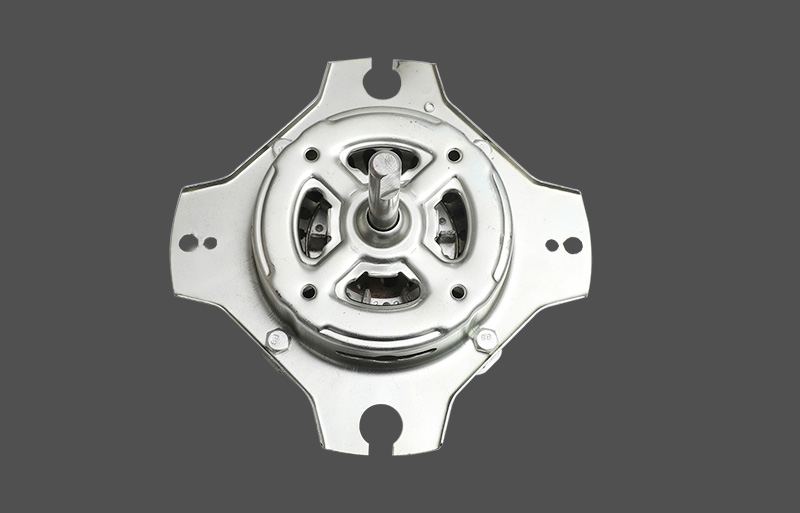
TY004 High-Efficiency Mini Copper Wire Washing Machine Motor
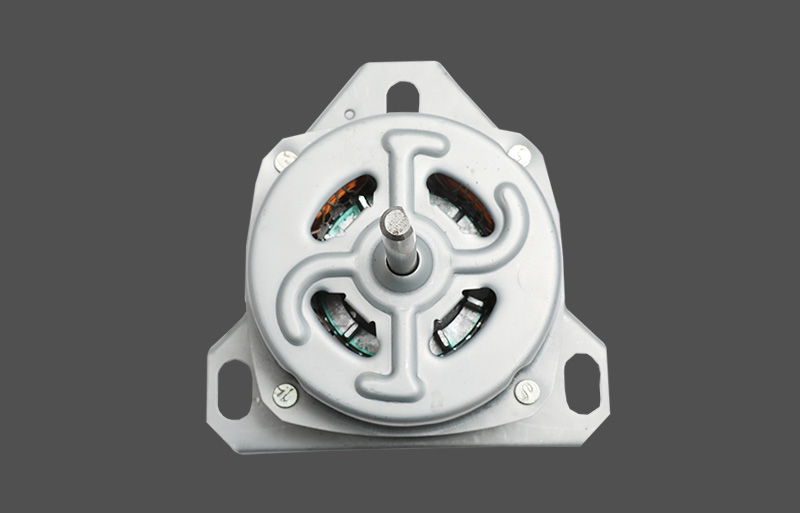
TY005 100% Copper Wire High-Speed Induction Motor
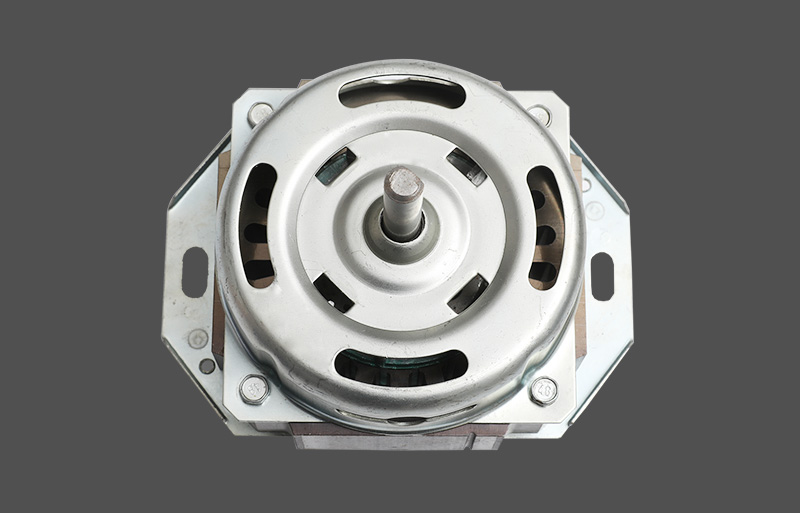
Home Appliance Parts Washing Motor
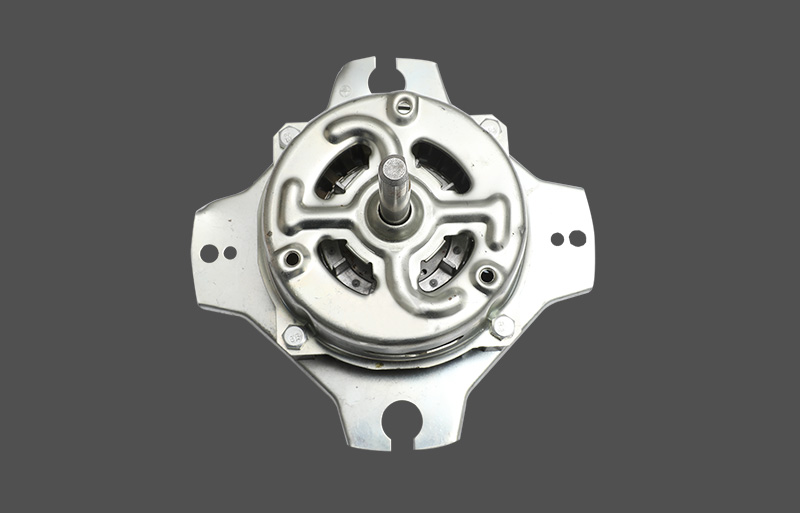
White Color CCA Motor
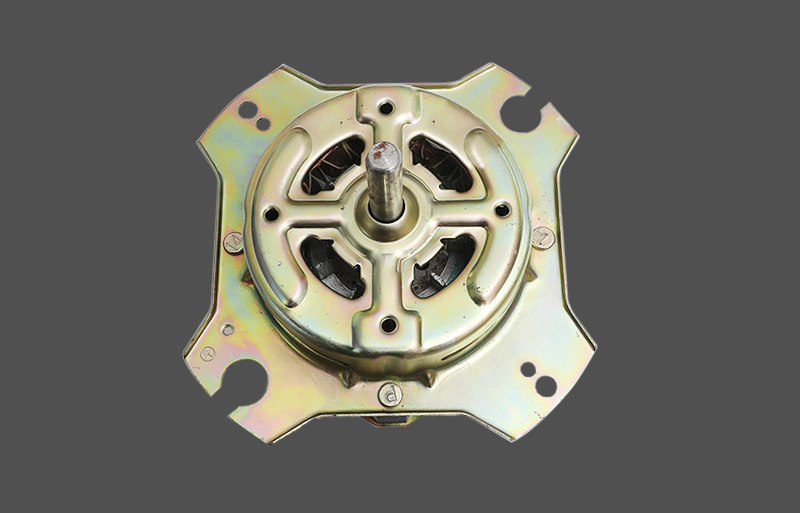
TY-008
Please leave your Email or phone nomber, so we can contact you as soon as possible.
Share


