At one end of a metal finishing shop, two 18-inch pedestal fans stand a few metres apart. One has been turning for six years without a service call. The other came from a household appliance shelf eight weeks ago and now makes a dry grinding sound every time it starts. Neither fan was defective when it left the factory. The second one was simply designed to move air in a bedroom for two or three hours at a time, and it is now being asked to run from eight in the morning until six at night in air thick with aluminium dust and polishing compound.
The difference between an industrial fan and a regular fan is not a marketing label or a handful of extra watts. The difference lives in the motor, the duty rating the motor is built for, the static pressure the impeller can work against, and the enclosure that keeps dust and moisture away from the windings. Blade count, grille shape, colour, remote controls and display panels are downstream decisions. Once you understand the four factors above, fan selection becomes a short engineering conversation instead of a guess.
The Short Answer: Motor Design, Duty Rating and Static Pressure
If you only remember one sentence from this article, make it this one: an industrial fan is built to run continuously and against resistance, while a regular fan is built to run occasionally in open, clean air. Everything else follows.
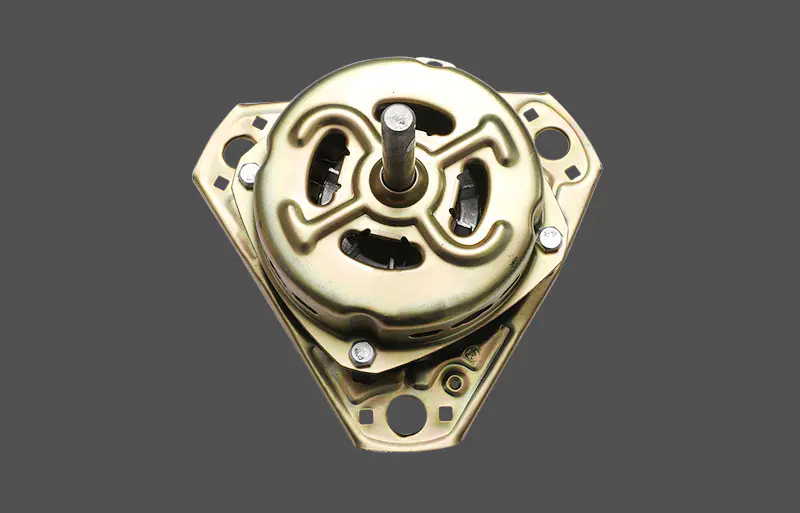
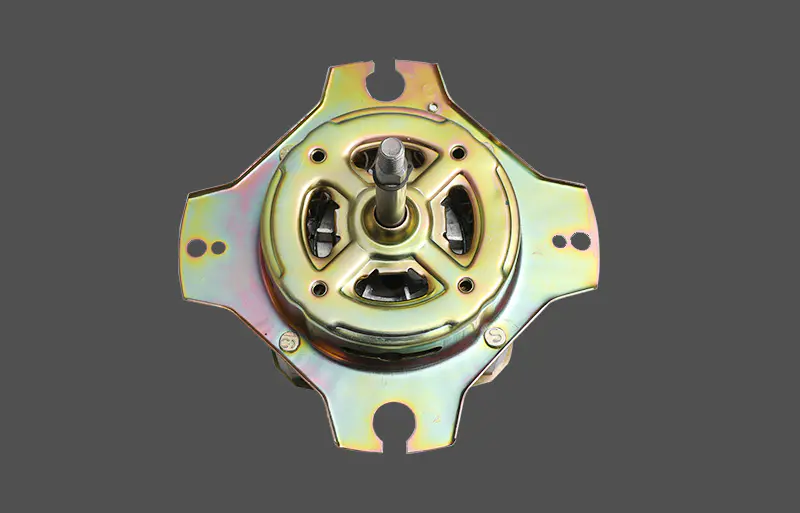
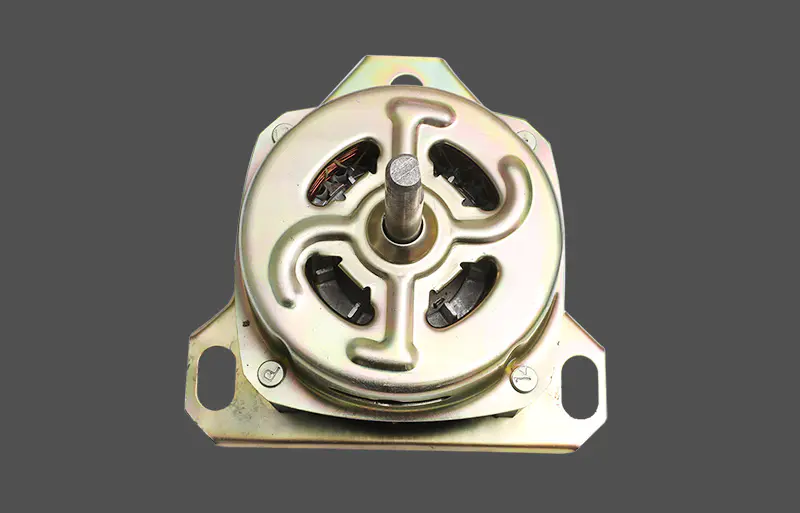
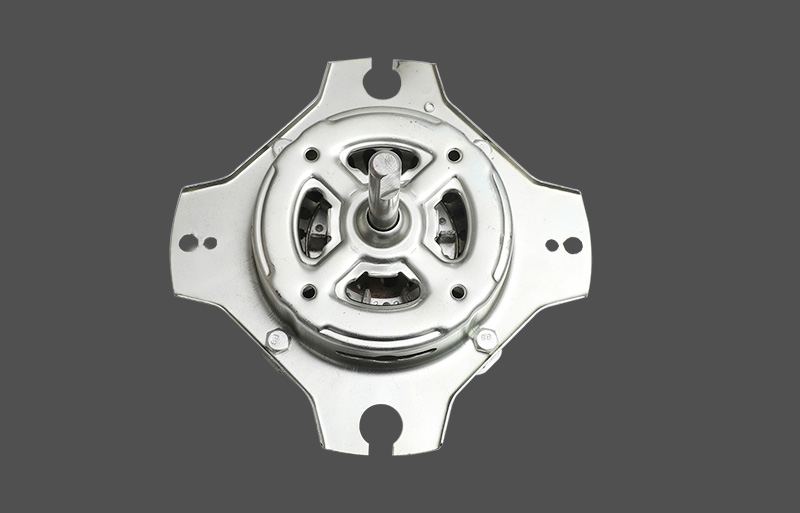
A regular household fan usually carries a single-phase shaded-pole or capacitor-run motor in the 40 W to 75 W range. Its bearings are often oil-impregnated sleeves, its windings are thin, and its frame is plastic or light stamped steel. An industrial fan carries a single-phase or three-phase induction motor from roughly 0.37 kW upward, sometimes past 2.2 kW on large mobile units, with ball bearings, thicker magnet wire, vacuum-impregnated windings and a cast or heavy-gauge steel housing.
Indicative figures for a typical 450 mm household pedestal fan and a typical 600 mm to 750 mm industrial axial fan. Exact values change with model, blade angle and operating point.
| Feature |
Regular household fan |
Industrial fan |
| Motor type |
Single-phase shaded-pole or capacitor-run |
Single-phase or three-phase induction motor |
| Typical input power |
40 W to 75 W |
0.37 kW to 2.2 kW for mobile units, higher for ducted designs |
| Free-air delivery |
900 m³/h to 3,000 m³/h |
8,000 m³/h to 30,000 m³/h |
| Usable static pressure |
20 Pa to 60 Pa |
150 Pa to 800 Pa |
| Bearings |
Sleeve, sometimes one ball bearing |
Sealed ball bearings, both ends |
| Duty rating |
Short-time or intermittent, two to four hours typical |
S1 continuous, twenty-four hour operation |
| Insulation class |
Class B or Class F, often unmarked |
Class F or Class H, usually stated on the nameplate |
| Enclosure protection |
Open drip-proof, normally no IP rating |
IP44 to IP65 depending on the environment |
| Sound pressure at 1 m |
45 dB(A) to 58 dB(A) |
65 dB(A) to 80 dB(A) |
| Expected service life |
3,000 to 8,000 hours |
20,000 to 40,000 hours |
The service life row is where money is won or lost. Replacing a household fan every eight to twelve months in a workshop costs far more than the price difference between the two products, and it also costs downtime, disposal and the labour of swapping units.
Inside the Motor: The Part That Decides How Long a Fan Lasts
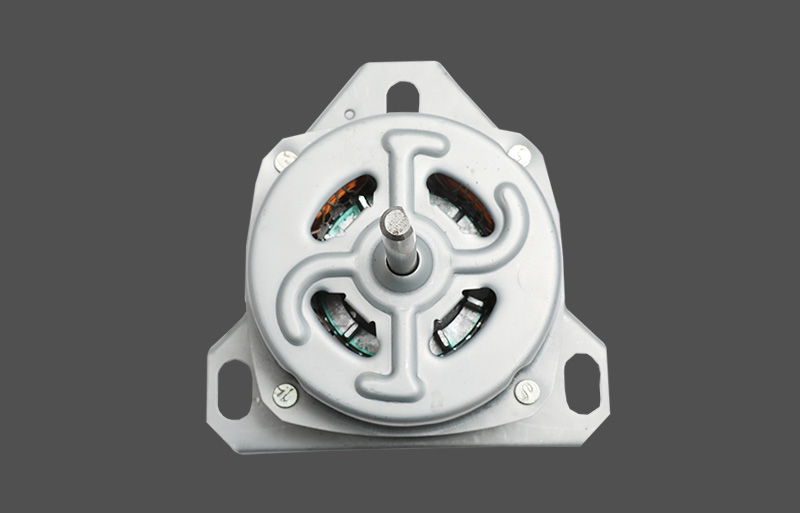
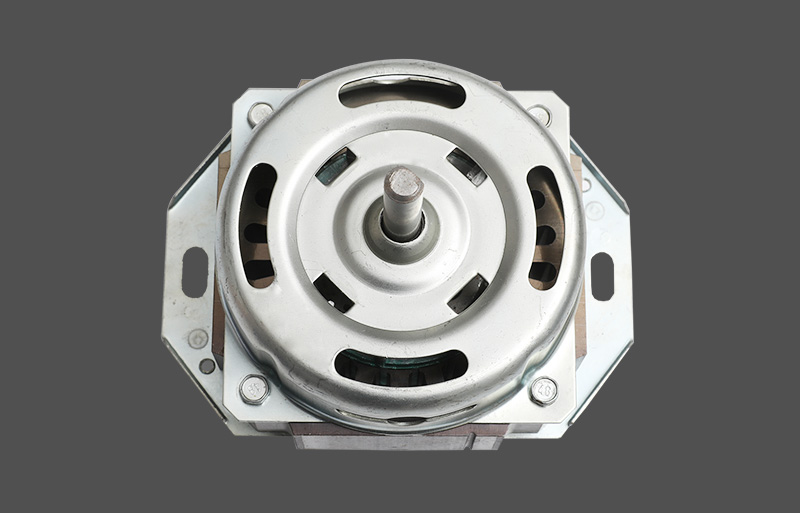
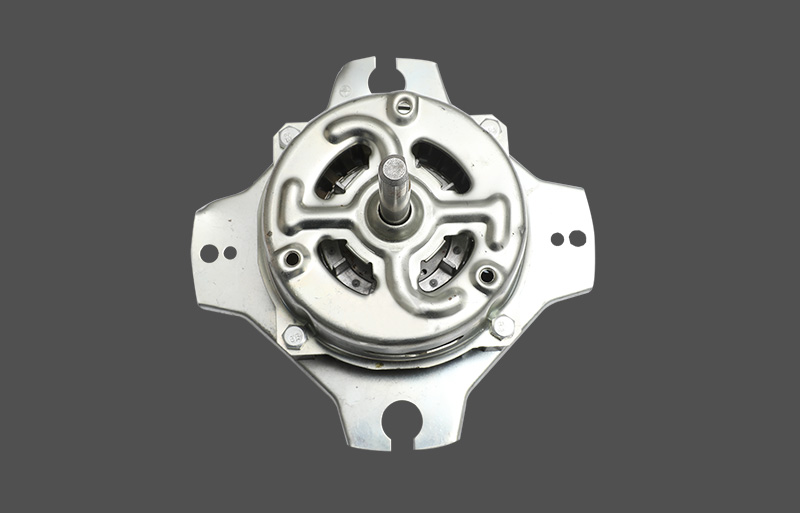
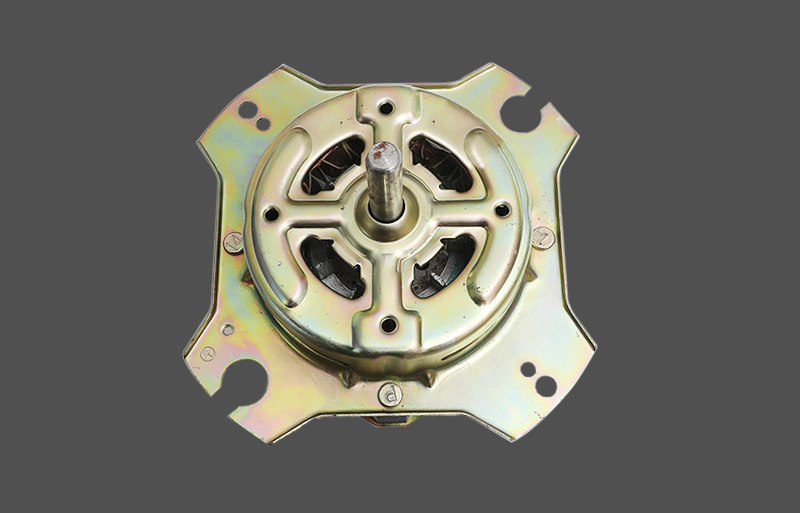
Open a household fan motor and you will usually find a stack of thin laminations, a small rotor, a plastic or die-cast end bracket, and magnet wire that has been wound loosely enough to keep material costs down. Open an industrial fan motor and the same components are present, but the quantities and tolerances are different.
Copper content
A larger copper cross-section in the stator reduces current density. Lower current density means less resistive heating for the same output, so the winding runs cooler and the insulation ages more slowly. A motor that runs 30 K cooler can last several times longer.
Impregnation
Industrial windings are usually dipped in varnish and cured, sometimes twice. This locks the turns in place, reduces mechanical chafing from vibration, and improves heat transfer from the copper to the lamination stack.
Bearing system
Sealed ball bearings tolerate axial thrust, high ambient temperature and contaminated air far better than sleeve bearings. A sleeve bearing that loses its oil film will seize within hours; a sealed ball bearing may run for tens of thousands of hours.
Rotor balance
Industrial rotors are balanced to a defined grade after assembly. Better balance means lower vibration, quieter running, and much less stress on the shaft, bearings and mounting feet over a long service period.
Thermal protection
Most industrial motors include a thermal protector or a PTC element in the winding. If the motor overheats because of a blocked guard or a failing capacitor, the protector trips instead of letting the insulation burn.
Frame and feet
Cast aluminium or heavy steel end brackets hold bearing alignment under load. Thin end brackets flex, which changes the air gap and increases noise, vibration and current draw over time.
None of these features is exotic. They are ordinary motor engineering, and they are exactly the items that get trimmed when a fan is designed to hit a consumer price point.
It is worth noting that the same engineering logic applies to the motors used in ventilation equipment. The construction principles behind a sealed industrial motor are closely related to those used in heavy-duty ventilator motors built for continuous duty in ducts and plant rooms.
Airflow and Static Pressure: Why Bigger Numbers Are Not Always More Cooling
Catalogue airflow figures are quoted at free delivery, which means the fan is blowing into open space with nothing in the way. As soon as you add a grille, a duct, a filter, a bend or a louvre, the pressure the fan must work against rises and the airflow falls. This relationship is called the fan curve, and it is the single most misunderstood part of fan selection.
A household fan with a soft plastic bladed impeller and a small motor has a very steep curve. Hang a metre of flexible duct on it, or bolt it against a window frame with a fine insect mesh, and the airflow collapses. An industrial fan with a deeper blade profile and a larger motor holds its airflow much further along the curve.
Tower or table fan, 300 mm 900 m³/h
Household pedestal fan, 450 mm 2,400 m³/h
Industrial mobile fan, 600 mm 9,000 m³/h
Industrial axial duct fan, 630 mm 18,000 m³/h
Industrial square-frame wall fan, 1000 mm 30,000 m³/h
Two practical conclusions come out of this chart. First, one industrial unit frequently replaces five to eight household fans, which changes the economics of the purchase entirely. Second, throw distance matters as much as total volume. A household fan delivers air two to four metres before the jet breaks up and mixes into the room. A large industrial fan with a properly designed guard can push a usable air jet eight to fifteen metres, which is why a single unit mounted at the end of a long workshop aisle can cool several workstations.
Where large open floor areas need gentle, wide coverage rather than a concentrated jet, large-scale low-speed cooling fans are the usual answer. Units such as the ZP series industrial cooling large scale fan are engineered around the opposite strategy from a household fan: a very large diameter turning slowly, moving a broad column of air with almost no draught and very low noise.
Build Quality: What Survives Dust, Humidity and a Twelve-Hour Shift
Materials and finishes decide whether a fan is still serviceable after a year in a real working environment. The following points come up repeatedly during site assessments.
- Impeller material. Household fans often use polypropylene blades pressed onto a small hub. Industrial impellers are usually aluminium, pressed steel or reinforced composite, dynamically balanced, and mechanically keyed or bolted rather than friction-fitted.
- Guard strength. A household wire guard deforms under light hand pressure. Industrial guards use thicker wire, closer spacing and welded rings, because they must withstand accidental contact from carts, panels and tools.
- Surface treatment. Powder coating, galvanising or a two-part epoxy finish determines how fast a steel housing corrodes in damp or mildly corrosive air. Bare or thinly painted steel rusts at the mounting holes first.
- Cable and switchgear. Industrial units often use flexible oil-resistant cable, a metal cable gland and an IP-rated switch enclosure. Exposed PVC flex with a moulded plug is a household standard, not a workshop one.
- Mounting points. Wall and column brackets on industrial fans are designed for a defined static and dynamic load, including vibration. Household stands are designed to keep a lightweight head upright on a flat floor.
In dusty environments the enclosure is the deciding factor for the motor. A fully enclosed motor with an external cooling fan keeps abrasive particles out of the air gap. An open motor with slots in the end brackets pulls that dust straight through the windings, and the resulting abrasion shortens insulation life dramatically.
Where air has to be pushed through ducting rather than across an open space, the fan is usually installed as part of a fixed system. A unit built for that duty, such as the industrial square frame ventilation fan, is normally matched with a mounting frame, a shutter and a duct connection, and it is selected to hold a specific working point on a pressure curve rather than to look good in a showroom.
Speed, Blade Tip Velocity and the Real Cost of Noise
Household fans are small, so they must turn fast to move meaningful air: typically 1,100 to 1,400 rpm. Industrial axial fans of larger diameter often turn at 900 to 1,450 rpm, and very large low-speed ceiling fans may run at only 20 to 60 rpm. The reason is tip velocity.
Blade tip speed is calculated as the circumference of the impeller multiplied by the rotational speed. A 450 mm household fan at 1,300 rpm has a tip speed of roughly 30 m/s. A 7.3 m low-speed fan turning at 40 rpm has a tip speed below 16 m/s. Tip speed drives both aerodynamic noise and the load on the blade root, so a large slow impeller can move more air than a small fast one while producing less sound.
Noise is not just a comfort topic. Above roughly 80 dB(A), a fan becomes a hearing protection issue under most workplace rules, and it interferes with spoken instructions and alarm signals. It also becomes a driver of fatigue, because workers turn the fan off or point it away rather than tolerate the sound.
Practical noise numbers to plan around
- Household fan on high setting, measured at one metre: 45 to 58 dB(A).
- Industrial mobile fan, 600 mm: 68 to 74 dB(A).
- Industrial axial fan in a duct with turbulent flow: 75 to 85 dB(A).
If a process area must stay below a certain sound level, the usual tactics are to increase impeller diameter and reduce speed, to select a lower blade angle, to add vibration isolation between the fan and the structure, and to keep the inlet clear. Most of the noise in a badly installed industrial fan comes from turbulence caused by a poorly shaped inlet or an obstruction a few centimetres in front of the blades.
Duty Cycle, Temperature Rise and Insulation Class
The nameplate tells you more about a fan than the airflow figure does. Two ratings matter most: the duty type and the insulation class.
Duty type follows the IEC convention. S1 means continuous duty at rated load with no defined rest period. S2 means short-time duty, where the motor reaches thermal equilibrium and then must be allowed to cool. S3 means intermittent duty with a defined cyclic duration factor. A household fan is usually designed around S2 behaviour with an assumed duty cycle of a few hours. An industrial fan is normally built for S1 and expected to run around the clock.
Insulation classes and the winding temperatures they are designed to survive, based on a 40 °C ambient and the resistance method of temperature measurement.
| Insulation class |
Maximum winding temperature |
Typical permitted temperature rise |
Where it appears |
| Class B |
130 °C |
About 80 K |
Light household appliances |
| Class F |
155 °C |
About 105 K |
Most industrial fan motors |
| Class H |
180 °C |
About 125 K |
Hot process areas, ovens, foundries |
Temperature rise is the difference between the winding temperature and the surrounding air. A motor with a 60 K rise sitting in 30 °C air will have windings at roughly 90 °C, comfortably inside a Class F limit. Move the same motor to a 55 °C plant room and the winding climbs to about 115 °C, which is still legal but leaves far less margin, and the insulation ages faster.
Insulation ageing roughly doubles for every additional 10 K of continuous winding temperature. This single rule explains why identical-looking fans behave so differently in different rooms, and why specifying a higher insulation class is often cheaper than accepting a shorter replacement cycle.
Power Draw and Running Cost: A Fair Comparison
It is easy to make an industrial fan look expensive on energy. A 1.1 kW unit running eight hours a day consumes about 8.8 kWh, while a 60 W household fan consumes about 0.48 kWh over the same period. But the comparison only becomes meaningful when you compare the air delivered, not the electricity consumed by a single box.
Comparing cost per unit of air moved
- Work out the airflow each candidate actually delivers at the real working pressure, not at free air.
- Divide input power in watts by airflow in thousands of cubic metres per hour to get watts per 1,000 m³/h.
- Multiply by the number of hours per year and the local electricity price.
A well-selected industrial axial fan typically lands between 35 W and 60 W per 1,000 m³/h. A household pedestal fan running in the same open space often lands between 25 W and 35 W per 1,000 m³/h, but it covers a fraction of the area, so you need several units to do the same job, and each one adds its own losses, cabling and failure points. Once the coverage is equalised, the industrial option is frequently the lower-cost choice over a three to five year horizon.
There is a second saving that rarely appears in a calculation sheet: air that is properly directed moves heat away from people more effectively than air that is merely stirred. Correct placement and a longer throw distance reduce the number of units required, which reduces both capital cost and connected load.
Protection and Safety: IP Ratings, Guards and Earthing
Industrial environments add water, dust, metal particles and vibration. The IP code is the standard way to describe how well an enclosure resists them.
Common IP ratings for fan motors and their practical meaning in a working environment.
| IP rating |
Protection against solids |
Protection against water |
Typical use |
| IP20 |
Fingers and objects over 12.5 mm |
None |
Dry indoor areas, control cabinets |
| IP44 |
Objects over 1 mm |
Splashing water from any direction |
General workshops, washdown-adjacent areas |
| IP55 |
Dust protected |
Low-pressure water jets |
Outdoor mounting, dusty plants |
| IP65 |
Dust tight |
Water jets from any direction |
Food areas, humid rooms, hose-down zones |
Beyond the motor, three safety items deserve attention. The guard must prevent fingers and clothing from reaching the impeller, and it must stay fixed after maintenance. The fan must be earthed through a proper protective conductor, not through the mounting frame. And the supply cable must be sized for continuous current plus start-up inrush, especially on single-phase motors with a starting capacitor.
In hot, humid or outdoor installations, the motor often needs more than an IP rating alone. A fully enclosed industrial waterproof motor for ventilating fans combines a sealed frame with treated windings so that condensation and spray do not shorten insulation life.
Matching the Fan to the Space: An Application Map
The fastest way to choose correctly is to start from the space and the task, then work back to the product type.
Typical fan selection by space, task and the property that drives the decision.
| Space or task |
Suitable fan type |
Deciding property |
| Bedroom, living room, small office |
Household pedestal, table or tower fan |
Low noise, light weight, low cost |
| Small workshop, garage, retail back room |
Medium industrial wall or pedestal fan |
Continuous running, metal guard, ball bearings |
| Large open production hall |
Low-speed large diameter fan |
Wide coverage, low noise, low energy per square metre |
| Workstation cooling on a line |
Mobile industrial circulation fan |
Throw distance, adjustability, stable base |
| Ducted extract or make-up air |
In-line axial or diagonal flow duct fan |
Static pressure at the working point |
| Wall or window extract in a dusty area |
Square-frame industrial ventilation fan |
IP-rated motor, rigid frame, serviceable guard |
| Humid or washdown environment |
Waterproof or sealed motor fan |
Ingress protection, corrosion-resistant finish |
Notice that none of these decisions depends on the number of speed settings or the presence of a remote control. Those are convenience features, and they belong at the end of the evaluation, not the beginning.
Portable cooling is a category of its own because the fan has to be relocated, repositioned and sometimes rolled over uneven concrete without tipping. Units in the BS series industrial large scale mobile circulation fan family are built around a reinforced trolley frame and large castors, which is what makes them practical on a shop floor rather than simply a bigger version of a household product.
It is also worth remembering that the same underlying question, which motor and which airflow, appears in many neighbouring product discussions. A practical example of how this reasoning is applied across a product family appears in this site note on industrial electric fans compared with ordinary electric fans.
The Specification Sheet You Should Write Before You Buy
Most poor fan purchases come from an incomplete brief. Before contacting a supplier, write down the following.
- The dimensions of the space, including ceiling height, and whether it is open or divided by racks and machinery.
- The task: cooling people, moving air through a duct, removing fumes, drying a product or protecting equipment.
- The required airflow at the real working pressure, not at free air. If ducting is involved, give the duct length, diameter, number of bends and any filter.
- The ambient conditions: temperature range, humidity, dust concentration, and whether the area is washed down.
- The duty pattern: hours per day, days per week, and whether the fan will be switched on and off frequently.
- The supply available: single-phase 230 V, three-phase 400 V, or another voltage, plus the protection device rating.
- The noise limit at the nearest occupied position, and the measurement distance that applies.
- Mounting constraints: wall, column, ceiling, floor stand, duct flange, and the load the structure can carry.
- Service access: how the guard is removed, whether bearings can be greased or replaced, and where spare parts come from.
- Documentation: nameplate data, insulation class, IP rating, duty rating and test records.
A supplier who can respond to all ten points with numbers is a supplier who understands the application. A supplier who responds with a photograph and a price is selling a box.
Installation and Maintenance Habits That Add Years
The installation is often the difference between a fan that reaches 30,000 hours and one that fails at 6,000.
- Keep the inlet clear. A partial obstruction within one impeller diameter of the inlet creates turbulence, reduces airflow and increases noise. Aim for at least one and a half impeller diameters of free space.
- Use flexible connections on ducted units. A rigid connection transmits vibration into the ductwork and the building structure.
- Check rotation direction after wiring. Single-phase motors wired incorrectly may run backwards with greatly reduced airflow and higher current draw.
- Clean the impeller, not just the guard. Dust build-up on blades causes imbalance, and imbalance destroys bearings faster than heat does.
- Inspect the capacitor on single-phase units. A weak capacitor increases current and temperature, and it is one of the most common causes of premature failure.
- Re-torque mounting bolts after the first month. Vibration settles joints, and loose mounts amplify stress on the frame.
- Record running hours. Bearing replacement is predictable when you know the hours, and unpredictable when you do not.
In dusty plants, a short cleaning interval is not optional. Impeller imbalance caused by uneven dust deposits is the leading mechanical cause of bearing failure in ventilation equipment, and it is entirely preventable.
Procurement Pitfalls That Cost Money Later
Several mistakes appear again and again in fan procurement reviews.
Buying on airflow alone
A large free-air figure with a steep fan curve is useless in a ducted system. Always ask for the airflow at the pressure your system will present, and ask for the curve, not just a number.
Assuming a bigger motor means better cooling
Motor size must match the impeller and the duty. An oversized motor on a small impeller simply draws more current for the same result, while an undersized motor on a large impeller overheats.
Ignoring the ambient temperature
A motor rated for 40 °C ambient loses usable output at 55 °C. In hot plants, this is often the reason a fan that performed well in testing fails in service.
Treating a household product as a light industrial one
Household fans sold through general retail channels are frequently not rated for continuous operation, and their guards are not designed for repeated contact or for the vibration of a factory wall.
Skipping the spares plan
Bearings, capacitors and guards should be available for the life of the installation. If they are not, the fan becomes disposable equipment, and that is rarely the intent.
Overlooking the electrical supply
Three-phase motors are more efficient and more durable for large installations, but they require the correct supply, protection and starting arrangement. Retrofitting a single-phase unit where three-phase was planned usually costs more in the long run.
Frequently Asked Questions
Can an industrial fan be used in a home?
It can, and some homeowners choose one for a garage, workshop or large open living area. The trade-offs are noise, weight, power consumption and a finish that is functional rather than decorative. For a bedroom, a household fan remains the better choice.
Does an industrial fan use much more electricity?
Per unit of air moved, a well-selected industrial fan is often comparable to or better than several household fans doing the same job. Per unit of equipment, yes, it draws far more, because it is doing far more work.
Why does my industrial fan make more noise than expected?
Check the inlet for obstructions, confirm the rotation direction, verify the mounting is rigid and isolated, and confirm the fan is operating near its design point. Operation far to the left or right of the design point increases noise significantly.
How long should an industrial fan last?
Between 20,000 and 40,000 running hours is a reasonable expectation for a well-installed unit with sealed ball bearings and correct maintenance. In dusty or hot conditions, expect the lower end unless cleaning and inspection intervals are short.
Is a three-phase fan always better than single-phase?
For continuous duty above roughly 0.75 kW, three-phase is generally the better engineering choice: smoother torque, no capacitor to fail, and lower current per phase. Below that, single-phase remains practical.
Do I need a higher IP rating for an indoor fan?
Only if the indoor environment includes water, condensation, washdown or heavy dust. IP44 is a sensible baseline for most workshops, and IP55 or IP65 is appropriate for humid rooms, food areas and outdoor mounting.
What is the most common cause of early failure?
Bearing failure driven by dust imbalance, followed by insulation failure caused by sustained overheating. Both trace back to installation and maintenance more often than to manufacturing defects.
Should I replace a failed industrial fan or repair it?
If the motor is standard, the bearings are accessible and the frame and impeller are undamaged, repair is usually worthwhile. If the windings are burnt and the impeller is out of balance, replacement is normally the better decision.
The two pedestal fans at the end of the polishing line are not really competing products. One is a household appliance doing a household job. The other is a piece of ventilation equipment doing an industrial job, and it was specified, built and installed with that job in mind.
When you evaluate the next fan purchase, resist the pull of the airflow headline. Ask what duty the motor is rated for, what pressure the impeller can work against, what protection class the enclosure carries, and what the noise will be at the nearest operator position. Those four answers will tell you whether the fan will still be turning in six years or whether it will be in a skip before the end of the season.