


The strongest house fan for most homes is a high-velocity air circulator with a 20–24 inch blade, a well-matched PSC or EC motor, and a shroud that turns blade rotation into a focused air stream. If the goal is to move air through a window, wall or duct, the strongest choice is usually a dedicated exhaust or inline duct fan with enough static pressure, not a larger floor fan pointed at the opening. That distinction matters because fan strength is measured in more than one way: free-air CFM, concentrated air velocity, exhaust pressure, and the ability to hold speed under real household resistance.
A fan can look powerful and still feel weak in a room. A wide guard, a shallow blade pitch, a loose mounting bracket, a long extension cord, or a clogged filter can remove much of the useful airflow before it reaches the occupant. The practical answer is to match three things together: blade and housing design, motor capability, and the installation path. When those three are aligned, a 3,000 CFM circulator can feel stronger in a living area than a 6,000 CFM drum fan placed against a wall with nowhere for the air to go.
| Fan type | Typical airflow | Best use | Main limitation | Motor note |
|---|---|---|---|---|
| High-velocity floor circulator | 3,000–8,000 CFM | Large living areas, garages, drying floors | Noise and floor space | PSC or EC motor with robust speed control |
| Wall-mounted fan | 1,500–3,500 CFM | Workshops, kitchens, utility rooms | Installation position and guard clearance | Wall fan motor with sealed bearings |
| Ceiling fan | 1,000–5,000 CFM | Whole-room air mixing | Low perceived velocity at floor level | Direct-drive or belt-driven motor |
| Tower fan | 300–900 CFM | Bedrooms and small offices | Small blade area and low static pressure | Compact shaded-pole or BLDC motor |
| Window exhaust fan | 100–1,500 CFM | Kitchens, bathrooms, small workshops | Needs a suitable opening and make-up air | Shaded-pole or PSC motor |
| Inline duct fan | 200–2,000 CFM | Remote exhaust and ducted ventilation | Duct pressure drop reduces free-air rating | PSC or EC motor with pressure capability |
| Industrial drum fan | 6,000–15,000 CFM | Warehouses, large garages, event spaces | Power demand, weight and noise | Large-frame motor with thermal protection |
Blade diameter sets the swept area, but it does not by itself determine the strongest house fan. A 20 inch fan with an aggressive blade pitch, a tight shroud and a motor that holds its rated speed can outperform a 24 inch fan with a flat blade angle and a weak capacitor. Airflow is the product of how much air the blades sweep and how effectively the housing converts that rotation into a directed stream. The same principle applies to exhaust fans, where pressure matters more than free-air volume.
CFM, or cubic feet per minute, describes volume. Air velocity describes how fast that air reaches a person or crosses a room. A large drum fan may move a high volume overall while producing a soft, spread-out breeze. A high-velocity circulator may move less total volume but deliver a stronger stream at 10–20 feet. For a bedroom, velocity and noise matter more than a big CFM number. For a garage or workshop, a focused stream can help dry floors and move heat away from a work area. For a kitchen, exhaust volume and pressure matter more than either number on a floor-fan box.
Blade pitch is the angle of the blade relative to the hub. More pitch can move more air, but it also loads the motor and increases noise. A deep shroud helps guide air into a cylinder instead of allowing it to spill sideways. A wide wire guard protects hands but can also disturb the edge of the air stream. The best high-airflow household fans use a balanced combination: moderate-to-high pitch, a shroud that covers the blade tips, and a guard that is open enough to reduce turbulence without creating a safety risk.
The motor is the first limit on real strength. A fan motor that cannot hold speed under load will slow down when the guard is partially blocked, when the air path is restricted, or when voltage drops on a long circuit. A motor with adequate starting torque and thermal protection will keep the blade speed closer to design value, which preserves airflow and reduces overheating. In household fans, electric fan motors are usually PSC, shaded-pole, BLDC or EC types; each has a different efficiency and speed-control profile.
Speed stability also affects sound quality. A motor that surges or vibrates can make a fan sound harsher than its measured dBA suggests. Balanced blades, a rigid motor mount and a stable base are not cosmetic details. They are part of the airflow system, because vibration wastes energy that should be turning the blade.
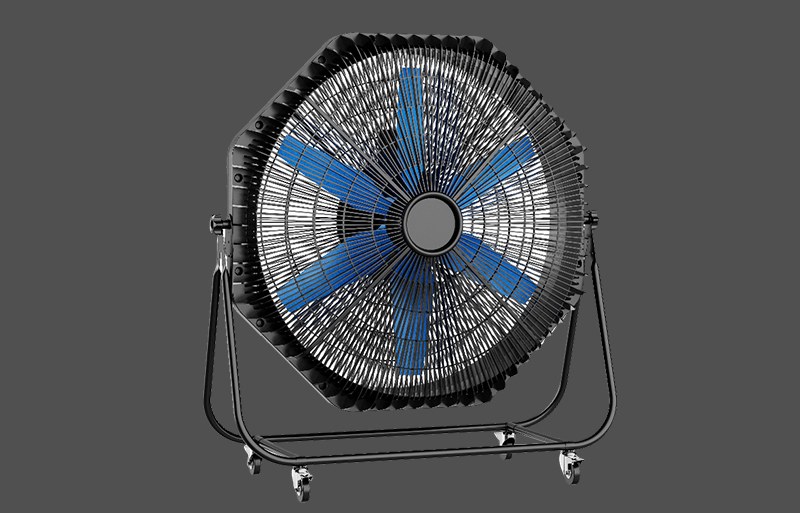 YS-Series Industrial Mobile High-Volume Circulation FanAE/EC motors and multi-speed control support stable airflow in large industrial spaces, with impellers up to 1,250 mm and reach up to 60 m.View Product →
Motor choice explains why two fans with similar blade sizes can feel completely different. The motor determines starting torque, speed regulation, energy use, noise character and how well the fan responds to a speed controller. For a high-airflow household fan, the motor should be selected for continuous duty, not just peak startup performance.
A permanent split capacitor motor uses a run capacitor to create phase shift. It offers decent starting torque, simple construction and good reliability in fans that run for long periods. Speed control is usually achieved with tapped windings or a suitable controller. PSC motors are common in wall fans, pedestal fans and exhaust fans where cost and durability matter.
Shaded-pole motors are simple, inexpensive and reliable in small sizes. They are often used in low-power exhaust fans and small household ventilators. Their efficiency is lower than PSC or BLDC designs, and they are not the best choice when the goal is the strongest airflow per watt. They suit short-duty or low-cost applications better than high-volume circulation.
A brushless DC motor uses permanent magnets and electronic commutation. It can deliver high efficiency, smooth speed control and quieter operation across a wide speed range. The electronics add cost, but the payoff is lower energy use and better control at low and medium speeds. BLDC designs are increasingly common in premium household fans and ventilation products.
An EC motor is essentially a BLDC motor with integrated electronic control. It is well suited to variable-speed ventilation because it can maintain a target speed or airflow as pressure changes. For ducted systems, an EC motor can be more useful than a larger fixed-speed motor because it responds to real system resistance rather than only free-air conditions.
For a simple floor fan, a well-made PSC motor is often the most practical balance of cost, torque and service life. For a ducted exhaust fan or a fan that will run many hours per day, an EC motor can reduce electricity use and improve comfort at lower speeds. For a small bathroom fan, a shaded-pole motor may still be adequate, but it should not be expected to deliver the strongest household airflow.
Room size, ceiling height, window orientation and the number of people in the space all change the answer. A fan that feels strong in a garage may be unbearable in a bedroom. A fan that is quiet enough for sleeping may be too weak for a west-facing living room in late afternoon. The following room-by-room approach is more useful than buying the largest fan on the shelf.
Best choice: 16–18 inch BLDC pedestal or tower fan with 5–9 speed settings.
Target: 300–900 CFM with a soft, adjustable stream and a low minimum speed.
Watch for: motor hum, blade imbalance and a display light that is too bright at night.
Best choice: 18–20 inch high-velocity air circulator with a tilting head.
Target: 1,500–4,000 CFM, depending on room volume and open-plan layout.
Watch for: a narrow stream that creates a draft in one seat while leaving the rest of the room still.
Best choice: dedicated range hood or wall exhaust fan with enough static pressure.
Target: 300–1,000 CFM for many residential kitchens, with make-up air considered.
Watch for: a floor fan that only stirs grease-laden air instead of removing it.
Best choice: 24–30 inch drum fan or large mobile circulation fan.
Target: 5,000–15,000 CFM with a rugged guard and sealed bearings.
Watch for: extension cords that are too light, and dust that clogs the motor cooling path.
Kitchen exhaust is a common mismatch. A strong floor fan cannot replace a range hood because it does not capture contaminants at the source. The strongest kitchen solution is a hood or exhaust fan with a short, smooth duct run, a properly sized opening and enough make-up air to prevent negative pressure. If the duct run is long or has several elbows, the fan’s free-air CFM rating becomes much less relevant than its pressure curve.
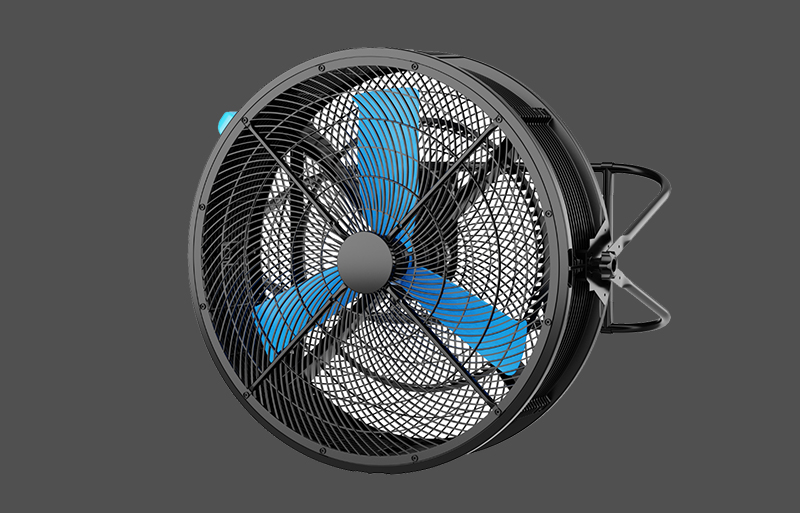 BS-Series Industrial Large-Scale Mobile Circulation FanMobile circulation fan for large industrial and outdoor sites, with 100–350 m² coverage, 58–65 dB noise, and braked wheels for single-person repositioning.View Product →
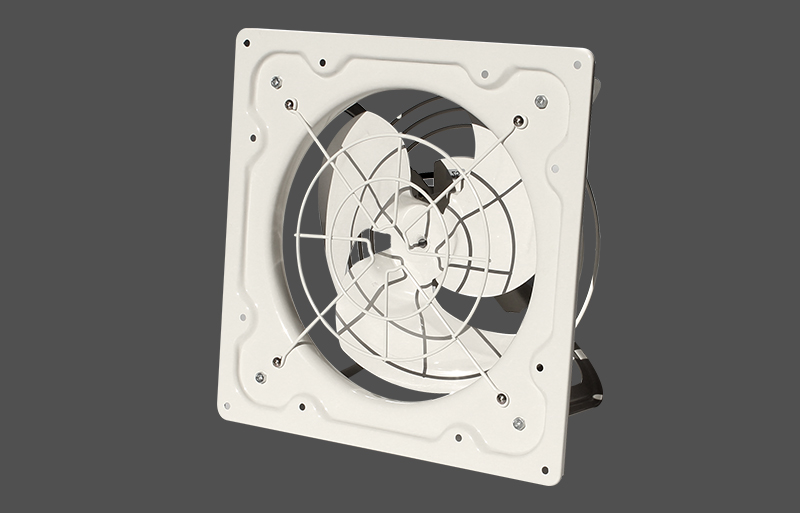 Industrial Square-Frame Wall or Window Ventilation FanSquare-chassis ventilation fan for wall or window mounting, offering steady continuous airflow in 200–350 mm sizes for warehouses, restrooms, and community facilities.View Product →
A fan that is strong on paper can fail in daily use because it is too loud, too heavy, or unsafe for the room. Noise is not just a comfort issue. It affects how often the fan is used, and a fan that is switched off delivers no airflow. Safety is equally practical: guards, mounting, cable routing and motor protection determine whether a high-airflow fan can be used confidently around children, pets and workshop dust.
A fan rated at 55 dBA on its lowest speed may be much louder on high. A fan rated at 70 dBA on high may still be acceptable in a garage but unsuitable for a bedroom. Blade tip speed, motor vibration, guard turbulence and bearing quality all shape the sound. For ducted systems, ventilator motors with balanced rotors and stable bearings can reduce the low-frequency hum that travels through walls.
High-airflow fans draw more current than small tower fans, and startup current can be several times the running current. A long, thin extension cord causes voltage drop, which can slow the motor and increase heating. Use a cord rated for the fan’s current, keep it uncoiled, and connect the fan to a circuit that is not already loaded by heaters or power tools. Thermal protection in the motor is a backup, not a substitute for correct installation. For permanently installed exhaust fans, the circuit should be protected according to local electrical rules and the fan should be isolatable for maintenance.
Specification sheets are useful when the test conditions are clear. A CFM number without a speed setting, static pressure value or test standard is incomplete. A wattage number without a duty cycle does not tell you the annual energy cost. A noise number without a distance and speed setting is difficult to compare. The following checklist helps separate a genuinely strong fan from a marketing claim.
| Specification | What it tells you | What to verify |
|---|---|---|
| CFM | Air volume moved per minute | Is it free-air or at a stated static pressure? Which speed setting? |
| Static pressure | Ability to push air through ducts, filters or louvers | Compare the fan curve at the actual duct resistance, not only the peak point. |
| Wattage | Running power draw | Is it input power or output power? Does it include the controller? |
| RPM | Blade speed | Does the fan hold RPM under load, or does it slow down when restricted? |
| Motor type | Efficiency, torque and control behavior | PSC, shaded pole, BLDC or EC; continuous duty rating; insulation class. |
| IP rating | Protection against dust and water | Match the rating to the room; a standard fan is not a wet-location fan. |
| Bearing type | Service life and noise | Sleeve bearings are lower cost; ball bearings handle higher loads and longer duty. |
| Noise | Acoustic comfort | Check dBA at the intended speed and distance; listen for hum and vibration. |
| Certification | Compliance and basic safety | Look for the certification required in the destination market, such as CE or CCC. |
A fan with a lower CFM rating but a better pressure curve can be stronger in a ducted application. A fan with a higher CFM rating but a noisy guard and a vibrating base may be used less often. The best specification is the one that matches the installation, not the one with the largest single number on the page.
Ductwork changes everything. Every foot of duct, every elbow, every transition and every louver adds resistance. A fan that moves 1,500 CFM in free air may move far less through a long flexible duct with two bends. For exhaust applications, the fan must be selected from its pressure curve at the actual system resistance, not from the free-air headline figure.
Static pressure is the resistance the fan must overcome to move air through a system. A short, straight wall opening has low resistance. A long duct with filters, a backdraft damper and a roof cap has much higher resistance. If the fan cannot generate enough pressure, airflow drops and the motor may run at a different point on its curve. In kitchens and bathrooms, undersized ducting is a common reason a seemingly strong exhaust fan feels weak.
For a simple window exhaust fan, the wall opening itself is the duct. For an inline fan mounted remotely, the entire duct path is part of the fan system. The strongest configuration is usually the one with the least resistance, not the one with the biggest fan box.
A high-airflow fan can be inexpensive to buy and expensive to run, or the reverse. The difference is motor efficiency and duty cycle. A 75 W fan running eight hours per day uses about 0.6 kWh per day. At an electricity price of 0.15 per kWh, that is roughly 0.09 per day, or about 2.70 per month if used every day. A 200 W fan used for the same period costs more than twice as much. The calculation is simple, but it is often overlooked when buyers focus only on CFM.
Example calculation: 75 W × 8 hours = 600 Wh = 0.6 kWh per day. At 0.15 per kWh, the daily cost is about 0.09. Over 30 days, the cost is about 2.70. A 200 W fan at the same usage would cost about 7.20 per month.
Bearing quality, motor insulation, thermal protection and installation environment determine how long a fan lasts. A fan in a clean bedroom may run for years with little attention. A fan in a dusty workshop needs more frequent cleaning because dust blocks motor cooling and unbalances the blade. A fan in a damp bathroom needs corrosion-resistant parts and a suitable IP rating. Capacitors can degrade over time, causing a PSC motor to lose starting torque or run slowly. Thermal protectors can trip repeatedly if the fan is installed in a restricted space.
For a high-quality fan, replacing a capacitor, bearing or power cord can be worthwhile. For a low-cost fan with a cracked housing, a worn blade and a noisy motor, replacement is usually more practical. The decision should consider the cost of the part, the difficulty of safe access, and whether the fan still meets the airflow and safety needs of the room. A repaired fan that is still undersized for the application is not a good outcome.
A strong fan needs a clean path for air and a stable mounting point. Most performance complaints trace back to installation rather than the fan itself. Use this checklist before and after installation to protect airflow, reduce noise and extend motor life.
Many fans are returned or replaced because the installation never gave them a fair chance. The most common mistakes are easy to correct and cost nothing.
The strongest fan in a real home is the one that is correctly sized, safely installed, clean and quiet enough to use. That may be a large circulator in a garage, a compact BLDC fan in a bedroom, or a pressure-capable exhaust fan in a kitchen. The label on the box is only the starting point.
For free-air movement in a large room or garage, a high-velocity industrial-style circulator with a 24–30 inch blade and a powerful PSC or EC motor is usually the strongest practical type. For exhausting air through a wall or duct, a dedicated exhaust or inline duct fan with a suitable pressure curve is stronger than a floor fan. The best answer depends on whether you need air movement inside the room or air exchange with the outside.
No. CFM is a volume rating, usually measured in free air. A fan with high CFM can feel weak if the air stream is diffuse, if the installation restricts intake or discharge, or if the motor slows under load. Air velocity, static pressure and installation quality also determine perceived strength.
Usually a 20 inch fan can move more air because it sweeps a larger area, but blade pitch, motor power, shroud design and speed matter. A well-designed 16 inch high-velocity fan can deliver a stronger focused stream than a poorly designed 20 inch fan. Compare CFM at the intended speed and the pressure curve if the fan is ducted.
They can be. Large drum fans and industrial circulators may be noisy, heavy and power-hungry in a small bedroom. They are better suited to garages, workshops and open living areas where high airflow is needed for short periods. For a bedroom, a smaller BLDC or PSC fan with a low minimum speed is usually more comfortable.
A PSC motor is a practical choice for many floor, wall and exhaust fans because it offers good torque and reliability at moderate cost. An EC or BLDC motor is better when efficiency, smooth speed control and quiet low-speed operation matter. Shaded-pole motors are simple and low cost but less efficient, so they are less suitable when maximum airflow per watt is the goal.
The window frame, screen, curtains or nearby furniture may be restricting intake or discharge. A fan that works well in open air can lose airflow when it is pushed into a small opening. Make sure the fan has clearance on both sides, the guard is not blocked, and the window or wall opening is large enough for the fan’s airflow.
It can help in the right conditions. Moving air across the skin makes a room feel cooler, so a fan may allow a higher thermostat setting. However, a high-wattage fan running all day can cost more than expected. Choose an efficient motor, use the lowest speed that provides comfort, and turn the fan off when the room is unoccupied.
In a clean bedroom, clean the blade and guard every few months. In a workshop, kitchen or dusty garage, clean them more often, especially when you notice vibration, reduced airflow or a change in motor sound. Always switch off and isolate the fan before cleaning or servicing.
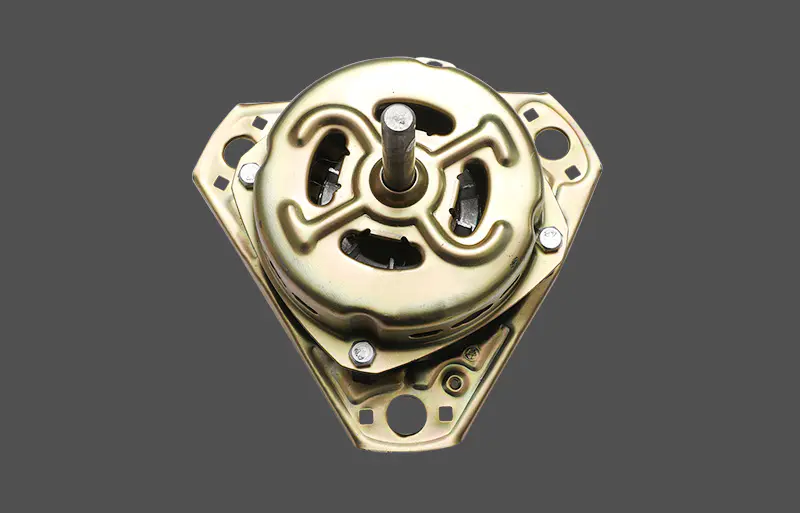
Ty001 Double-Tub Washing Machine Dedicated Motor
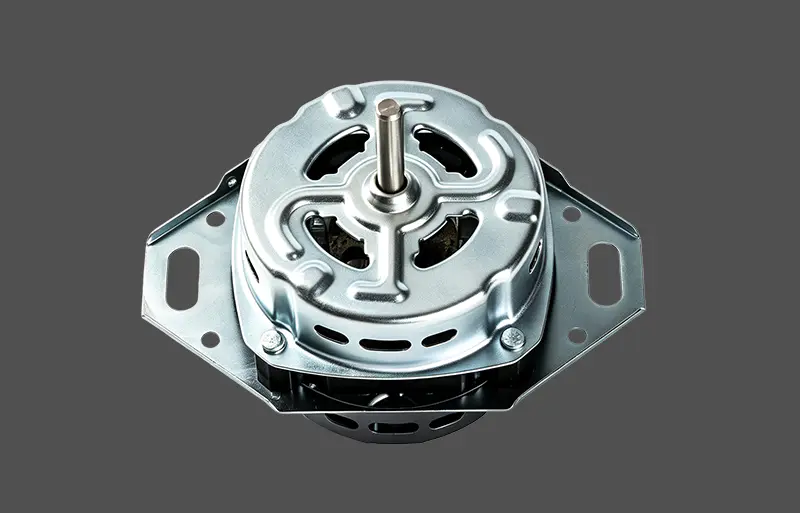
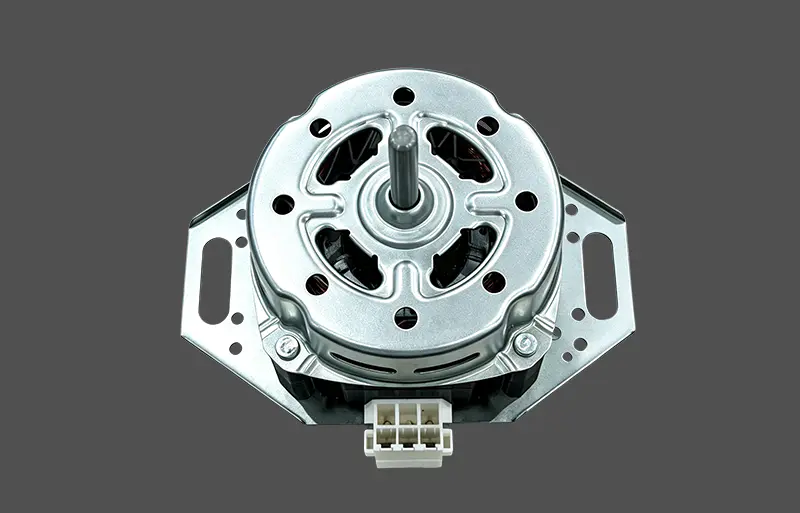
TY002 Powerful & Durable Copper-Wound Washing Machine Motor
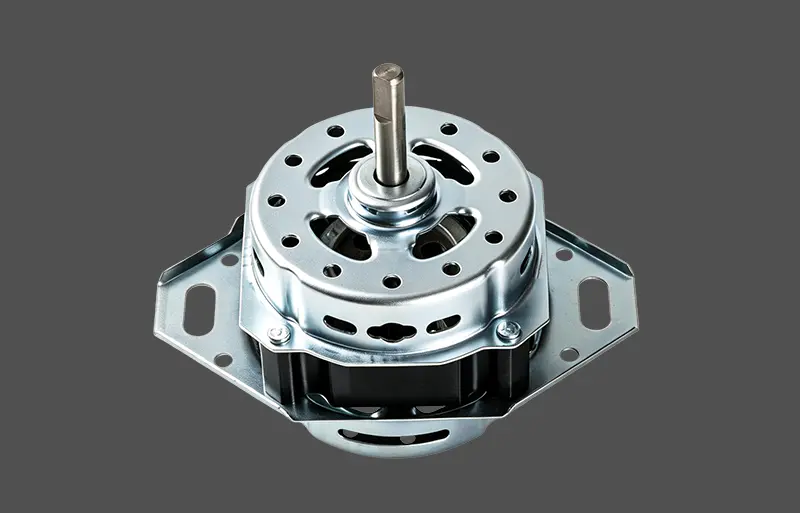
Environmental Cover Washing Machine Motor
TY004 High-Efficiency Mini Copper Wire Washing Machine Motor
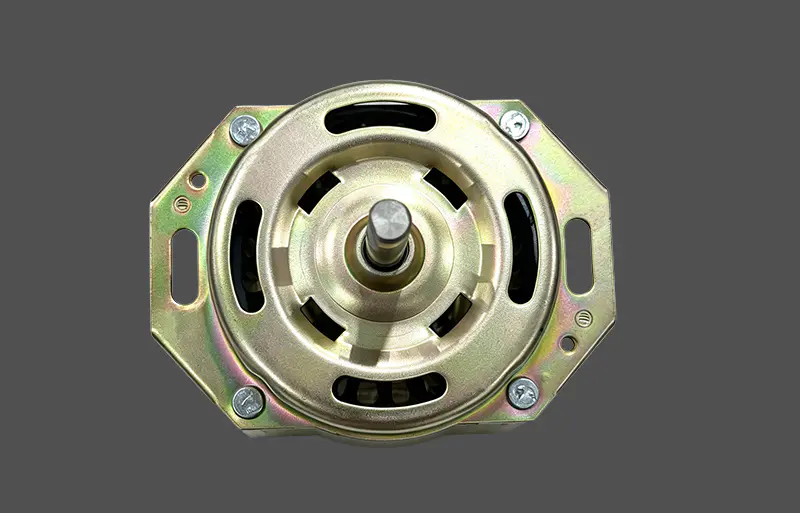
TY005 100% Copper Wire High-Speed Induction Motor
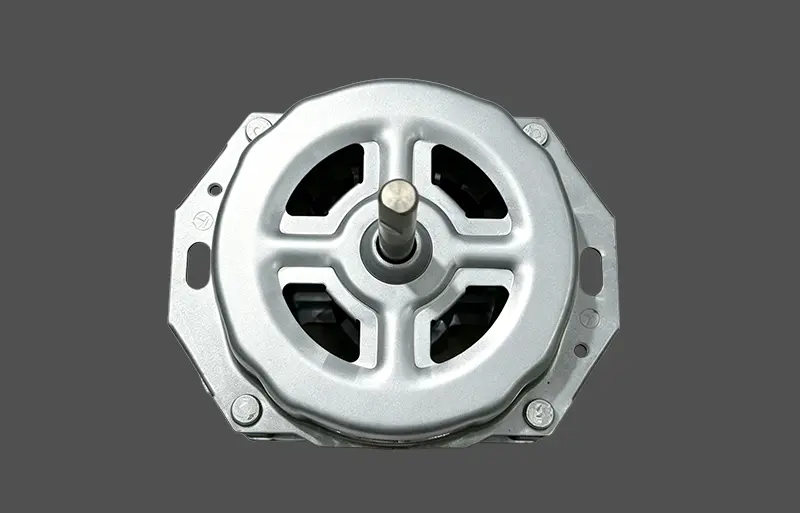
Home Appliance Parts Washing Motor
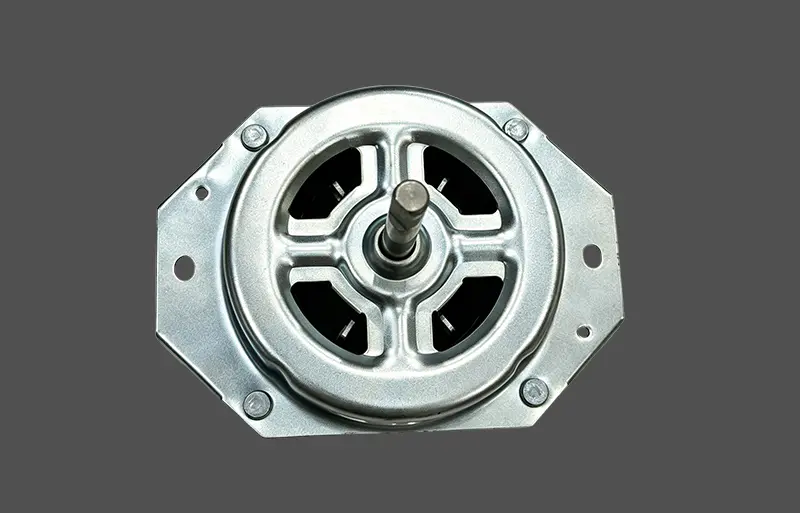
White Color CCA Motor
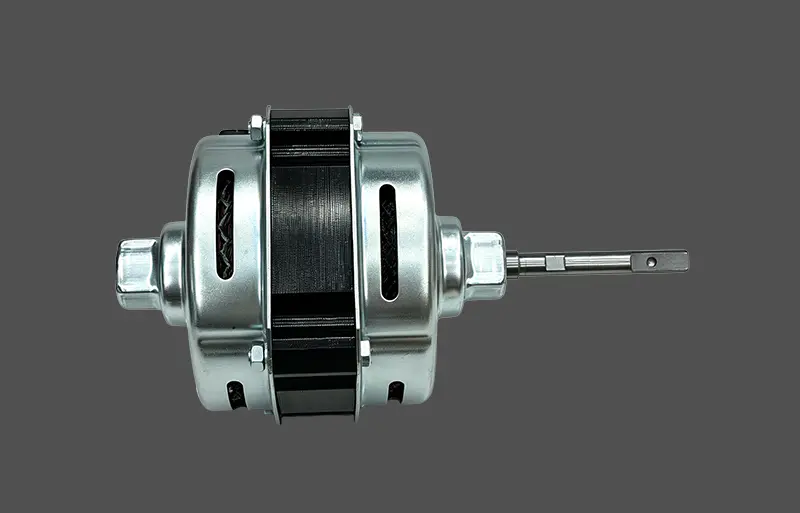
TY-008
Please leave your Email or phone nomber, so we can contact you as soon as possible.
Share


