


Yes, an industrial fan will cool a room, and it will usually do it with a fraction of the electricity an air conditioner needs. What changes is not the air temperature but the speed at which heat leaves human skin. In a 6 m x 5 m x 3.5 m workshop, a 750 mm axial fan moving roughly 18,000 m3/h keeps people working comfortably at a wall thermometer reading of 30 degrees Celsius, a temperature at which still air feels oppressive within minutes.
The limit is worth stating clearly before anything else: fans move heat, they do not destroy it. If the room is sealed and the fan is the only machine running inside it, the motor's own losses add heat to the air. Even then, measured at the person, a properly sized fan still delivers a felt comfort gain of about 3 to 5 degrees Celsius. That is why workshops, packing halls, loading bays, welding booths and warehouse aisles are cooled by air movement first and by refrigeration second.
Three numbers decide whether the answer for your room is yes or no: the air speed that actually reaches people, the number of air changes per hour, and the relative humidity. Push the first above 1 m/s and the second above 10 ACH, and in most dry or temperate climates an industrial fan will carry the whole cooling load on its own.
Comfort cooling from a fan is built on two physical paths working at the same time. The first is convection. In still air, the convective heat transfer coefficient on human skin sits around 3 to 4 W/m2K. Raise the air speed to 2 m/s and it climbs to roughly 8 to 12 W/m2K. Across a body surface of about 1.8 m2, that difference is the equivalent of several hundred watts of extra heat leaving the body every hour.
The second path is evaporation. Sweat that evaporates removes about 2,400 kJ per litre. Still air traps a saturated micro-layer of moisture against the skin, so sweat sits there doing nothing. Moving air replaces that layer continuously, and the body loses heat through a route that has nothing to do with the air temperature at all.
ASHRAE Standard 55 treats elevated air speed as a legitimate comfort strategy. With occupant-controlled air movement, the acceptable comfort temperature in a space can be raised by roughly 2.5 to 3 degrees Celsius at around 1.2 m/s of air speed, and more at higher speeds. In practical terms this means a factory floor that would otherwise need mechanical refrigeration at 28 degrees Celsius can stay productive at 31 degrees Celsius once the air is moving properly.
Motor, blade, air speed, comfort. The chain is only as strong as its weakest point. A high-efficiency motor driving a poorly pitched blade produces noise without throw. A well-designed blade driven by a motor that loses speed under load produces a comfortable first five minutes and a disappointing next five hours. When buyers ask why one 750 mm fan outperforms another with the same nameplate power, this chain is normally the answer.
Every watt of electricity a fan consumes eventually becomes heat inside the building. A 1.1 kW industrial fan is therefore also a 1.1 kW heater, roughly 3,750 BTU/h. In a sealed room with no exhaust path, that energy accumulates, and the air temperature can rise by 0.5 to 1.5 degrees Celsius over the first two hours of operation even while occupants feel cooler.
The moment the fan is used to exhaust air, the picture flips. Warm air leaves the room, outdoor or corridor air replaces it, and the actual temperature drops. A balanced supply-and-extract arrangement stabilises that drop instead of letting it drift. This is why the same fan can be a comfort device in one installation and a genuine temperature-control device in another.
| Operating mode | Effect on air temperature | Where it works best |
|---|---|---|
| Recirculation only, closed room | Rises 0.5-1.5 °C after two hours from motor and occupant heat | Large open volumes with dry air, people positioned inside the air jet |
| Exhaust or extract | Falls 2-6 °C once airflow exceeds 10 air changes per hour | Kitchens, welding bays, press shops, rooms with hot machinery |
| Balanced supply and extract | Falls and then holds steady at a predictable level | Production halls, clean assembly areas, hot aisles |
| Evaporative cooling | Falls 5-12 °C where relative humidity stays below 50 percent | Dry climates, open workshops, semi-outdoor production areas |
Read the table from the point of view of the person standing in the airflow, not the sensor on the wall. A thermometer reports what the room contains. A human body reports what it experiences. Both readings are correct, and both describe different things.
The sizing calculation is short enough to do on paper. In metric units, required airflow in m3/h equals room volume in m3 multiplied by the target air changes per hour. In imperial units, required CFM equals room volume in cubic feet multiplied by air changes, divided by 60.
Take a 10 m x 8 m x 4 m hall. Volume is 320 m3. At 10 air changes per hour the fan must move 3,200 m3/h, at 20 ACH it must move 6,400 m3/h, and at 30 ACH it must move 9,600 m3/h. For an occupied production area with light activity, 15 to 25 ACH is the usual band. Storage with no people inside tolerates far less.
| Room size (L x W x H) | Volume | 10 ACH | 20 ACH | 30 ACH |
|---|---|---|---|---|
| 4 x 3 x 2.7 m | 32 m3 | 320 m3/h | 650 m3/h | 970 m3/h |
| 6 x 5 x 3.5 m | 105 m3 | 1,050 m3/h | 2,100 m3/h | 3,150 m3/h |
| 10 x 8 x 4 m | 320 m3 | 3,200 m3/h | 6,400 m3/h | 9,600 m3/h |
| 20 x 15 x 6 m | 1,800 m3 | 18,000 m3/h | 36,000 m3/h | 54,000 m3/h |
| 30 x 20 x 8 m | 4,800 m3 | 48,000 m3/h | 96,000 m3/h | 144,000 m3/h |
Throw distance matters as much as volume. A good 750 mm axial floor fan pushes a coherent air jet roughly 15 to 25 m before the velocity falls below 0.5 m/s. Beyond that distance the air still moves, but it no longer feels like cooling. If the far end of a 40 m hall needs comfort, two fans working in the same direction beat one larger fan aimed at the far wall.
Fan classes are not interchangeable, and the mismatch usually shows up as either wasted money or wasted air. A high-velocity floor fan aimed at a low warehouse ceiling simply stirs hot air down onto the people below. A quiet ceiling unit in a welding bay does not extract anything.
| Fan class | Typical airflow | Throw | Noise at 3 m | Best room |
|---|---|---|---|---|
| Axial floor or column fan | 10,000-25,000 m3/h | 15-25 m | 62-72 dB(A) | Open workshops, loading bays, event tents |
| Large-diameter ceiling fan | 100,000-350,000 m3/h | Whole floor area | 45-55 dB(A) | Warehouses and halls above 5 m clear height |
| Centrifugal and duct fan | 500-6,000 m3/h | 5-15 m along duct | 55-68 dB(A) | Ducted exhaust, ceiling voids, partitioned areas |
| Wall-mounted exhaust fan | 1,000-8,000 m3/h | One direction only | 58-68 dB(A) | Kitchens, paint booths, toilets, welding stations |
For rooms where people stand within a few metres of the airflow, an axial unit with a well-balanced blade and a capacitor-run motor is the practical choice. For a 60 m long racking aisle, a large ceiling fan with slow blades and a gearless direct-drive motor wins on both noise and energy.
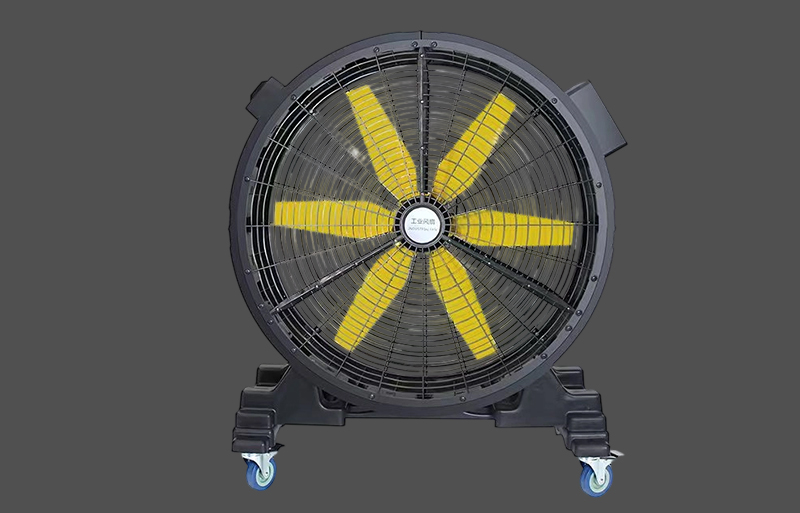 ZP-Series Industrial Misting and Cooling FanMobile misting fan for hot foundries, farms, and outdoor sites; centrifugal atomization and a large tank cool open areas where air conditioning is impractical.View Product →
Buyers compare airflow figures on the label and rarely open the motor housing. That is where the real difference sits. Two fans can move the same air volume on day one and diverge dramatically by month six, because speed stability, thermal rise and bearing quality all live inside the motor.
| Motor type | Efficiency band | Speed control | Typical service life | Typical use |
|---|---|---|---|---|
| Shaded pole | 20-35 percent | None, or crude voltage reduction | 8,000-15,000 h | Small exhaust fans, low-cost wall units |
| Permanent split capacitor | 45-65 percent | Two or three tapped speeds | 15,000-25,000 h | Pedestal fans, floor fans, ventilation fans |
| Electronically commutated | 75-88 percent | Stepless 0-100 percent | 25,000-40,000 h | Variable-speed industrial fans, smart ventilation |
| Three-phase IE3 or IE4 | 88-94 percent | Stepless through a drive | 30,000-50,000 h | Large hall fans, ducted plant, high duty cycles |
The practical consequence is simple: an EC or three-phase motor that holds its speed against a rising ambient temperature keeps the air jet stable all shift. A shaded-pole motor in the same frame slowly slows down as it heats, and the cooling effect on the floor quietly disappears without anyone noticing why. Designers who plan for ventilation equipment usually work from the motor outwards, not the blade inwards.
We produce more than 10 million motors a year across washing machine, cooker hood, air conditioner, fan and ventilation applications, and the fan projects that satisfy end users are almost always the ones where the motor curve was matched to the blade load curve at the drawing stage. Forced ventilation equipment lives or dies on that match. Teams that specify ventilator motors early in a project generally spend less time fixing complaints about weak airflow later.
Fans and refrigeration solve different problems, and comparing them on temperature alone produces the wrong purchase. The comparison that matters covers what each system does to a room, what it costs to run, and how well it handles dust, fumes and open doors.
| Aspect | Industrial fan | Air conditioner |
|---|---|---|
| Air temperature | Unchanged in closed mode, reduced when exhausting | Reduced directly |
| Comfort at occupant level | 3-5 °C felt reduction | Direct, independent of air speed |
| Installed cost for large open areas | Low per square metre covered | High, and scales with volume, not floor area |
| Operating cost per hour | Roughly one fifth to one fifteenth of refrigeration | Highest of the two by a wide margin |
| Fumes, dust and odour removal | Yes, when used as extract | No, recirculated air concentrates them |
| Door and window management | Tolerant of open loading doors | Loses performance with every opening |
| Humidity | Unaffected | Condenses moisture, dries the air |
The hybrid arrangement is usually the smartest: an industrial fan carries the general comfort load across a large volume, while a smaller air-conditioned zone handles quality control rooms, electronics benches or server alcoves where temperature and humidity must be held within tolerance. That split keeps capital spending concentrated where it actually changes the output of the business.
There is a clear dividing line. Below about 50 percent relative humidity, an evaporative cooler drops the real air temperature by 5 to 12 degrees Celsius, because water absorbs latent heat as it evaporates into the air stream. Above 65 percent humidity the same machine adds moisture and delivers almost nothing. A fan, by contrast, behaves consistently in both conditions, because it never relies on evaporation into the room air.
For dry inland workshops, mobile evaporative units with EC motors give the closest thing to genuine air conditioning without refrigerant, and they can be rolled from bay to bay as the work shifts. For humid coastal sites the decision should stay with air movement and exhaust ventilation, with refrigeration reserved for critical rooms only.
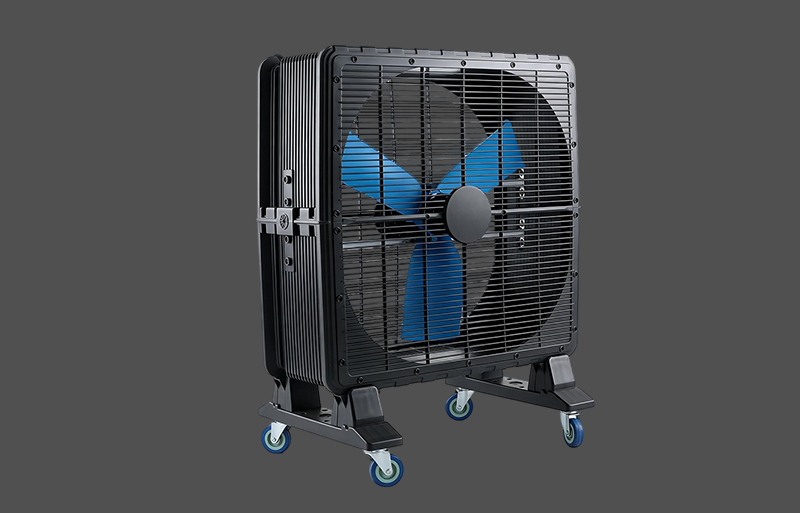 Mobile Industrial Evaporative Air Cooler with EC MotorDelivers 10,000 m³/h through a 650 mm blade and EC motor, with 7-speed control and casters for bay-to-bay cooling in workshops.View Product →
Two design details separate a good evaporative unit from a mediocre one: the pad area relative to airflow, and whether the motor holds its speed as the pad loads with dust and mineral scale. A larger pad at lower face velocity saturates the air more efficiently, and a speed-stable EC motor keeps the delivery constant over a full season of use.
Buyers who gather these nine figures before contacting a supplier rarely end up with the wrong fan.
Hand these nine answers to any competent fan supplier and the selection narrows to two or three candidates immediately. Skip them and the conversation becomes a series of guesses that usually ends in an oversized floor fan and an unsatisfied site manager.
Two identical fans installed two metres apart in different positions can produce comfort levels that differ by an entire fan size. Position decides whether air reaches people, whether it short-circuits back to the intake, and whether the motor runs hot.
Extract applications are the most sensitive to installation quality. A wall fan intended for fume removal must overcome static pressure from louvres, duct runs and dirty grilles, and that load is carried entirely by the motor. Units built with industrial exhaust fan motors rated for continuous duty and fitted with thermal protection survive those conditions far better than general-purpose assemblies borrowed from a household design.
Noise is the most common reason a functional installation gets switched off. It comes from three sources that must be handled separately: blade tip noise, motor electromagnetic noise, and bearing or structural vibration.
| Noise source | Typical contribution | Practical fix |
|---|---|---|
| Blade tip and turbulence | Dominant above 2,500 rpm on small blades | Larger diameter at lower speed, cleaner blade profile |
| Motor electromagnetic hum | 2-6 dB(A) at blade-passing frequency | Better lamination stack, tighter air gap tolerance |
| Bearing rumble | Grows 3-5 dB(A) after 5,000 hours if unserviced | Sealed-for-life or regreasable bearings of correct class |
| Structural resonance | Intermittent peaks at specific speeds | Rubber isolation, stiffer mounting frame, avoid that speed band |
Balance grade is the quiet determinant here. A fan rotor balanced to a tight residual unbalance will run smoothly at 1,400 rpm and last for years. The same rotor with a looser balance tolerance transmits vibration into bearings, brackets and roof panels, and the resulting wear shows up first as noise measured at 3 m.
Summer cooling is the obvious duty cycle, but industrial fans are often selected for year-round ventilation, and that changes the motor specification. Condensation inside a motor housing during spring and autumn temperature swings attacks insulation resistance and bearing grease. Fully enclosed waterproof motors with IP55 or higher protection are the correct answer for laundries, food processing areas, car washes and coastal sites.
Heat source density also shifts the balance. A room with 30 kW of installed machinery heat needs genuine extract airflow, not recirculation, because a fan that only stirs the air will eventually deliver hotter air back to the people who need relief. As a rule of thumb, every kilowatt of internal heat load requires roughly 300 m3/h of outside air to hold the room within a few degrees of ambient in temperate conditions.
Single-phase 220 to 240 V at 50 or 60 Hz covers most portable and wall-mounted industrial fans, with capacitor-run designs giving reliable starting torque on a standard domestic supply. Three-phase supplies above about 1.5 kW make far more sense for fixed installations, because the motor is smaller, cooler and easier to protect.
Speed control deserves attention before purchase rather than after. Tapped-speed PSC motors give two or three fixed points and cannot be dimmed on a triac controller without overheating. EC motors accept a 0-10 V signal and hold the selected speed under load. Three-phase motors behave best with a proper variable-frequency drive set to the correct V/f curve. Thermal protection, whether a built-in thermal link or an external overload relay, should be treated as mandatory on any fan running unattended.
A well-specified fan should deliver between 20,000 and 40,000 running hours before the first bearing service, which for a single-shift operation is somewhere between eight and fifteen years. That life depends almost entirely on three things: bearing lubrication, blade cleanliness and winding temperature.
Motors in our own production run through the same discipline: winding, varnishing, balancing and final load testing on every unit before packing. It is the least glamorous part of fan manufacturing and the part that decides whether a customer is still satisfied in the fifth summer of use.
Not by itself in a sealed room. It cools people through convection and sweat evaporation. The room temperature falls only when the fan exhausts warm air and outside air replaces it, or when an evaporative cooler adds water evaporation to the air stream.
Multiply room volume in cubic metres by the target air changes per hour. A 105 m3 office or workshop at 20 air changes needs about 2,100 m3/h, which a single 450 to 600 mm axial fan can deliver comfortably.
Yes, by a wide margin. A 1.1 kW fan running ten hours consumes about 11 kWh. A comparable air-conditioned area would typically need three or more units of 3.5 kW cooling capacity, and total input power would be several times higher for the same floor space.
In workshops, warehouses and semi-open production areas, usually yes. In rooms requiring controlled temperature, humidity or filtration, such as electronics assembly or pharmaceutical packing, no. Those spaces need mechanical refrigeration regardless of how much air moves.
It will cool people, but the room will warm slowly from motor losses and occupant heat. Adding a door grille, a wall louvre or a ducted extract path turns the same fan into an effective ventilation device and produces a measurable temperature drop.
Because it is recirculating its own heat plus the room's internal heat load. The air jet is unchanged in speed but higher in temperature. Providing an exhaust path of at least 80 percent of the intake area normally eliminates the problem.
With a 3 m ceiling, volume is about 90 m3. At 20 air changes per hour you need roughly 1,800 m3/h. A 450 mm high-velocity floor or wall fan covers that easily, and a 600 mm unit gives reserve capacity for hot afternoons.
Yes, and better than evaporative coolers, because their performance does not depend on evaporation into the room air. In humid conditions the correct strategy is air movement at occupant level plus powered exhaust to remove heat and moisture at source.
A useful specification sheet for an industrial fan contains six lines: airflow in m3/h at free air and at the actual static pressure, motor type and rated input power, supply voltage and frequency, protection class and insulation class, noise level in dB(A) at a stated distance, and mounting arrangement. Suppliers who can quote all six usually build the product themselves.
Axial fans for general room cooling, wall-mounted exhaust units for fume and heat removal, ducted centrifugal fans for hidden ventilation, and large slow-speed ceiling fans for tall volumes form the practical range. The right choice follows directly from the nine sizing figures above, not from the size of the fan that happened to be on promotion.
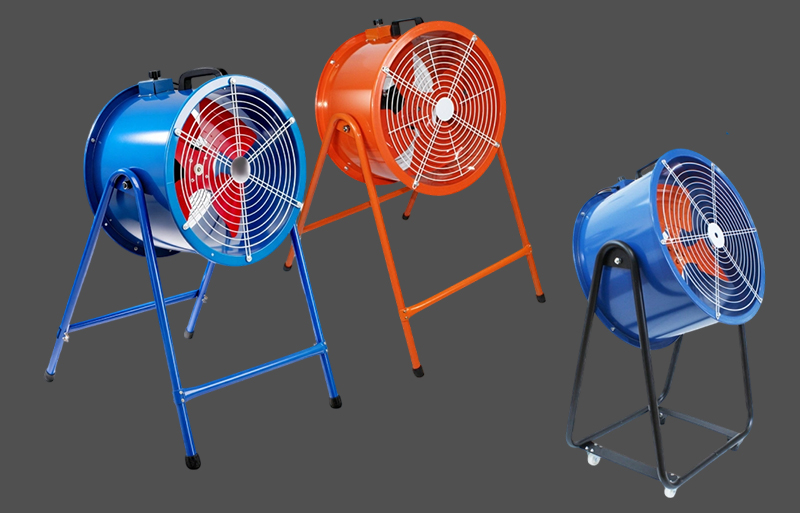 Post-Mounted Axial Flow Fan for Industrial CoolingProvides directional airflow from 3,000 to 24,500 m³/h with tilt adjustment and optional stepless speed control for workshops and large open spaces.View Product →
Our factory has manufactured motors since 1993 and ventilation equipment alongside them, with ISO9001 quality management and CE and CCC certified products. If you send us the room dimensions, the heat load and the noise limit, we will come back with a fan model, its motor specification and an honest statement of what airflow it will produce in your building rather than on a test bench.
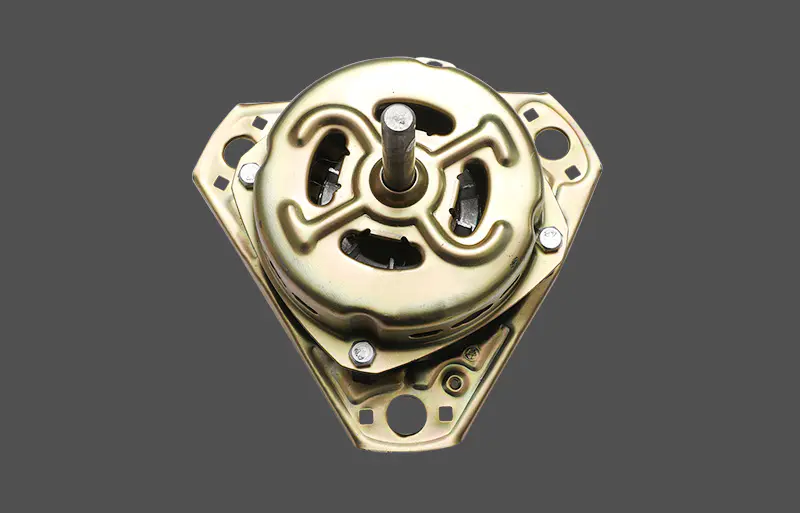
Ty001 Double-Tub Washing Machine Dedicated Motor
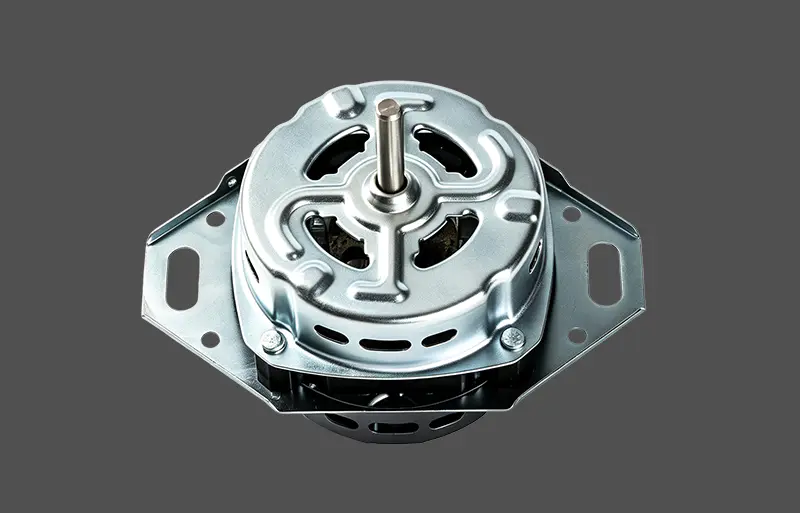
TY002 Powerful & Durable Copper-Wound Washing Machine Motor
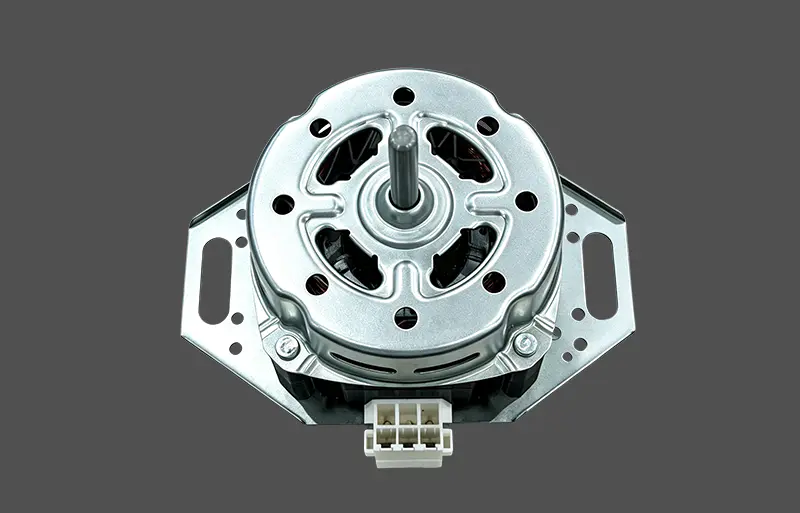
Environmental Cover Washing Machine Motor
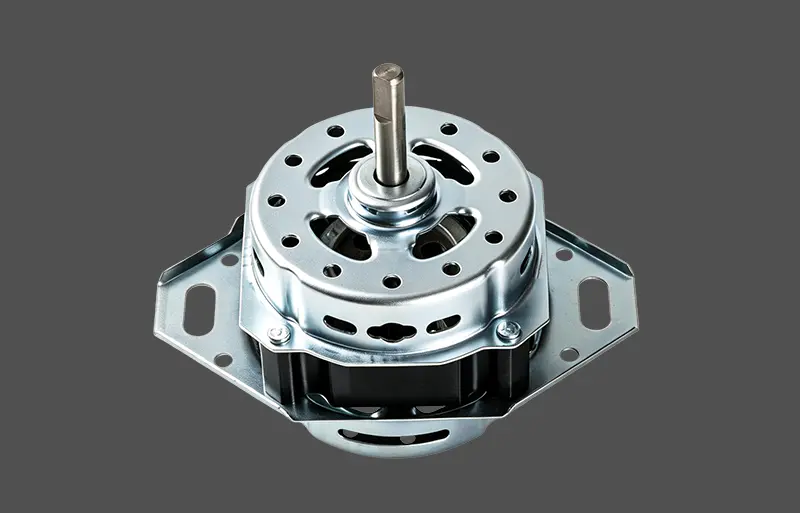
TY004 High-Efficiency Mini Copper Wire Washing Machine Motor
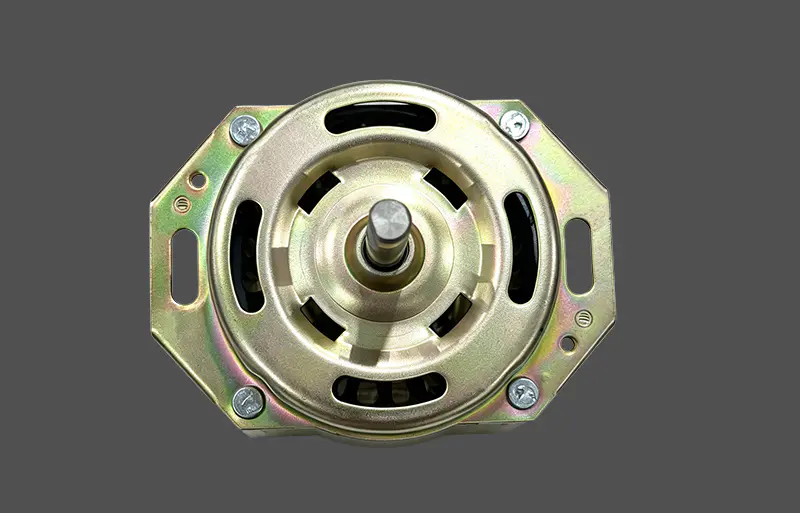
TY005 100% Copper Wire High-Speed Induction Motor
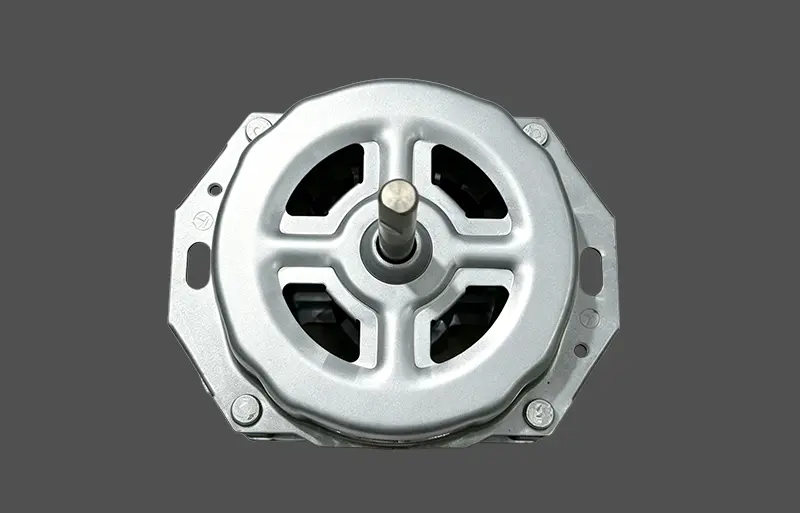
Home Appliance Parts Washing Motor
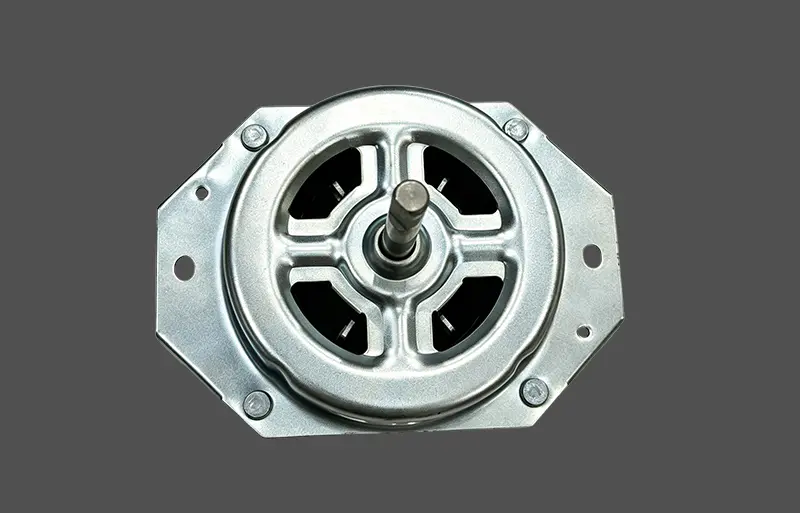
White Color CCA Motor
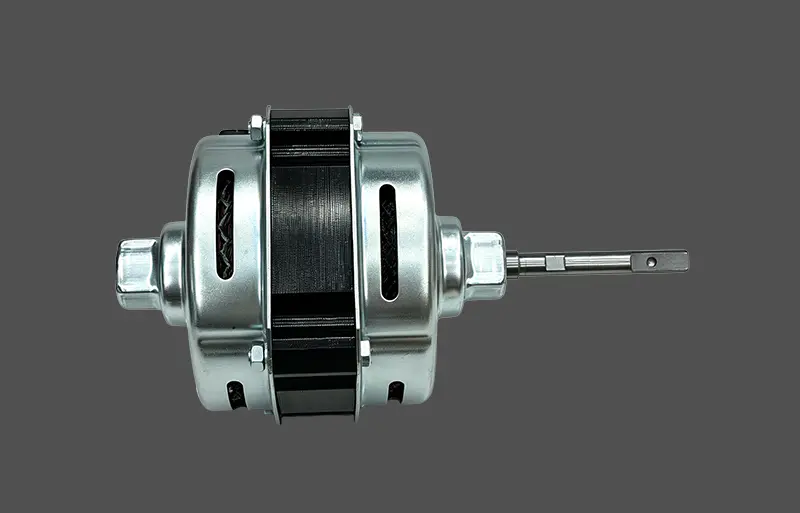
TY-008
Please leave your Email or phone nomber, so we can contact you as soon as possible.
Share


